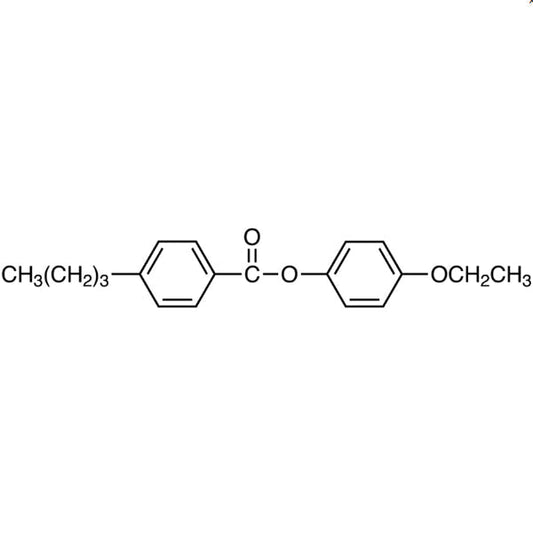
4-n-Octyloxyphenyl 4-Butylbenzoate is a chemical compound widely used in material science, particularly in the study of liquid crystal (LC) materials. As a key component in LC formulations, it plays a vital role in the development of advanced optical and electronic devices. This compound is essential for researchers aiming to create materials with unique optical and electrical properties, making it indispensable in modern laboratory settings. Its molecular structure enables it to interact effectively with various mediums, both liquid and solid, which is critical for its function in material synthesis.
The compound's favorable polarity and solubility properties make it ideal for use in formulations and solvent applications. These characteristics allow it to blend seamlessly with other materials, enhancing the performance of the final product. Additionally, its stability under specific conditions ensures consistent results, which is crucial for high-precision research. This stability and compatibility with different mediums make it a preferred choice for scientists working in complex material development projects.
In Indonesian laboratories, 4-n-Octyloxyphenyl 4-Butylbenzoate is commonly used in research related to liquid crystal materials, especially in academic institutions and research organizations. It is an integral part of projects focused on display technology and optical sensor development. Its role in advancing these fields highlights its importance in the scientific community in Indonesia.
TCI brochures (PDF)
- Liquid Crystal Materials 2026-04-01 · p. 8
Related TCI products
- TCI B1091 38454-28-3 4-(Hexyloxy)phenyl 4-Butylbenzoate
- TCI B0375 62716-65-8 4-Ethoxyphenyl 4-Butylbenzoate
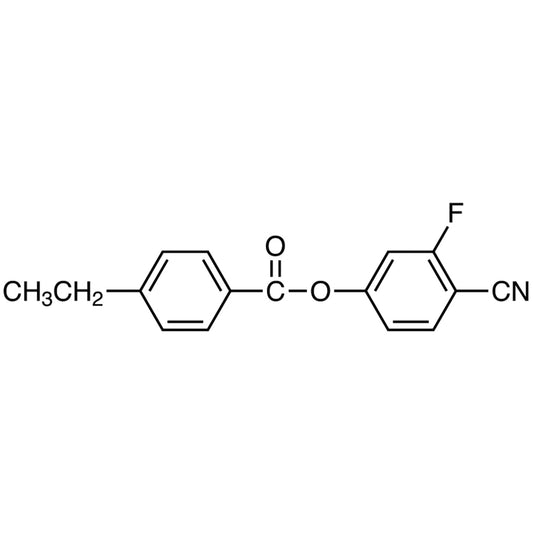
- TCI C3540 86776-50-3 4-Cyano-3-fluorophenyl 4-Ethylbenzoate
- TCI C3341 86776-52-5 4-Cyano-3-fluorophenyl 4-Butylbenzoate
- TCI C3794 38690-77-6 4-Cyanophenyl 4-Butylbenzoate
- TCI B4399 2725-22-6 2,4-Bis(2,4-dimethylphenyl)-6-(2-hydroxy-4-n-octyloxyphenyl)-1,3,5-triazine
- Liquid Crystal Material Synthesis: This compound is ideal for creating LC materials due to its molecular structure and compatibility with various mediums.
- Optical Device Development: Its optical properties make it suitable for use in advanced optical devices and sensors.
- Display Technology Research: It plays a key role in the development of next-generation display technologies, including LCD and OLED screens.
- Solvent and Formulation Applications: Its solubility and polarity make it a valuable component in formulation processes.
- Material Characterization Studies: It is frequently used in studies that require precise material behavior under different conditions.
| Brand | TCI |
|---|---|
| CAS number | 42815-59-8 |
| Molecular formula | — |
| Purity | — |
| Category | Materials Science > Electronic Materials > Liquid Crystal (LC) Materials |
| Pack sizes | Available in standard laboratory quantities |
| Physical form | Liquid |
| Storage | Store in a cool, dry place away from direct sunlight |
This compound should be stored in a cool, dry environment, away from direct sunlight and sources of heat. It is recommended to use airtight containers to prevent moisture absorption and contamination. Due to its chemical nature, it should be handled with care, using appropriate personal protective equipment such as gloves and safety goggles. It is important to ensure proper ventilation in the laboratory when working with this material. Avoid exposure to incompatible substances to maintain its stability and effectiveness. Proper storage and handling practices help preserve its quality and ensure safe usage in laboratory settings.
—
Produk Terkait
-
4-(Hexyloxy)phenyl4-Butylbenzoate TCI B1091
Regular price Rp 3.180.450,00Regular priceRp 2.239.650,00Sale price Rp 3.180.450,00 -
4-Ethoxyphenyl4-Butylbenzoate TCI B0375
Regular price Rp 6.067.950,00Regular priceRp 4.258.800,00Sale price Rp 6.067.950,00 -
4-Cyano-3-fluorophenyl4-Ethylbenzoate TCI C3540
Regular price From Rp 1.272.600,00Regular priceRp 905.100,00Sale price From Rp 1.272.600,00 -
4-Cyano-3-fluorophenyl4-Butylbenzoate TCI C3341
Regular price Rp 1.192.800,00Regular priceRp 849.450,00Sale price Rp 1.192.800,00 -
4-Cyanophenyl4-Butylbenzoate TCI C3794
Regular price From Rp 900.900,00Regular priceRp 645.750,00Sale price From Rp 900.900,00 -
2,4-Bis(2,4-dimethylphenyl)-6-(2-hydroxy-4-n-octyloxyphenyl)-1,3,5-triazine TCI B4399
Regular price From Rp 3.127.950,00Regular priceRp 2.202.900,00Sale price From Rp 3.127.950,00 -
3,6-Dibromo-9-(4-n-octyloxyphenyl)-9H-carbazole TCI D5341
Regular price From Rp 822.150,00Regular priceRp 590.100,00Sale price From Rp 822.150,00 -
4-Cyano-3,5-difluorophenyl4-Pentylbenzoate TCI C3512
Regular price From Rp 1.510.950,00Regular priceRp 1.072.050,00Sale price From Rp 1.510.950,00