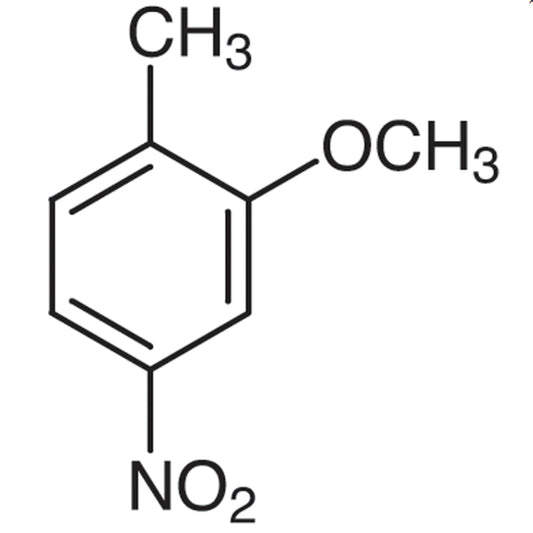
2-Bromo-4-nitrotoluene is a chemical compound widely used in organic reactions for the synthesis of complex molecules. As a building block in chemical research, it plays a crucial role in the development of aromatic and heterocyclic compounds. Its versatility makes it a valuable asset in laboratories where precision and reproducibility are essential. This compound is commonly used in synthetic pathways that require controlled reactivity and predictable outcomes.
The compound’s stable molecular structure and predictable reactivity make it a preferred choice for researchers. It is well-suited for electrophilic substitution reactions and nitration processes, which are fundamental in organic chemistry. Its consistent chemical properties allow for accurate experimentation and reliable results, ensuring that researchers can design efficient synthetic routes with confidence.
In Indonesian laboratories, 2-Bromo-4-nitrotoluene is frequently used in organic chemistry research, particularly in academic institutions and research centers. Its application enhances the understanding of reaction mechanisms and supports the development of new chemical compounds. It is a key component in the synthesis of complex aromatic structures, contributing to advancements in pharmaceutical and food chemistry research.
- Synthesis of complex aromatic compounds for pharmaceutical research due to its reactivity and structural versatility.
- Electrophilic substitution reactions in the creation of heterocyclic compounds for medicinal chemistry applications.
- Development of chemical materials for the food industry through controlled organic synthesis processes.
- Research on reaction mechanisms to improve synthetic strategies and optimize chemical processes.
- Nitration reactions in the production of aromatic derivatives for industrial and academic use.
| Brand | TCI |
|---|---|
| CAS number | 7745-93-9 |
| Molecular formula | — |
| Purity | — |
| Category | Chemistry > Building Blocks > Non-Heterocyclic Building Blocks |
| Pack sizes | Available in various quantities as per standard laboratory requirements |
| Physical form | Solid |
| Storage | Store in a cool, dry place away from direct sunlight and incompatible materials |
This compound should be stored in a cool, dry environment, away from direct sunlight and sources of heat. It is recommended to use airtight containers made of materials that are chemically inert, such as glass or stainless steel, to prevent contamination and degradation. Due to its chemical nature, it should be handled in a well-ventilated area, and appropriate personal protective equipment, including gloves and safety goggles, should be worn. Avoid contact with incompatible substances such as strong oxidizers or acids. Regular monitoring of storage conditions is advised to ensure the compound remains stable and safe for use in laboratory settings.
—
Produk Terkait
-
2-Bromo-3-nitrotoluene TCI B3712
Regular price Rp 1.565.550,00Regular priceRp 1.094.100,00Sale price Rp 1.565.550,00 -
2-Bromo-6-nitrotoluene TCI B1878
Regular price From Rp 1.008.000,00Regular priceRp 704.550,00Sale price From Rp 1.008.000,00 -
2-Bromo-5-nitrotoluene TCI B1853
Regular price From Rp 848.400,00Regular priceRp 593.250,00Sale price From Rp 848.400,00 -
4-Bromo-2-nitrotoluene TCI B1843
Regular price From Rp 769.650,00Regular priceRp 537.600,00Sale price From Rp 769.650,00 -
2-Iodo-3-nitrotoluene TCI I0799
Regular price From Rp 2.650.200,00Regular priceRp 1.853.250,00Sale price From Rp 2.650.200,00 -
4-tert-Butyl-3-methoxy-2,6-dinitrotoluene TCI B1379
Regular price From Rp 875.700,00Regular priceRp 612.150,00Sale price From Rp 875.700,00 -
2-Methoxy-4-nitrotoluene TCI M1681
Regular price From Rp 1.140.300,00Regular priceRp 796.950,00Sale price From Rp 1.140.300,00 -
2-Methoxy-6-nitrotoluene TCI M1416
Regular price From Rp 1.115.100,00Regular priceRp 779.100,00Sale price From Rp 1.115.100,00