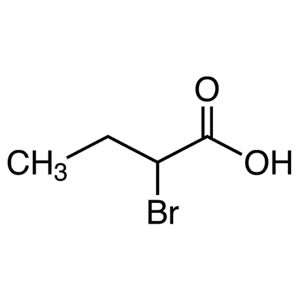
4-Bromobutyric Acid (4-BBA) is a chemical compound widely used in laboratory settings for its versatility in chemical reactions and molecular synthesis. As a building block in organic chemistry, it plays a crucial role in the development of complex molecules, particularly in the synthesis of both heterocyclic and non-heterocyclic compounds. Its simple yet essential chemical structure makes it a valuable tool for researchers aiming to create new compounds with specific functional groups. In the laboratory, 4-BBA is often used as a starting material to construct more intricate molecular frameworks, especially in organic synthesis projects.
The chemical properties of 4-BBA make it a preferred choice for various synthetic applications. The presence of a bromo group at the fourth carbon position enhances its reactivity in substitution and electrophilic reactions, making it ideal for halogen substitution reactions. Its stability under controlled conditions allows for predictable chemical behavior, which is essential for reproducible experimental outcomes. Additionally, its relatively high melting and boiling points facilitate handling during heating and cooling processes, ensuring ease of use in laboratory procedures.
In Indonesian laboratories, 4-Bromobutyric Acid is commonly used in organic chemistry research, particularly in academic and industrial settings. It is a key reagent in the development of pharmaceutical compounds and other organic materials. Its availability and chemical versatility make it a staple in many research laboratories across Indonesia, supporting both basic and applied scientific investigations.
- Organic synthesis projects benefit from 4-Bromobutyric Acid due to its reactivity and ability to form diverse molecular structures.
- Pharmaceutical research utilizes this compound for the development of new drug molecules through functional group modification.
- Heterocyclic compound synthesis relies on 4-BBA as a building block for creating complex ring structures.
- Analytical chemistry applications use 4-BBA as a standard reference material for qualitative and quantitative analysis.
- Industrial chemical processes incorporate 4-Bromobutyric Acid for the production of specialty chemicals and intermediates.
| Brand | TCI |
|---|---|
| CAS number | 2623-87-2 |
| Molecular formula | — |
| Purity | — |
| Category | Chemistry > Building Blocks > Non-Heterocyclic Building Blocks |
| Pack sizes | Available in various quantities as per supplier specifications |
| Physical form | Solid |
| Storage | Store in a cool, dry place away from light and moisture |
4-Bromobutyric Acid should be stored in a cool, dry location, away from direct sunlight and moisture. It is recommended to use airtight containers to prevent exposure to air and humidity, which can affect its chemical stability. As a brominated compound, it is important to handle it with care, using appropriate personal protective equipment such as gloves and safety goggles. Avoid contact with incompatible materials, and ensure proper ventilation in the laboratory. Due to its reactivity, it should be kept in a secure area away from heat sources and potential ignition points. Always follow standard laboratory safety protocols when working with this compound to ensure a safe and controlled environment.
—
Produk Terkait
-
2-BromobutyricAcid TCI B0564
Regular price From Rp 530.250,00Regular priceRp 386.400,00Sale price From Rp 530.250,00 -
4-BromobutylAcetate TCI B4958
Regular price From Rp 769.650,00Regular priceRp 537.600,00Sale price From Rp 769.650,00 -
2-BromobutyrylChloride TCI B4105
Regular price From Rp 2.969.400,00Regular priceRp 2.091.600,00Sale price From Rp 2.969.400,00 -
Methyl4-Bromobutyrate TCI B2308
Regular price From Rp 2.147.250,00Regular priceRp 1.517.250,00Sale price From Rp 2.147.250,00 -
Methyl2-Bromobutyrate TCI B1462
Regular price From Rp 689.850,00Regular priceRp 497.700,00Sale price From Rp 689.850,00 -
Ethyl4-Bromobutyrate TCI B0999
Regular price From Rp 900.900,00Regular priceRp 645.750,00Sale price From Rp 900.900,00 -
Ethyl2-Bromobutyrate TCI B0800
Regular price From Rp 662.550,00Regular priceRp 478.800,00Sale price From Rp 662.550,00 -
2-BromobutyrylBromide TCI B0566
Regular price Rp 2.518.950,00Regular priceRp 1.776.600,00Sale price Rp 2.518.950,00