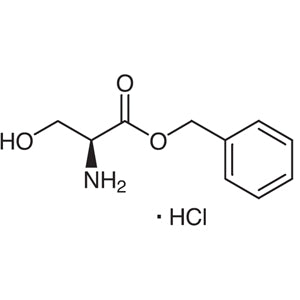
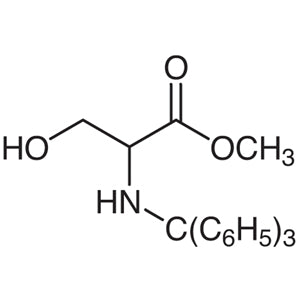
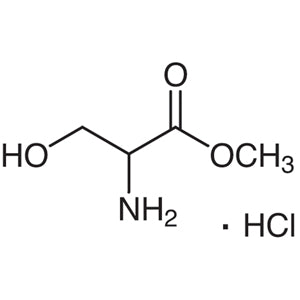
O-Benzyl-L-serine Methyl Ester Hydrochloride is a chemical compound widely used in synthetic reactions to produce complex molecules. This compound plays a crucial role in organic chemistry by serving as a versatile building block. Its unique structure enables it to participate in various chemical transformations, making it an essential reagent in laboratory settings. It is particularly valuable for its ability to undergo substitution reactions and other chemical modifications under controlled conditions.
As an ester hydrochloride, this compound exhibits high reactivity, which makes it ideal for applications requiring functional group manipulation. Its chemical stability under specific conditions ensures reliable performance in synthetic processes. The compound’s reactivity and stability make it a preferred choice for researchers seeking to synthesize a wide range of organic compounds. Its compatibility with various reagents, including acids, bases, and organic reagents, further enhances its utility in laboratory experiments.
In Indonesian laboratories, O-Benzyl-L-serine Methyl Ester Hydrochloride is commonly used in scientific research, especially in the fields of organic chemistry and pharmaceutical development. It is frequently employed in the synthesis of new compounds with potential therapeutic or industrial applications. Its availability in the local market supports researchers in accessing high-quality reagents, facilitating innovation and discovery in both academic and industrial settings.
TCI brochures (PDF)
- Amino Acids and Peptide Synthesis Reagents 2025-08-14 · p. 25
Related TCI products
- TCI S0550 60022-62-0 L-Serine Benzyl Ester Hydrochloride
- TCI C2873 21209-51-8 N-Benzyloxycarbonyl-L-serine Benzyl Ester
- TCI T2870 4465-44-5 N-(Triphenylmethyl)-L-serine Methyl Ester
- TCI T2500 13515-76-9 N-(Triphenylmethyl)-DL-serine Methyl Ester
- TCI B4913 51537-21-4 O-tert-Butyl-L-serine tert-Butyl Ester Hydrochloride
- TCI B1736 17114-97-5 O-tert-Butyl-L-serine Methyl Ester Hydrochloride
- Organic Synthesis: This compound is ideal for constructing complex organic molecules due to its reactivity and compatibility with various reagents.
- Pharmaceutical Research: It is used in the development of new drugs, as it can be modified to produce bioactive compounds with therapeutic potential.
- Functional Group Manipulation: Its ester group allows for selective chemical transformations, making it suitable for targeted synthetic pathways.
- Academic Research: It is widely used in university laboratories for teaching and research in synthetic chemistry and medicinal chemistry.
- Industrial Applications: It supports the production of specialty chemicals and pharmaceutical intermediates in manufacturing settings.
| Brand | TCI |
|---|---|
| CAS number | 19525-87-2 |
| Molecular formula | — |
| Purity | — |
| Category | Chemistry > Building Blocks > Non-Heterocyclic Building Blocks |
| Pack sizes | Available in various quantities as per supplier specifications |
| Physical form | Solid powder |
| Storage | Store in a cool, dry place away from moisture and direct sunlight |
This compound should be stored in a cool, dry environment to maintain its chemical stability and prevent degradation. It is recommended to keep it in a tightly sealed container to avoid exposure to moisture and air. Suitable storage conditions include a controlled temperature range between 15°C and 25°C. Avoid storing near incompatible substances such as strong bases or oxidizing agents. In laboratory settings, always handle with appropriate personal protective equipment, including gloves and safety goggles. Ensure proper ventilation when working with this compound to minimize inhalation risks. Regular monitoring of storage conditions is advised to ensure the compound remains in optimal condition for use.
—
Product Categories
Produk Terkait
-
L-SerineBenzylEsterHydrochloride TCI S0550
Regular price Rp 2.862.300,00Regular priceRp 2.017.050,00Sale price Rp 2.862.300,00 -
N-Benzyloxycarbonyl-L-serineBenzylEster TCI C2873
Regular price From Rp 1.934.100,00Regular priceRp 1.368.150,00Sale price From Rp 1.934.100,00 -
N-(Triphenylmethyl)-L-serineMethylEster TCI T2870
Regular price From Rp 1.431.150,00Regular priceRp 1.016.400,00Sale price From Rp 1.431.150,00 -
N-(Triphenylmethyl)-DL-serineMethylEster TCI T2500
Regular price From Rp 2.650.200,00Regular priceRp 1.869.000,00Sale price From Rp 2.650.200,00 -
O-tert-Butyl-L-serinetert-ButylEsterHydrochloride TCI B4913
Regular price From Rp 1.192.800,00Regular priceRp 849.450,00Sale price From Rp 1.192.800,00 -
O-tert-Butyl-L-serineMethylEsterHydrochloride TCI B1736
Regular price From Rp 2.782.500,00Regular priceRp 1.961.400,00Sale price From Rp 2.782.500,00 -
L-SerineMethylEsterHydrochloride TCI B0267
Regular price From Rp 848.400,00Regular priceRp 609.000,00Sale price From Rp 848.400,00 -
DL-SerineMethylEsterHydrochloride TCI S0576
Regular price From Rp 530.250,00Regular priceRp 386.400,00Sale price From Rp 530.250,00