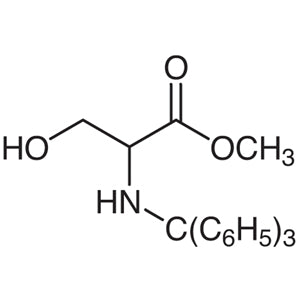
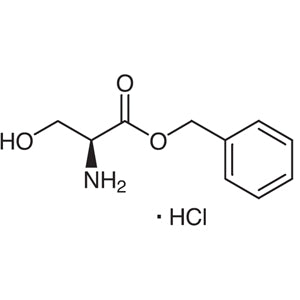
DL-Serine Methyl Ester Hydrochloride is a chemical compound widely used in laboratory settings for chemical and biochemical experiments. It belongs to the category of peptide chemistry and is commonly employed as a building block in the synthesis of complex compounds with biological activity. This compound plays a crucial role in reactions involving amino acids and esters, acting as a substrate or reagent in various synthetic processes. Its presence in laboratory research supports the development of new compounds and the study of molecular interactions.
DL-Serine Methyl Ester Hydrochloride is valued for its chemical stability and solubility in organic solvents, making it a preferred choice for synthetic and analytical applications. These properties allow it to be effectively used in a variety of chemical processes without undergoing significant degradation. Its molecular structure also enables it to serve as a tool for studying molecular interactions and as a reagent in biochemical assays. The compound’s reliability and consistency make it an essential component in many research protocols.
In Indonesian laboratories, DL-Serine Methyl Ester Hydrochloride is frequently used in organic chemistry, biochemical, and pharmacological research. It is a key reagent in the synthesis of active compounds, drug development, and the investigation of chemical reaction mechanisms. Many research institutions and universities rely on this compound for experimental work that contributes to scientific advancements in these fields. Its versatility and effectiveness make it a standard material in laboratory practice.
TCI brochures (PDF)
- Amino Acids and Peptide Synthesis Reagents 2025-08-14 · p. 26
Related TCI products
- TCI T2870 4465-44-5 N-(Triphenylmethyl)-L-serine Methyl Ester
- TCI T2500 13515-76-9 N-(Triphenylmethyl)-DL-serine Methyl Ester
- TCI B4913 51537-21-4 O-tert-Butyl-L-serine tert-Butyl Ester Hydrochloride
- TCI B1736 17114-97-5 O-tert-Butyl-L-serine Methyl Ester Hydrochloride
- TCI B1450 19525-87-2 O-Benzyl-L-serine Methyl Ester Hydrochloride
- TCI B0267 5680-80-8 L-Serine Methyl Ester Hydrochloride
- Peptide Synthesis: DL-Serine Methyl Ester Hydrochloride is commonly used in the synthesis of peptides due to its structural compatibility with amino acid derivatives.
- Biochemical Research: It serves as a reagent in biochemical assays to study molecular interactions and enzyme activity.
- Organic Chemistry Experiments: Its solubility in organic solvents makes it ideal for use in organic synthesis and reaction studies.
- Drug Development: It is utilized in the synthesis of bioactive compounds, supporting pharmaceutical research and development.
- Analytical Chemistry: Its stability and reactivity make it suitable for use in analytical procedures requiring precise chemical reactions.
| Brand | TCI |
|---|---|
| CAS number | 5619-04-5 |
| Molecular formula | — |
| Purity | — |
| Category | Chemistry > Chemical Biology > Peptide Chemistry |
| Pack sizes | — |
| Physical form | — |
| Storage | Store in a cool, dry place away from moisture and light. |
DL-Serine Methyl Ester Hydrochloride should be stored in a cool, dry place, away from moisture and direct light to maintain its chemical stability. It is recommended to use airtight containers to prevent exposure to air and humidity, which could affect its integrity. In laboratory settings, it should be handled with care, using appropriate personal protective equipment such as gloves and safety goggles. Due to its chemical nature, it should be kept away from incompatible substances to avoid potential reactions. Proper labeling and storage conditions are essential to ensure the safety of laboratory personnel and the effectiveness of the compound in experiments.
—
Product Categories
Produk Terkait
-
N-(Triphenylmethyl)-L-serineMethylEster TCI T2870
Regular price From Rp 1.431.150,00Regular priceRp 1.016.400,00Sale price From Rp 1.431.150,00 -
N-(Triphenylmethyl)-DL-serineMethylEster TCI T2500
Regular price From Rp 2.650.200,00Regular priceRp 1.869.000,00Sale price From Rp 2.650.200,00 -
O-tert-Butyl-L-serinetert-ButylEsterHydrochloride TCI B4913
Regular price From Rp 1.192.800,00Regular priceRp 849.450,00Sale price From Rp 1.192.800,00 -
O-tert-Butyl-L-serineMethylEsterHydrochloride TCI B1736
Regular price From Rp 2.782.500,00Regular priceRp 1.961.400,00Sale price From Rp 2.782.500,00 -
O-Benzyl-L-serineMethylEsterHydrochloride TCI B1450
Regular price From Rp 1.483.650,00Regular priceRp 1.053.150,00Sale price From Rp 1.483.650,00 -
L-SerineMethylEsterHydrochloride TCI B0267
Regular price From Rp 848.400,00Regular priceRp 609.000,00Sale price From Rp 848.400,00 -
L-SerineBenzylEsterHydrochloride TCI S0550
Regular price Rp 2.862.300,00Regular priceRp 2.017.050,00Sale price Rp 2.862.300,00 -
N-Benzyloxycarbonyl-L-serineBenzylEster TCI C2873
Regular price From Rp 1.934.100,00Regular priceRp 1.368.150,00Sale price From Rp 1.934.100,00