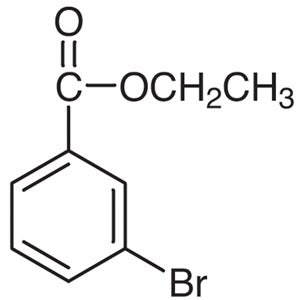
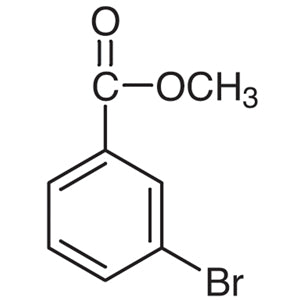
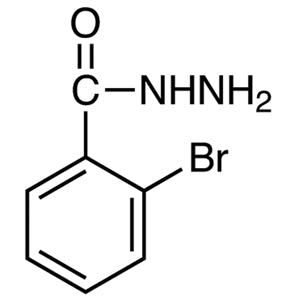
Ethyl 2-Bromobenzoate is a chemical compound widely used in organic reactions as a building block or reagent. It serves as an essential material in chemical laboratories for the synthesis of aromatic compounds and their derivatives. As an ester of 2-bromobenzoic acid, it offers a stable molecular structure and controlled reactivity, making it a reliable choice for various synthetic processes. Its versatility allows it to participate in multiple reaction types, including nucleophilic substitution and elimination reactions, depending on the reagents and conditions applied.
This compound is valued for its chemical properties that enable it to react with a variety of nucleophiles such as alcohols, amines, and hydroxides. These characteristics make it highly suitable for reactions where controlled reactivity is required. Its ability to undergo substitution and elimination reactions under specific conditions enhances its utility in organic synthesis. Additionally, Ethyl 2-Bromobenzoate has relatively high boiling and melting points, which facilitates separation and isolation during laboratory procedures.
In Indonesian laboratories, Ethyl 2-Bromobenzoate is commonly used in organic chemistry research, particularly in the synthesis of aromatic compounds and their derivatives. It is also frequently employed in educational settings to teach students about reaction mechanisms and separation techniques. Its role in both research and teaching makes it an important reagent in the chemical laboratory environment.
- Nucleophilic Substitution Reactions: Ethyl 2-Bromobenzoate is ideal for substitution reactions due to its bromine atom, which is a good leaving group, allowing for efficient nucleophilic attack.
- Aromatic Compound Synthesis: It is widely used in the synthesis of aromatic derivatives, providing a stable and reactive starting material for complex organic structures.
- Educational Demonstrations: Its predictable reactivity and ease of handling make it a popular choice for teaching organic chemistry concepts and laboratory techniques.
- Elimination Reaction Studies: The compound can be used to study elimination reactions, offering insights into reaction mechanisms and stereochemistry.
- Analytical Testing: It is useful for testing the reactivity of bromoaromatic compounds under different reaction conditions and catalysts.
| Brand | TCI |
|---|---|
| CAS number | 6091-64-1 |
| Molecular formula | — |
| Purity | — |
| Category | Chemistry > Building Blocks > Non-Heterocyclic Building Blocks |
| Pack sizes | Available in various quantities as per supplier specifications |
| Physical form | Solid |
| Storage | Store in a cool, dry place away from light and moisture |
Ethyl 2-Bromobenzoate should be stored in a cool, dry place away from direct light and moisture to maintain its stability and reactivity. It is recommended to use airtight containers to prevent exposure to air and potential degradation. In a laboratory setting, it should be handled with appropriate personal protective equipment, such as gloves and safety goggles, to ensure safety. Due to its brominated structure, it is important to avoid contact with incompatible substances and to follow standard chemical safety protocols. Proper labeling and storage conditions are essential to prevent cross-contamination and ensure safe handling during experiments.
—
Produk Terkait
-
Ethyl3-Bromobenzoate TCI B1808
Regular price From Rp 928.200,00Regular priceRp 664.650,00Sale price From Rp 928.200,00 -
Ethyl4-Bromobenzoate TCI B1515
Regular price From Rp 1.696.800,00Regular priceRp 1.202.250,00Sale price From Rp 1.696.800,00 -
Methyl4-Bromobenzoate TCI B0556
Regular price From Rp 2.173.500,00Regular priceRp 1.535.100,00Sale price From Rp 2.173.500,00 -
Methyl2-Bromobenzoate TCI B0555
Regular price From Rp 875.700,00Regular priceRp 627.900,00Sale price From Rp 875.700,00 -
Methyl3-Bromobenzoate TCI B0554
Regular price From Rp 1.087.800,00Regular priceRp 775.950,00Sale price From Rp 1.087.800,00 -
Methyl2,5-Dibromobenzoate TCI D2673
Regular price From Rp 1.060.500,00Regular priceRp 757.050,00Sale price From Rp 1.060.500,00 -
3-Bromobenzohydrazide TCI B4148
Regular price Rp 557.550,00Regular priceRp 405.300,00Sale price Rp 557.550,00 -
2-Bromobenzohydrazide TCI B4147
Regular price Rp 3.074.400,00Regular priceRp 2.165.100,00Sale price Rp 3.074.400,00