Ethyl 3-Bromobenzoate is a chemical compound widely used in organic reactions, particularly in the synthesis of aromatic and heterocyclic compounds. As an ester of 3-bromobenzoic acid, it plays a crucial role in laboratory settings where the creation of complex molecules is required. This compound is commonly found in chemical laboratories as a building block for the development of various substances with applications in pharmaceuticals, materials science, and chemical industries. Its structural stability and reactivity make it a versatile reagent in synthetic processes.
The compound exhibits favorable chemical properties that make it a preferred choice for synthetic chemists. It is soluble in organic solvents such as ethyl acetate and chloroform, which enhances its utility in reaction systems. Its ability to participate in nucleophilic substitution reactions, particularly SN2 and SN1 mechanisms, makes it ideal for controlled synthetic pathways. These characteristics allow for precise manipulation in laboratory conditions, supporting the synthesis of compounds with specific functional groups.
In Indonesian laboratories, Ethyl 3-Bromobenzoate is extensively used by chemists and pharmaceutical researchers. It is commonly applied in drug compound research, polymer synthesis, and the development of new materials. Its availability and reactivity make it a valuable resource for both academic and industrial research. The compound's role in advancing chemical innovation is well recognized in the scientific community.
- Drug compound research benefits from Ethyl 3-Bromobenzoate due to its reactivity and structural versatility in synthesizing pharmaceutical intermediates.
- Polymer synthesis relies on this compound for its ability to participate in nucleophilic substitution reactions, enabling the creation of complex polymeric structures.
- Material development utilizes Ethyl 3-Bromobenzoate for its solubility in organic solvents, facilitating the formation of advanced chemical materials.
- Organic synthesis applications take advantage of its stability and reactivity, supporting the creation of aromatic and heterocyclic compounds.
- Analytical chemistry uses this compound as a reference standard for identifying and quantifying ester functional groups in complex mixtures.
| Brand | TCI |
|---|---|
| CAS number | 24398-88-7 |
| Molecular formula | — |
| Purity | — |
| Category | Chemistry > Building Blocks > Non-Heterocyclic Building Blocks |
| Pack sizes | Available in various quantities as per supplier specifications |
| Physical form | Solid, crystalline appearance |
| Storage | Store in a cool, dry place away from light and moisture |
Ethyl 3-Bromobenzoate should be stored in a cool, dry environment, away from direct light and moisture to maintain its chemical integrity. It is recommended to use airtight containers made of glass or polyethylene to prevent contamination and degradation. Due to its reactivity, it should be handled in a well-ventilated area, and appropriate personal protective equipment should be worn when working with it. The compound is non-hazardous under normal conditions but should be kept out of reach of children and not exposed to incompatible substances. Proper labeling and storage practices are essential to ensure safe handling and long-term stability in laboratory settings.
—
Produk Terkait
-
Ethyl4-Bromobenzoate TCI B1515
Regular price From Rp 1.696.800,00Regular priceRp 1.202.250,00Sale price From Rp 1.696.800,00 -
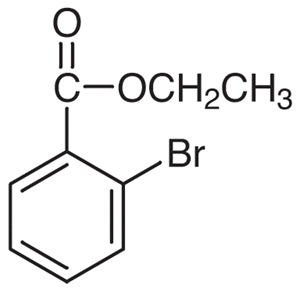
Ethyl2-Bromobenzoate TCI B1514
Regular price Rp 2.041.200,00Regular priceRp 1.442.700,00Sale price Rp 2.041.200,00 -
Methyl4-Bromobenzoate TCI B0556
Regular price From Rp 2.173.500,00Regular priceRp 1.535.100,00Sale price From Rp 2.173.500,00 -
Methyl2-Bromobenzoate TCI B0555
Regular price From Rp 875.700,00Regular priceRp 627.900,00Sale price From Rp 875.700,00 -
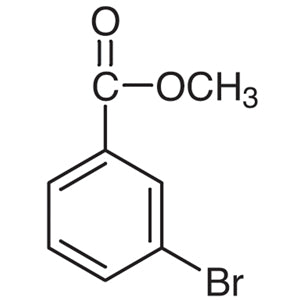
Methyl3-Bromobenzoate TCI B0554
Regular price From Rp 1.087.800,00Regular priceRp 775.950,00Sale price From Rp 1.087.800,00 -
Methyl2,5-Dibromobenzoate TCI D2673
Regular price From Rp 1.060.500,00Regular priceRp 757.050,00Sale price From Rp 1.060.500,00 -
3-Bromobenzohydrazide TCI B4148
Regular price Rp 557.550,00Regular priceRp 405.300,00Sale price Rp 557.550,00 -
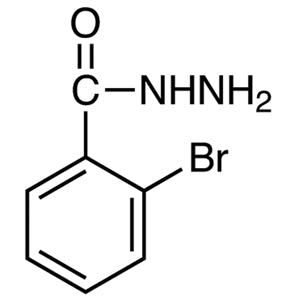
2-Bromobenzohydrazide TCI B4147
Regular price Rp 3.074.400,00Regular priceRp 2.165.100,00Sale price Rp 3.074.400,00