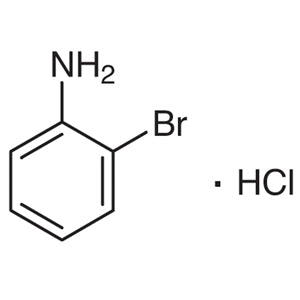
4-Chloro-2,6-dibromoaniline is a versatile organic compound widely used in laboratory settings as a building block for synthetic reactions. This aromatic amine contains substituents of chlorine and bromine, which significantly influence its chemical reactivity and stability. It is commonly found in chemical laboratories where researchers synthesize complex molecules, particularly in the field of organic chemistry. Its role as an electron-donating compound makes it a valuable reagent in various synthetic pathways, including nitration, sulfonation, and electrophilic substitution reactions.
The compound's unique structure and functional groups make it a preferred choice for chemists seeking to create a wide range of derivatives. Its ability to participate in multiple reaction mechanisms allows for the development of new compounds with tailored properties. Additionally, its chemical stability under controlled conditions ensures reliability in experimental processes. These characteristics make it a go-to material for both academic and industrial research applications.
In Indonesian laboratories, 4-Chloro-2,6-dibromoaniline is utilized in diverse scientific studies, including drug development, industrial chemical synthesis, and material research. Its reactivity and structural versatility support the creation of new compounds with specific applications. Researchers in Indonesia rely on this compound for its consistent performance and adaptability in various synthetic processes.
- Organic synthesis research due to its reactivity and ability to participate in multiple reaction mechanisms.
- Drug development projects as a precursor for creating pharmaceutical compounds with specific functionalities.
- Industrial chemical production for the synthesis of dyes, pesticides, and other specialty chemicals.
- Material science experiments to develop new polymers and functional materials with tailored properties.
- Analytical chemistry applications for use as a standard in chromatographic and spectroscopic analyses.
| Brand | TCI |
|---|---|
| CAS number | 874-17-9 |
| Molecular formula | — |
| Purity | — |
| Category | Chemistry > Building Blocks > Non-Heterocyclic Building Blocks |
| Pack sizes | Available in various quantities as per standard laboratory supply formats |
| Physical form | Solid, typically in crystalline or powder form |
| Storage | Store in a cool, dry place away from light and incompatible substances |
This compound should be stored in a cool, dry environment, away from direct sunlight and sources of heat. It is recommended to keep it in a tightly sealed container to prevent moisture absorption and contamination. Due to its reactivity, it should be handled in a well-ventilated laboratory or fume hood to minimize exposure. Avoid contact with strong oxidizing agents or acids to prevent unwanted reactions. Proper personal protective equipment, including gloves and safety goggles, should always be worn when handling this material. Regular inspection of storage conditions is advised to ensure the compound remains stable and suitable for use in laboratory applications.
—
Produk Terkait
-
2-Chloro-4,6-dibromoaniline TCI C1385
Regular price Rp 2.068.500,00Regular priceRp 1.445.850,00Sale price Rp 2.068.500,00 -
3,5-Dibromoaniline TCI D4802
Regular price Rp 2.889.600,00Regular priceRp 2.020.200,00Sale price Rp 2.889.600,00 -
2,5-Dibromoaniline TCI D1989
Regular price From Rp 1.326.150,00Regular priceRp 927.150,00Sale price From Rp 1.326.150,00 -
2,4-Dibromoaniline TCI D1153
Regular price From Rp 1.776.600,00Regular priceRp 1.242.150,00Sale price From Rp 1.776.600,00 -
2,6-Dibromoaniline TCI D0004
Regular price From Rp 2.306.850,00Regular priceRp 1.612.800,00Sale price From Rp 2.306.850,00 -
4-Bromoaniline TCI B1393
Regular price From Rp 1.193.850,00Regular priceRp 834.750,00Sale price From Rp 1.193.850,00 -
2-BromoanilineHydrochloride TCI B0870
Regular price Rp 1.670.550,00Regular priceRp 1.167.600,00Sale price Rp 1.670.550,00 -
3-Bromoaniline TCI B0542
Regular price From Rp 1.696.800,00Regular priceRp 1.186.500,00Sale price From Rp 1.696.800,00