2,4-Dibromoaniline from TCI is an aniline that carries two bromine atoms, one ortho and one para to the amino group. It belongs to the class of non-heterocyclic building blocks and is widely used in organic synthesis as an intermediate for dyes, active pharmaceutical ingredients, agrochemicals and functional materials. Because one aromatic ring holds both an amino group and two halogens, researchers have many options for building substituted aromatic molecules in a controlled, step-by-step way.
The amino group can be acylated or alkylated, or converted into a diazonium salt for Sandmeyer reactions and azo coupling. The two bromine atoms are useful handles for palladium-catalysed cross-coupling reactions such as Suzuki, Heck, Sonogashira and Buchwald–Hartwig. The ortho bromine has a different steric and electronic environment from the para bromine, so under suitable conditions the two positions can be functionalised one after the other. This is especially helpful when chemists need aromatic compounds with an unsymmetrical substitution pattern, where control over each position matters.
In Indonesia, this compound is relevant to synthetic organic chemistry laboratories at universities and research institutions that develop cross-coupling methods, dyes and related aromatic intermediates. Postgraduate research groups can use it as a model substrate to study selectivity between two different halogen positions. Teams working on pharmaceutical or agrochemical intermediates can use it as a starting point for substituted aniline derivatives that need further functionalisation in later steps.
- Palladium-catalysed cross-coupling: the two bromine atoms suit Suzuki, Heck, Sonogashira and Buchwald–Hartwig reactions for building new carbon–carbon and carbon–nitrogen bonds on the aromatic ring.
- Sequential functionalisation studies: the ortho and para bromines behave differently, so researchers can modify one position first and the other later to reach unsymmetrical products.
- Diazonium chemistry and Sandmeyer reactions: the amino group can be converted into a diazonium salt, which can then be replaced with other substituents on the dibrominated ring.
- Azo dye synthesis: the diazonium salt made from this aniline can take part in azo coupling, making the compound a practical intermediate for dye research and colourant development.
- Pharmaceutical and agrochemical intermediate work: acylation or alkylation of the amino group, combined with coupling at the bromine sites, gives access to substituted aromatic scaffolds for discovery programmes.
| Brand | TCI (product code D1153) |
|---|---|
| CAS number | 615-57-6 |
| Molecular formula | — |
| Purity | — |
| Category | Chemistry > Building Blocks > Non-Heterocyclic Building Blocks |
| Pack sizes | see the options listed on this product page |
| Physical form | refer to the TCI product label and certificate of analysis |
| Storage | follow the storage conditions on the TCI label and safety data sheet |
Keep 2,4-Dibromoaniline in its original, tightly closed container in a cool, dry and well-ventilated area, away from direct light, heat and incompatible materials such as strong oxidising agents and strong acids. Follow the storage conditions stated on the TCI label and safety data sheet. As with other halogenated aromatic amines, handle it in a fume hood and wear gloves, safety glasses and a lab coat. Avoid breathing dust or vapour and avoid contact with skin and eyes. Label any portions you transfer to secondary containers clearly. Dispose of waste and contaminated materials as halogenated organic waste, following your institution's rules and local regulations.
—
Produk Terkait
-
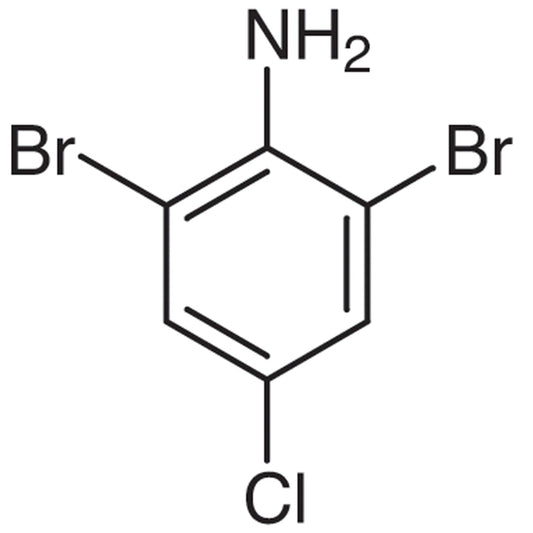
4-Chloro-2,6-dibromoaniline TCI B1516
Regular price Rp 2.068.500,00Regular priceRp 1.445.850,00Sale price Rp 2.068.500,00 -
3,5-Dibromoaniline TCI D4802
Regular price Rp 2.889.600,00Regular priceRp 2.020.200,00Sale price Rp 2.889.600,00 -
2,5-Dibromoaniline TCI D1989
Regular price From Rp 1.326.150,00Regular priceRp 927.150,00Sale price From Rp 1.326.150,00 -
2,6-Dibromoaniline TCI D0004
Regular price From Rp 2.306.850,00Regular priceRp 1.612.800,00Sale price From Rp 2.306.850,00 -
2-Chloro-4,6-dibromoaniline TCI C1385
Regular price Rp 2.068.500,00Regular priceRp 1.445.850,00Sale price Rp 2.068.500,00 -
4-Bromoaniline TCI B1393
Regular price From Rp 1.193.850,00Regular priceRp 834.750,00Sale price From Rp 1.193.850,00 -
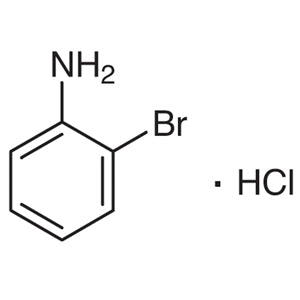
2-BromoanilineHydrochloride TCI B0870
Regular price Rp 1.670.550,00Regular priceRp 1.167.600,00Sale price Rp 1.670.550,00 -
3-Bromoaniline TCI B0542
Regular price From Rp 1.696.800,00Regular priceRp 1.186.500,00Sale price From Rp 1.696.800,00