5-Bromoisatin is a chemical compound classified under the category of heterocyclic building blocks, making it a valuable resource in organic chemistry laboratories. This compound features a complex structure composed of an indole ring and a bromo group, which allows it to serve as a foundational element in the synthesis of more intricate organic molecules. Its unique molecular architecture enables chemists to design and develop a wide range of compounds with specific functional groups and structural features. In laboratory settings, 5-Bromoisatin plays a crucial role in the construction of complex chemical structures, particularly in the field of heterocyclic chemistry.
The compound is known for its reactivity, which makes it suitable for participation in various chemical reactions such as nucleophilic and electrophilic reactions. Its chemical stability under certain conditions, combined with its high reactivity in the presence of heat or moisture, makes it a versatile reagent. These properties allow it to be effectively used in reactions that require the involvement of bromo groups. Additionally, its ability to interact with a variety of functional groups enhances its applicability in synthetic pathways.
In Indonesian laboratories, 5-Bromoisatin is widely used in organic chemistry research, particularly in the synthesis of heterocyclic compounds. It is commonly found in research institutions and universities, where it supports the development of new chemical structures and the exploration of reactivity patterns. Its importance in academic and industrial research underscores its role as a key reagent in modern chemical synthesis.
- Organic synthesis of heterocyclic compounds due to its indole ring and bromo group, enabling structural modifications and functional group transformations.
- Nucleophilic and electrophilic reaction pathways, where its reactivity allows for the formation of diverse chemical structures through substitution and coupling reactions.
- Development of pharmaceutical and agrochemical compounds, as its molecular framework is often used as a starting point for drug discovery and compound optimization.
- Research in chemical reactivity and functional group interactions, providing insights into molecular behavior under different reaction conditions.
- Educational purposes in chemistry laboratories, where it serves as a practical example of heterocyclic chemistry and synthetic methodology.
| Brand | TCI |
|---|---|
| CAS number | 87-48-9 |
| Molecular formula | — |
| Purity | — |
| Category | Chemistry > Building Blocks > Heterocyclic Building Blocks |
| Pack sizes | Available in various quantities as per standard chemical supply practices |
| Physical form | Solid, typically in crystalline or powder form |
| Storage | Store in a cool, dry place away from moisture and direct sunlight |
5-Bromoisatin should be stored in a cool, dry environment to maintain its chemical stability and prevent degradation. It is recommended to keep it in a sealed container to minimize exposure to moisture and air, which can affect its reactivity. Due to its potential for chemical interaction, it should be handled in a well-ventilated laboratory setting, preferably with appropriate personal protective equipment. Avoid contact with incompatible substances such as strong oxidizing agents. Regular inspection of storage conditions is advised to ensure the compound remains in optimal condition for use in laboratory applications.
—
Produk Terkait
-
7-Bromoisatin TCI B3974
Regular price From Rp 1.087.800,00Regular priceRp 775.950,00Sale price From Rp 1.087.800,00 -
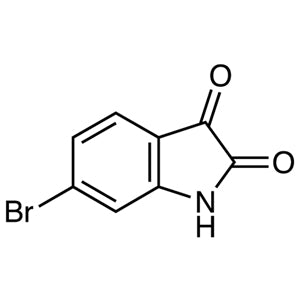
6-Bromoisatin TCI B2424
Regular price From Rp 1.563.450,00Regular priceRp 1.108.800,00Sale price From Rp 1.563.450,00 -
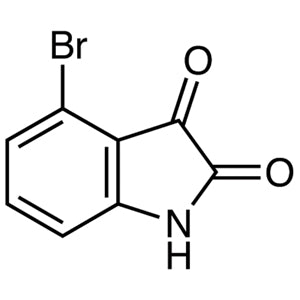
4-Bromoisatin TCI B2423
Regular price From Rp 1.008.000,00Regular priceRp 720.300,00Sale price From Rp 1.008.000,00 -
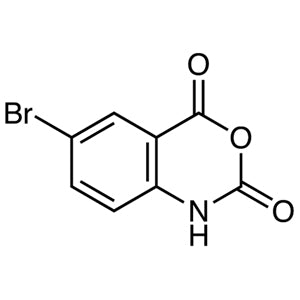
5-BromoisatoicAnhydride TCI B3659
Regular price Rp 3.180.450,00Regular priceRp 2.239.650,00Sale price Rp 3.180.450,00