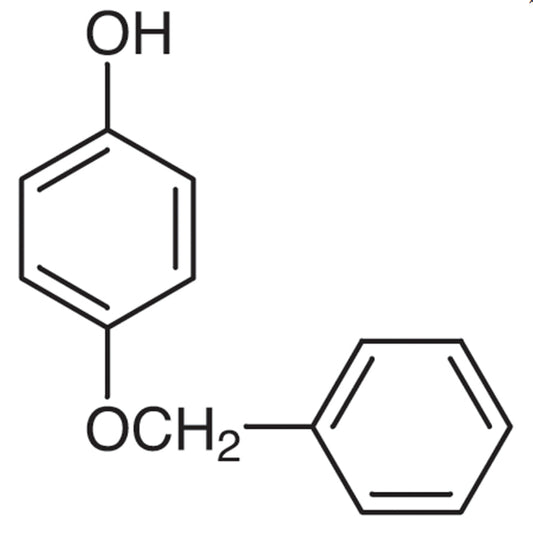
2-(Benzyloxy)phenol is a chemical compound widely used in synthetic reactions within laboratory settings, particularly in the field of organic chemistry. Its complex aromatic structure, featuring a benzyloxy group connecting two aromatic rings, makes it a versatile building block for various chemical syntheses. This compound is commonly employed as a starting material for the creation of more complex organic molecules, contributing to the development of pharmaceuticals, agrochemicals, and specialty chemicals. Its presence in laboratory workflows underscores its importance in both academic and industrial research environments.
The chemical properties of 2-(Benzyloxy)phenol make it a preferred choice for laboratory use. It exhibits good solubility in organic solvents such as ethyl acetate and chloroform, which facilitates its use in a wide range of synthetic procedures. Its relatively stable chemical structure ensures minimal degradation during reactions, enhancing the reliability of experimental outcomes. Additionally, the compound is non-corrosive and relatively safe when handled properly, aligning with the safety standards of modern laboratories. These characteristics contribute to its widespread adoption in both research and teaching laboratories.
In Indonesian laboratories, 2-(Benzyloxy)phenol is frequently utilized in organic chemistry research, especially in universities and research institutions focused on the synthesis of complex compounds. Its role in facilitating chemical reactions and its compatibility with various experimental conditions make it an essential component in the study of organic synthesis and functional group transformations. Its availability and reliability support the advancement of chemical research in Indonesia.
- Organic Synthesis: This compound is ideal for organic synthesis due to its aromatic structure and reactivity, making it suitable for creating complex molecules and functional groups.
- Substitution Reactions: Its benzyloxy group enables effective participation in substitution reactions, offering versatility in synthetic pathways.
- Oxidation Reactions: The compound's stability allows it to be used in oxidation reactions without significant degradation, ensuring consistent results.
- Teaching Laboratories: It is commonly used in educational settings to demonstrate aromatic substitution and functional group transformations.
- Research Institutions: Its reliability and availability make it a preferred choice for advanced research in chemical synthesis and material science.
| Brand | TCI |
|---|---|
| CAS number | 6272-38-4 |
| Molecular formula | — |
| Purity | — |
| Category | Chemistry > Building Blocks > Non-Heterocyclic Building Blocks |
| Pack sizes | Available in various quantities as per standard laboratory supply |
| Physical form | Solid |
| Storage | Store in a cool, dry place away from direct sunlight |
2-(Benzyloxy)phenol should be stored in a cool, dry environment to maintain its chemical stability. It is recommended to keep the compound in a sealed container to prevent moisture absorption and contamination. Suitable storage containers include glass or high-density polyethylene (HDPE) bottles, which are resistant to chemical interactions. In laboratory settings, it is important to handle the compound with appropriate personal protective equipment (PPE) such as gloves and safety goggles. While it is not highly reactive, it should be stored away from incompatible materials to ensure safety. Proper labeling and adherence to standard chemical storage protocols are essential for maintaining a safe and efficient laboratory environment.
—
Produk Terkait
-
3-(Benzyloxy)phenol TCI B2070
Regular price From Rp 5.460.000,00Regular priceRp 3.833.550,00Sale price From Rp 5.460.000,00 -
4-(Benzyloxy)phenol TCI B1104
Regular price From Rp 1.801.800,00Regular priceRp 1.275.750,00Sale price From Rp 1.801.800,00 -
3,4,5-Tris(benzyloxy)benzylAlcohol TCI T1840
Regular price From Rp 1.881.600,00Regular priceRp 1.331.400,00Sale price From Rp 1.881.600,00 -
4-(Benzyloxy)benzylChloride TCI B5121
Regular price From Rp 1.724.100,00Regular priceRp 1.205.400,00Sale price From Rp 1.724.100,00 -
1-Benzyloxy-4-iodobenzene TCI B4692
Regular price From Rp 3.551.100,00Regular priceRp 2.483.250,00Sale price From Rp 3.551.100,00 -
1-Benzyloxy-3-iodobenzene TCI B4689
Regular price Rp 2.597.700,00Regular priceRp 1.816.500,00Sale price Rp 2.597.700,00 -
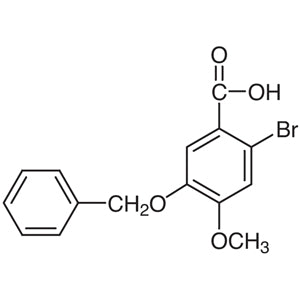
5-Benzyloxy-2-bromo-4-methoxybenzoicAcid TCI B3332
Regular price From Rp 2.439.150,00Regular priceRp 1.720.950,00Sale price From Rp 2.439.150,00 -
4-Benzyloxy-1,3-butanediol TCI B3326
Regular price From Rp 2.439.150,00Regular priceRp 1.720.950,00Sale price From Rp 2.439.150,00