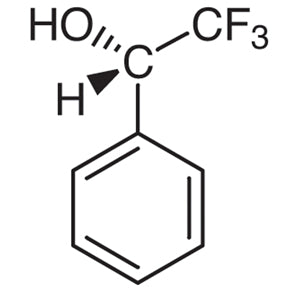
3,5-Bis(trifluoromethyl)benzyl Alcohol is a chemical compound widely utilized in laboratory settings for constructing complex molecular structures. This compound serves as a key building block in organic chemistry, particularly in the synthesis of fluorinated compounds. Its unique chemical structure enables it to participate in various chemical reactions, making it a versatile reagent for researchers. Due to its functional groups, it is often employed in the development of new compounds with specific properties, such as enhanced stability or reactivity.
The compound’s primary characteristic is the presence of two trifluoromethyl groups, which significantly influence its electronic and physical properties. These groups contribute to the compound’s high stability and polarity, making it ideal for substitution reactions and other synthetic processes. The presence of fluorine atoms also enhances its reactivity in specific chemical environments, allowing it to be a valuable tool in advanced organic synthesis. These properties make it a preferred choice for chemists working on fluorinated compound development.
In Indonesian laboratories, 3,5-Bis(trifluoromethyl)benzyl Alcohol is commonly used in research related to organic chemistry and pharmaceutical development. It plays a crucial role in the synthesis of bioactive compounds and industrial chemicals. Its availability in the local market supports scientific research and innovation, enabling researchers to access essential materials for their experiments. This compound is an essential component in the toolkit of many Indonesian chemical laboratories.
Related TCI products
- TCI T1792 340-05-6 alpha-(Trifluoromethyl)benzyl Alcohol
- TCI T1342 349-75-7 3-(Trifluoromethyl)benzyl Alcohol
- TCI T1312 349-95-1 4-(Trifluoromethyl)benzyl Alcohol
- TCI T1311 346-06-5 2-(Trifluoromethyl)benzyl Alcohol
- TCI C3208 64372-62-9 2-Chloro-5-(trifluoromethyl)benzyl Alcohol
- TCI T2593 175278-07-6 2-(Trifluoromethoxy)benzyl Alcohol
- Organic synthesis applications benefit from this compound’s fluorinated structure, enabling the development of new chemical entities with enhanced stability and reactivity.
- Pharmaceutical research utilizes this material for the synthesis of bioactive compounds, contributing to drug discovery and development efforts.
- Industrial chemical production relies on its unique properties for the creation of specialized materials with tailored functional characteristics.
- Fluorinated compound development leverages its trifluoromethyl groups to design molecules with specific electronic and physical properties.
- Research in chemical engineering incorporates this compound for the synthesis of advanced materials with improved performance in various applications.
| Brand | TCI |
|---|---|
| CAS number | 32707-89-4 |
| Molecular formula | — |
| Purity | — |
| Category | Chemistry > Building Blocks > Fluorinated Building Blocks |
| Pack sizes | Available in various quantities as per standard supplier offerings |
| Physical form | Liquid |
| Storage | Store in a cool, dry place away from direct sunlight |
This compound should be stored in a cool, dry environment, away from direct sunlight and sources of heat. It is recommended to use airtight containers made of materials compatible with its chemical properties, such as glass or high-density polyethylene. Due to its fluorinated nature, it is important to handle it with appropriate personal protective equipment, including gloves and safety goggles, to prevent skin or eye contact. Proper ventilation should be maintained in the laboratory to minimize exposure to vapors. The compound is generally stable under normal storage conditions but should be kept sealed to prevent contamination or degradation. Regular inspection of storage containers is advised to ensure the integrity of the material remains intact.
—
Produk Terkait
-
alpha-(Trifluoromethyl)benzylAlcohol TCI T1792
Regular price From Rp 3.817.800,00Regular priceRp 2.669.100,00Sale price From Rp 3.817.800,00 -
3-(Trifluoromethyl)benzylAlcohol TCI T1342
Regular price From Rp 1.458.450,00Regular priceRp 1.019.550,00Sale price From Rp 1.458.450,00 -
4-(Trifluoromethyl)benzylAlcohol TCI T1312
Regular price From Rp 1.140.300,00Regular priceRp 796.950,00Sale price From Rp 1.140.300,00 -
2-(Trifluoromethyl)benzylAlcohol TCI T1311
Regular price Rp 903.000,00Regular priceRp 631.050,00Sale price Rp 903.000,00 -
2-Chloro-5-(trifluoromethyl)benzylAlcohol TCI C3208
Regular price From Rp 1.008.000,00Regular priceRp 704.550,00Sale price From Rp 1.008.000,00 -
2-(Trifluoromethoxy)benzylAlcohol TCI T2593
Regular price Rp 1.060.500,00Regular priceRp 757.050,00Sale price Rp 1.060.500,00 -
3-(Trifluoromethoxy)benzylAlcohol TCI T1955
Regular price From Rp 1.351.350,00Regular priceRp 960.750,00Sale price From Rp 1.351.350,00 -
(S)-(+)-alpha-(Trifluoromethyl)benzylAlcohol TCI P1368
Regular price Rp 6.651.750,00Regular priceRp 4.651.500,00Sale price Rp 6.651.750,00