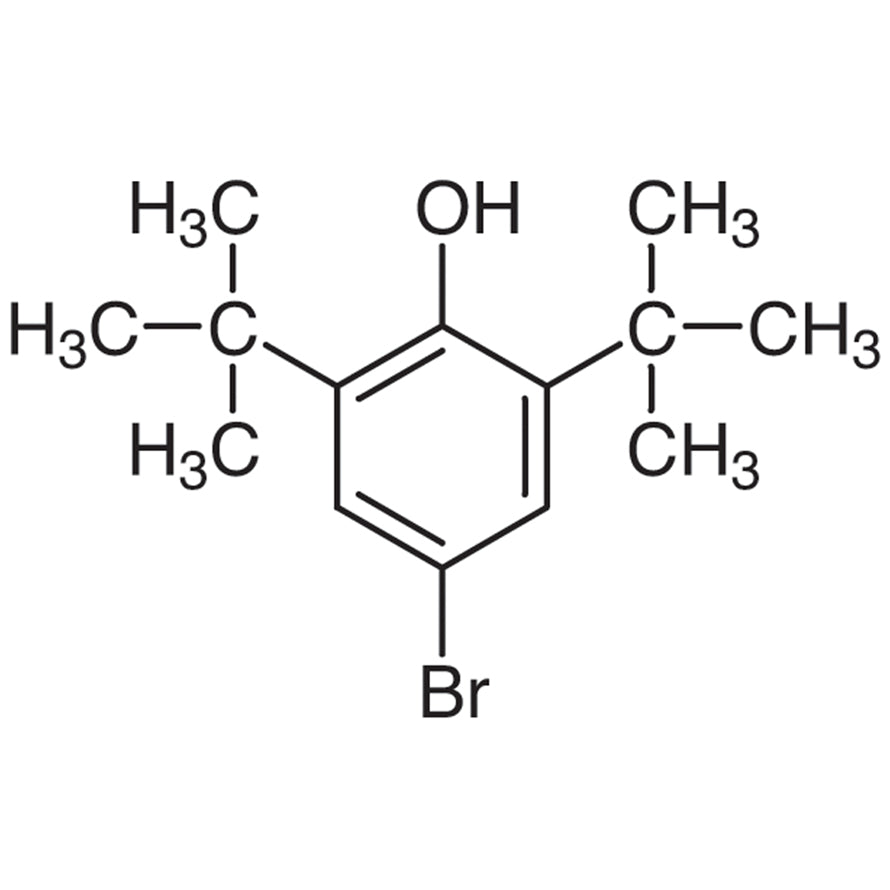
4-Bromo-2,6-di-tert-butylphenol is a chemical compound widely used in laboratory settings for the synthesis of complex organic molecules. As a building block in organic chemistry, it plays a crucial role in the development of new compounds through various reaction mechanisms. This material is commonly found in research laboratories, particularly in synthetic chemistry, where it serves as a versatile starting material for a range of chemical transformations. Its aromatic structure, combined with bromo and tert-butyl substituents, makes it a valuable component in the design of more intricate molecular frameworks.
The chemical properties of 4-Bromo-2,6-di-tert-butylphenol make it a preferred choice for laboratory applications. Its moderate solubility in organic solvents allows for ease of use in a variety of reaction conditions. The tert-butyl groups provide structural stability, reducing the likelihood of unwanted side reactions during synthesis. Additionally, the presence of the bromo group enables participation in substitution and electrophilic reactions, making it suitable for a wide range of chemical processes. These characteristics contribute to its reliability and effectiveness in laboratory environments.
In Indonesian laboratories, 4-Bromo-2,6-di-tert-butylphenol is commonly used in organic chemistry research. It is particularly useful in the synthesis of pharmaceuticals, agrochemicals, and specialty chemicals. Its availability and chemical versatility make it an essential reagent for researchers working on complex molecular structures. The compound is frequently utilized in both academic and industrial research settings, supporting the development of new compounds and materials.
- Organic synthesis is a primary application where this compound serves as a key building block for creating complex molecular structures.
- Pharmaceutical research benefits from its use in the development of new drug molecules due to its reactivity and structural versatility.
- Agrochemical formulation relies on this compound for the synthesis of pesticide and herbicide compounds with specific functional groups.
- Material science applications utilize it to create functional polymers and specialty chemicals with tailored properties.
- Analytical chemistry uses it as a standard reference material for chromatographic and spectroscopic analysis.
| Brand | TCI |
|---|---|
| CAS number | 1139-52-2 |
| Molecular formula | — |
| Purity | — |
| Category | Chemistry > Building Blocks > Non-Heterocyclic Building Blocks |
| Pack sizes | Available in various quantities as per standard laboratory supply |
| Physical form | Solid, typically in crystalline or powder form |
| Storage | Store in a cool, dry place away from light and moisture |
This compound should be stored in a cool, dry environment, away from direct light and moisture. It is recommended to use airtight containers to prevent exposure to air and humidity, which may affect its stability. As a brominated compound, it should be handled with care to avoid any potential chemical reactions with incompatible substances. Proper personal protective equipment, such as gloves and safety goggles, should be worn when handling this material. It is important to ensure good ventilation in the laboratory to minimize inhalation risks. The compound is not classified as hazardous under standard conditions but should still be treated with the usual precautions for chemical reagents.
—
Produk Terkait
-
4-Bromo-2-tert-butylphenol TCI B4315
Regular price From Rp 2.386.650,00Regular priceRp 1.668.450,00Sale price From Rp 2.386.650,00 -
2-Bromo-4-tert-butylphenol TCI B3763
Regular price From Rp 1.644.300,00Regular priceRp 1.149.750,00Sale price From Rp 1.644.300,00 -
4-sec-Butyl-2,6-di-tert-butylphenol TCI B2774
Regular price From Rp 557.550,00Regular priceRp 405.300,00Sale price From Rp 557.550,00 -
4-Butylphenol TCI B1026
Regular price From Rp 1.723.050,00Regular priceRp 1.220.100,00Sale price From Rp 1.723.050,00 -
2-tert-Butylphenol TCI B0734
Regular price Rp 505.050,00Regular priceRp 368.550,00Sale price Rp 505.050,00 -
4-sec-Butylphenol TCI B0733
Regular price From Rp 980.700,00Regular priceRp 701.400,00Sale price From Rp 980.700,00 -
2-sec-Butylphenol TCI B0732
Regular price From Rp 557.550,00Regular priceRp 405.300,00Sale price From Rp 557.550,00 -
3-tert-Butylphenol TCI B0731
Regular price From Rp 1.988.700,00Regular priceRp 1.405.950,00Sale price From Rp 1.988.700,00