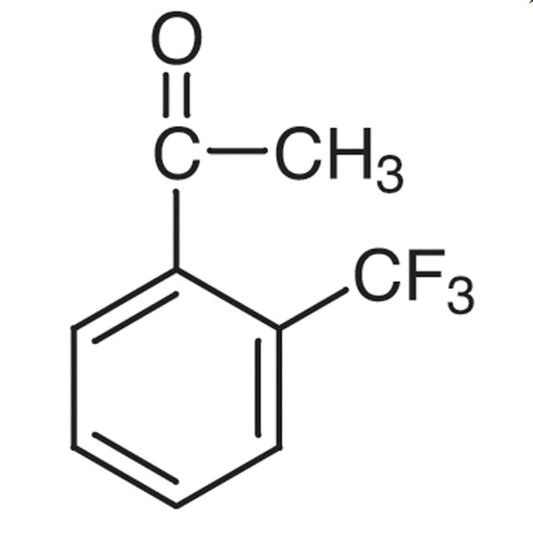
3',5'-Bis(trifluoromethyl)acetophenone is a chemical compound widely used as a building block in the synthesis of complex organic compounds. This versatile reagent plays a crucial role in laboratory settings where the construction of intricate molecular structures is required. Its unique molecular structure features two trifluoromethyl groups attached to the 3' and 5' positions of a phenyl ring, making it a valuable tool for chemists engaged in synthetic chemistry. The compound is commonly employed in substitution and structural modification reactions, contributing to the development of new materials and pharmaceuticals.
The compound’s preference stems from its stability under specific conditions and its ability to participate in a wide range of chemical reactions. The presence of the trifluoromethyl groups imparts unique electronic properties, making it highly sought after in the synthesis of compounds with specific functional characteristics. These groups enhance the reactivity and selectivity of the molecule, allowing it to be a key component in advanced synthetic strategies. Its controlled reactivity ensures that it remains a reliable and effective reagent in laboratory environments.
In Indonesian laboratories, this compound is extensively used in organic chemistry research, particularly in academic institutions and research centers. Its relevance is evident in the development of new chemical entities and the exploration of synthetic pathways. The compound’s utility in creating complex molecular architectures makes it a staple in both educational and industrial research settings. Its consistent performance and reliability make it a preferred choice among researchers in Indonesia.
Related TCI products
- TCI T2747 383-53-9 2-Bromo-4'-(trifluoromethyl)acetophenone
- TCI T1899 17408-14-9 2'-(Trifluoromethyl)acetophenone
- TCI T1784 709-63-7 4'-(Trifluoromethyl)acetophenone
- TCI T1546 349-76-8 3'-(Trifluoromethyl)acetophenone
- TCI B5213 537050-14-9 2-Bromo-4'-fluoro-3'-(trifluoromethyl)acetophenone
- TCI F0808 208173-24-4 4'-Fluoro-3'-(trifluoromethyl)acetophenone
- Organic synthesis is a primary application where this compound is used to construct complex molecular frameworks due to its reactivity and structural versatility.
- Pharmaceutical research benefits from its ability to introduce trifluoromethyl groups, enhancing the pharmacological properties of target molecules.
- Polymer science utilizes this compound to modify polymer structures, improving their thermal and chemical stability.
- Analytical chemistry employs it as a standard for calibrating instruments and testing reaction conditions due to its predictable behavior.
- Materials science incorporates it in the development of advanced materials with tailored electronic and physical properties.
| Brand | TCI |
|---|---|
| CAS number | 30071-93-3 |
| Molecular formula | — |
| Purity | — |
| Category | Chemistry > Building Blocks > Fluorinated Building Blocks |
| Pack sizes | Available in various quantities as per supplier specifications |
| Physical form | Solid or liquid, depending on supplier packaging |
| Storage | Store in a cool, dry place away from light and incompatible substances |
This compound should be stored in a cool, dry environment, away from direct sunlight and sources of heat. It is recommended to use airtight containers made of materials that are chemically inert, such as glass or high-density polyethylene. Proper labeling of storage containers is essential to ensure safe handling and prevent accidental exposure. Due to its chemical nature, it should be kept away from incompatible substances like strong bases or reducing agents. In laboratory settings, it is important to follow standard safety protocols, including the use of personal protective equipment when handling or transferring the compound. Regular inspections of storage areas should be conducted to maintain optimal conditions and ensure the integrity of the material.
—
Produk Terkait
-
2-Bromo-4'-(trifluoromethyl)acetophenone TCI T2747
Regular price From Rp 1.618.050,00Regular priceRp 1.146.600,00Sale price From Rp 1.618.050,00 -
2'-(Trifluoromethyl)acetophenone TCI T1899
Regular price Rp 1.431.150,00Regular priceRp 1.016.400,00Sale price Rp 1.431.150,00 -
4'-(Trifluoromethyl)acetophenone TCI T1784
Regular price From Rp 875.700,00Regular priceRp 627.900,00Sale price From Rp 875.700,00 -
3'-(Trifluoromethyl)acetophenone TCI T1546
Regular price From Rp 1.140.300,00Regular priceRp 812.700,00Sale price From Rp 1.140.300,00 -
2-Bromo-4'-fluoro-3'-(trifluoromethyl)acetophenone TCI B5213
Regular price From Rp 557.550,00Regular priceRp 405.300,00Sale price From Rp 557.550,00 -
4'-Fluoro-3'-(trifluoromethyl)acetophenone TCI F0808
Regular price From Rp 875.700,00Regular priceRp 627.900,00Sale price From Rp 875.700,00 -
2'-Chloro-5'-(trifluoromethyl)acetophenone TCI C3336
Regular price From Rp 530.250,00Regular priceRp 386.400,00Sale price From Rp 530.250,00 -
4'-Chloro-3'-(trifluoromethyl)acetophenone TCI C2821
Regular price Rp 1.246.350,00Regular priceRp 887.250,00Sale price Rp 1.246.350,00