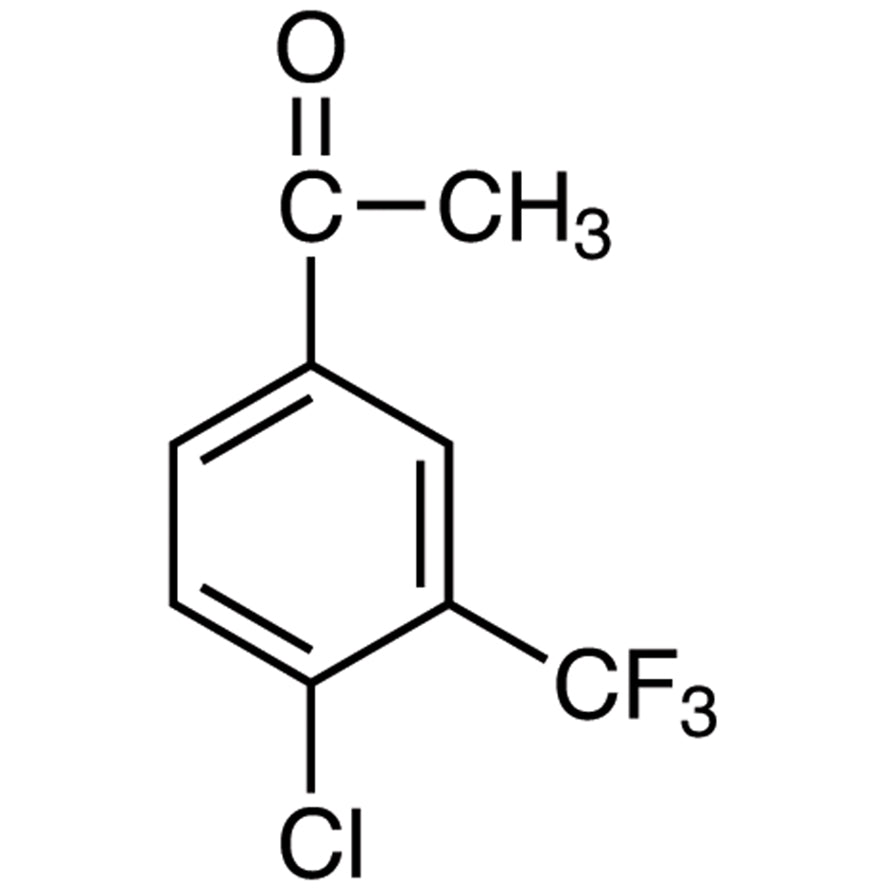
4'-Chloro-3'-(trifluoromethyl)acetophenone is an organic compound derived from acetophenone, featuring two significant substituents: a chlorine atom at the 4' position and a trifluoromethyl group at the 3' position of the aromatic ring. This compound plays a crucial role in modern organic synthesis, particularly in the development of complex molecular frameworks. Its unique structure makes it a valuable building block for researchers aiming to create molecules with specific biological activities. As a fluorinated compound, it is widely used in the synthesis of pharmaceuticals and agrochemicals due to its reactivity and functional group versatility.
The compound’s properties, including its electronegative trifluoromethyl group and the presence of a chlorine atom, make it a preferred choice for synthetic chemists. These substituents enable selective chemical reactions, such as nucleophilic substitution and carbon-carbon bond formation, which are essential in the design of target molecules. The combination of fluorine and chlorine atoms also enhances the molecule’s lipophilicity and stability, contributing to its effectiveness in various synthetic pathways. Its reactivity and functional versatility make it a key component in the development of new chemical entities.
In Indonesian laboratories, 4'-Chloro-3'-(trifluoromethyl)acetophenone is commonly used in research focused on drug discovery, material science, and environmental chemistry. Its role in creating complex molecular structures is vital for advancing scientific knowledge and developing innovative solutions. Researchers rely on this compound to explore new chemical reactions and synthesize compounds with potential applications in multiple fields.
TCI brochures (PDF)
- Fluorination Reagents, Fluorinated Building Blocks 2026-03-18 · p. 42
Related TCI products
- TCI T2747 383-53-9 2-Bromo-4'-(trifluoromethyl)acetophenone
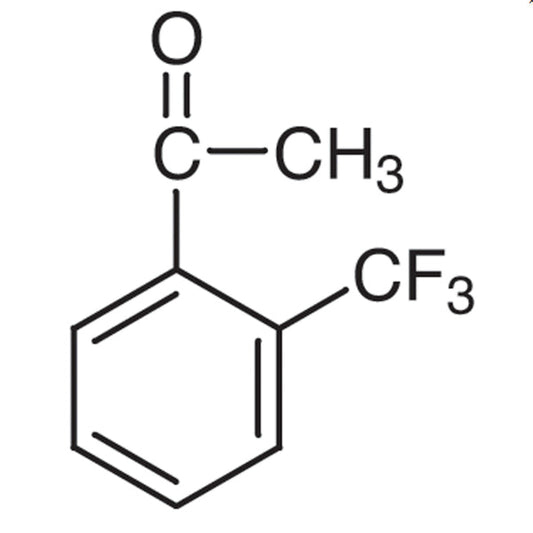
- TCI T1899 17408-14-9 2'-(Trifluoromethyl)acetophenone
- TCI T1784 709-63-7 4'-(Trifluoromethyl)acetophenone
- TCI T1546 349-76-8 3'-(Trifluoromethyl)acetophenone
- TCI B5213 537050-14-9 2-Bromo-4'-fluoro-3'-(trifluoromethyl)acetophenone
- TCI B1949 30071-93-3 3',5'-Bis(trifluoromethyl)acetophenone
- Used in pharmaceutical research for the synthesis of bioactive compounds due to its reactivity and functional group versatility.
- Applied in agrochemical development to create pesticides with enhanced stability and biological activity.
- Utilized in material science for the production of advanced polymers and coatings with specific chemical properties.
- Employed in environmental chemistry to study the behavior of fluorinated compounds in ecosystems.
- Integrated into organic synthesis workflows for the preparation of complex molecules with targeted functionalities.
| Brand | TCI |
|---|---|
| CAS number | 129825-11-2 |
| Molecular formula | — |
| Purity | — |
| Category | Chemistry > Building Blocks > Fluorinated Building Blocks |
| Pack sizes | Available in various quantities as per standard laboratory supply formats |
| Physical form | Solid or liquid, depending on the specific product variant |
| Storage | Store in a cool, dry place away from light and incompatible substances |
This compound should be stored in a cool, dry environment, away from direct sunlight and sources of heat. It is recommended to use airtight containers made of materials that are chemically inert to prevent degradation. Due to its fluorinated nature, it may react with strong oxidizing agents, so it should be kept separate from such substances. Proper personal protective equipment, including gloves and safety goggles, should be worn when handling the compound to ensure laboratory safety. Regular monitoring of storage conditions is essential to maintain the compound's integrity and effectiveness in research applications.
—
Produk Terkait
-
2-Bromo-4'-(trifluoromethyl)acetophenone TCI T2747
Regular price From Rp 1.618.050,00Regular priceRp 1.146.600,00Sale price From Rp 1.618.050,00 -
2'-(Trifluoromethyl)acetophenone TCI T1899
Regular price Rp 1.431.150,00Regular priceRp 1.016.400,00Sale price Rp 1.431.150,00 -
4'-(Trifluoromethyl)acetophenone TCI T1784
Regular price From Rp 875.700,00Regular priceRp 627.900,00Sale price From Rp 875.700,00 -
3'-(Trifluoromethyl)acetophenone TCI T1546
Regular price From Rp 1.140.300,00Regular priceRp 812.700,00Sale price From Rp 1.140.300,00 -
2-Bromo-4'-fluoro-3'-(trifluoromethyl)acetophenone TCI B5213
Regular price From Rp 557.550,00Regular priceRp 405.300,00Sale price From Rp 557.550,00 -
3',5'-Bis(trifluoromethyl)acetophenone TCI B1949
Regular price From Rp 955.500,00Regular priceRp 683.550,00Sale price From Rp 955.500,00 -
4'-Fluoro-3'-(trifluoromethyl)acetophenone TCI F0808
Regular price From Rp 875.700,00Regular priceRp 627.900,00Sale price From Rp 875.700,00 -
2'-Chloro-5'-(trifluoromethyl)acetophenone TCI C3336
Regular price From Rp 530.250,00Regular priceRp 386.400,00Sale price From Rp 530.250,00