Bis(3-ethyl-5-methyl-4-maleimidophenyl)methane is a chemical compound widely used in scientific and industrial applications, particularly in the fields of materials science and polymer chemistry. This compound serves as a key reagent in laboratory settings, where it plays a critical role in cross-linking reactions and the formation of stable polymer structures. Its unique molecular structure, consisting of two maleimid groups connected by a methylene chain, enables it to participate in strong covalent bonding, making it essential for the synthesis of advanced polymers and composites. Due to its reactivity and versatility, it is a valuable tool for researchers working on material development and chemical synthesis.
The compound is highly reactive, especially towards functional groups such as amines and hydroxyls, which allows it to form robust covalent bonds between molecules. This reactivity makes it an ideal choice for applications requiring strong and durable chemical linkages. Additionally, it exhibits good chemical stability under certain conditions, which enhances its usability in various laboratory environments. These properties make it a preferred choice for scientists and engineers engaged in polymer research and material innovation.
In Indonesian laboratories, Bis(3-ethyl-5-methyl-4-maleimidophenyl)methane is commonly used in research and development projects focused on new material creation. Its role in polymer synthesis and cross-linking applications supports advancements in materials science, contributing to the development of high-performance materials for industrial and scientific purposes.
TCI brochures (PDF)
- Monomers 2025-05-28 · p. 28
Related TCI products
- TCI B4807 79922-55-7 2,2-Bis[4-(4-maleimidophenoxy)phenyl]propane
- TCI T3896 160248-28-2 Tetrakis(4-carboxyphenyl)methane
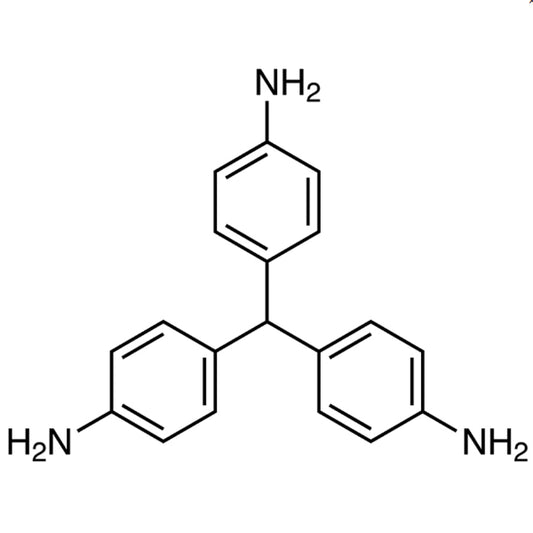
- TCI T3599 548-61-8 Tris(4-aminophenyl)methane
- TCI T3151 177991-01-4 Tetrakis(4-ethynylphenyl)methane
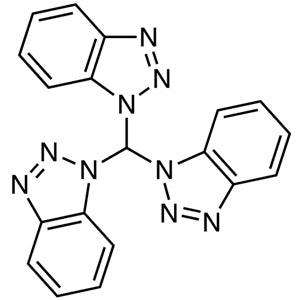
- TCI T3141 88088-95-3 Tris(1H-benzotriazol-1-yl)methane
- TCI T3026 80510-03-8 Tris(1-pyrazolyl)methane
- Cross-linking reactions in polymer synthesis due to its ability to form strong covalent bonds between molecular chains.
- Development of advanced composite materials by enabling stable chemical linkages between different components.
- Research in polymer chemistry for creating high-performance materials with enhanced mechanical properties.
- Synthesis of functional polymers requiring precise chemical bonding for specific applications.
- Investigation of material properties in academic and industrial research settings for innovation in polymer science.
| Brand | TCI |
|---|---|
| CAS number | 105391-33-1 |
| Molecular formula | — |
| Purity | — |
| Category | Materials Science > Polymer/Macromolecule Reagents > Monomers |
| Pack sizes | — |
| Physical form | — |
| Storage | Store in a cool, dry place away from light and moisture |
This compound should be stored in a cool, dry place, away from direct light and moisture to maintain its chemical stability. It is recommended to use airtight containers to prevent exposure to air and humidity, which could affect its reactivity. Due to its high reactivity, it should be handled with care, using appropriate personal protective equipment such as gloves and safety goggles. It is important to ensure proper ventilation in the laboratory to minimize inhalation risks. Always follow standard laboratory safety protocols when working with reactive chemicals to ensure a safe and controlled environment.
—
Product Categories
Produk Terkait
-
2,2-Bis[4-(4-maleimidophenoxy)phenyl]propane TCI B4807
Regular price From Rp 1.618.050,00Regular priceRp 1.146.600,00Sale price From Rp 1.618.050,00 -
Tetrakis(4-carboxyphenyl)methane TCI T3896
Regular price Rp 6.863.850,00Regular priceRp 4.799.550,00Sale price Rp 6.863.850,00 -
Tris(4-aminophenyl)methane TCI T3599
Regular price From Rp 3.710.700,00Regular priceRp 2.610.300,00Sale price From Rp 3.710.700,00 -
Tetrakis(4-ethynylphenyl)methane TCI T3151
Regular price Rp 3.976.350,00Regular priceRp 2.780.400,00Sale price Rp 3.976.350,00 -
Tris(1H-benzotriazol-1-yl)methane TCI T3141
Regular price From Rp 2.227.050,00Regular priceRp 1.572.900,00Sale price From Rp 2.227.050,00 -
Tris(1-pyrazolyl)methane TCI T3026
Regular price From Rp 4.399.500,00Regular priceRp 3.092.250,00Sale price From Rp 4.399.500,00 -
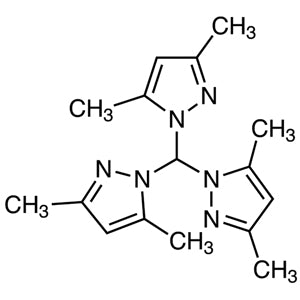
Tris(3,5-dimethyl-1-pyrazolyl)methane TCI T3025
Regular price From Rp 1.272.600,00Regular priceRp 905.100,00Sale price From Rp 1.272.600,00 -
Tetrakis(4-aminophenyl)methane TCI T2947
Regular price From Rp 1.908.900,00Regular priceRp 1.350.300,00Sale price From Rp 1.908.900,00