2,2-Bis[4-(4-maleimidophenoxy)phenyl]propane is a chemical compound widely used as a monomer in the synthesis of specialized polymers. This material plays a crucial role in polymer chemistry by participating in polymerization reactions that form complex polymer structures. Its presence is essential in the development of thermoplastic and composite polymers, contributing to the mechanical properties of the final products. As a key component in polymer science, it enables the creation of materials with tailored characteristics for various industrial applications.
The compound is known for its chemical stability and moderate reactivity, making it a preferred choice in controlled chemical reactions. Its molecular structure allows for the formation of strong covalent bonds, which enhance the strength and durability of the resulting materials. These properties make it suitable for applications where both stability and reactivity are required. The compound’s ability to form robust cross-linkages also contributes to the performance of materials in demanding environments.
In Indonesian laboratories, this compound is commonly used in research related to advanced materials and polymer science. It is particularly relevant in the development of composite materials and polymers with specific functional properties. Its use is widespread in both academic and industrial research settings, supporting innovation in material science and chemical engineering. The compound’s versatility and performance make it an essential reagent in the pursuit of new and improved material solutions.
TCI brochures (PDF)
- Monomers 2025-05-28 · p. 28
Related TCI products
- TCI B1971 105391-33-1 Bis(3-ethyl-5-methyl-4-maleimidophenyl)methane
- TCI B1796 1675-54-3 2,2-Bis(4-glycidyloxyphenyl)propane
- TCI B0494 80-05-7 2,2-Bis(4-hydroxyphenyl)propane
- TCI A3367 88992-91-0 3-[[2-(Acryloyloxy)ethyl]dimethylammonio]propane-1-sulfonate
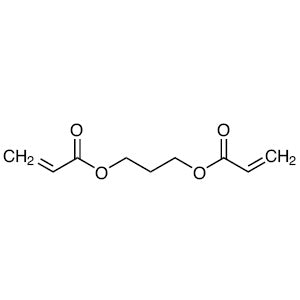
- TCI P2898 24493-53-6 Propane-1,3-diyl Diacrylate (stabilized with MEHQ)
- TCI M1971 3637-26-1 3-[[2-(Methacryloyloxy)ethyl]dimethylammonio]propane-1-sulfonate
- Polymer synthesis for thermoplastic and composite material development due to its ability to form strong covalent bonds.
- Research in advanced material science for creating polymers with tailored mechanical and chemical properties.
- Composite material fabrication where high strength and durability are required for industrial applications.
- Chemical reaction studies involving controlled polymerization processes for specialized polymer production.
- Industrial polymer development for applications requiring stability and reactivity in manufacturing processes.
| Brand | TCI |
|---|---|
| CAS number | 79922-55-7 |
| Molecular formula | — |
| Purity | — |
| Category | Materials Science > Polymer/Macromolecule Reagents > Monomers |
| Pack sizes | As available from supplier |
| Physical form | Solid (may vary depending on supplier) |
| Storage | Store in a cool, dry place away from direct sunlight |
This compound should be stored in a cool, dry environment, away from direct sunlight and sources of heat. It is recommended to use airtight containers to prevent moisture absorption and contamination. Due to its chemical nature, it should be handled with appropriate personal protective equipment, including gloves and safety goggles. Storage should be in a well-ventilated area to minimize exposure to vapors. Proper labeling of containers is essential for safe handling and to prevent accidental use. Always ensure that storage conditions comply with standard laboratory safety protocols to maintain the integrity and safety of the material.
—
Product Categories
Produk Terkait
-
Bis(3-ethyl-5-methyl-4-maleimidophenyl)methane TCI B1971
Regular price From Rp 1.881.600,00Regular priceRp 1.331.400,00Sale price From Rp 1.881.600,00 -
2,2-Bis(4-glycidyloxyphenyl)propane TCI B1796
Regular price From Rp 1.115.100,00Regular priceRp 779.100,00Sale price From Rp 1.115.100,00 -
2,2-Bis(4-hydroxyphenyl)propane TCI B0494
Regular price From Rp 477.750,00Regular priceRp 333.900,00Sale price From Rp 477.750,00 -
3-[[2-(Acryloyloxy)ethyl]dimethylammonio]propane-1-sulfonate TCI A3367
Regular price From Rp 4.161.150,00Regular priceRp 2.925.300,00Sale price From Rp 4.161.150,00 -
Propane-1,3-diylDiacrylate(stabilizedwithMEHQ) TCI P2898
Regular price From Rp 2.227.050,00Regular priceRp 1.557.150,00Sale price From Rp 2.227.050,00 -
3-[[2-(Methacryloyloxy)ethyl]dimethylammonio]propane-1-sulfonate TCI M1971
Regular price From Rp 900.900,00Regular priceRp 645.750,00Sale price From Rp 900.900,00 -
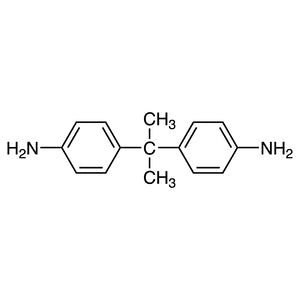
4,4'-(Propane-2,2-diyl)dianiline TCI B6743
Regular price Rp 3.153.150,00Regular priceRp 2.220.750,00Sale price Rp 3.153.150,00 -
Propane-2,2-diylbis(4,1-phenylene)Bis(1,3-dioxo-1,3-dihydroisobenzofuran-5-carboxylate) TCI B6612
Regular price From Rp 2.995.650,00Regular priceRp 2.094.750,00Sale price From Rp 2.995.650,00