4,4'-(Propane-2,2-diyl)dianiline from TCI, also known as 2,2-bis(4-aminophenyl)propane, is an aromatic diamine. Its structure has two aniline rings joined by an isopropylidene bridge. This resembles the bisphenol A skeleton, except that amino groups take the place of the hydroxyl groups. In the laboratory it serves as a bifunctional building block for organic synthesis, polymer chemistry and materials development. Its two primary amino groups let it act as a linker between two molecular units, so chemists use it to connect, extend or crosslink molecular frameworks.
The compound is useful because it pairs the rigidity of aromatic rings with a quaternary carbon bridge. That bridge adds a small degree of flexibility and affects how polymer chains pack together. Polyimide, polyamide and thermoset resin design often calls for this combination, because the monomer's structure largely sets properties of the final material such as solubility and thermal behaviour. Both aromatic amino groups can react with dianhydrides, diacyl chlorides, isocyanates, epoxides and aldehydes. This gives researchers a wide range of reactions, from polycondensation to Schiff base and ligand formation.
In Indonesia, this compound is useful to materials science and polymer research groups at universities, research institutes and industrial R&D laboratories. Researchers working on new polymers, high-performance resins or functional materials can use it as a well-defined diamine monomer for systematic structure–property studies. Synthetic and coordination chemistry laboratories may also use it as a starting material for Schiff bases and ligands. Its role as a non-heterocyclic building block makes it a practical addition to the reagent inventory of laboratories that carry out organic synthesis and materials development.
TCI brochures (PDF)
- Monomers 2025-05-28 · p. 33
Related TCI products
- TCI B6647 7479-12-1 4,4'-(Piperazine-1,4-diyl)dianiline
- TCI T3239 368-53-6 5-Trifluoromethyl-1,3-phenylenediamine
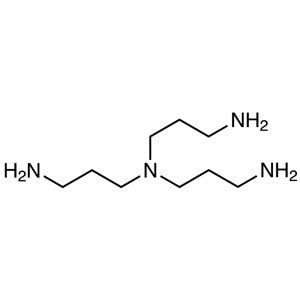
- TCI T1540 4963-47-7 Tris(3-aminopropyl)amine
- TCI T1457 3102-87-2 2,3,5,6-Tetramethyl-1,4-phenylenediamine
- TCI T1275 3102-70-3 2,4,6-Trimethyl-1,3-phenylenediamine
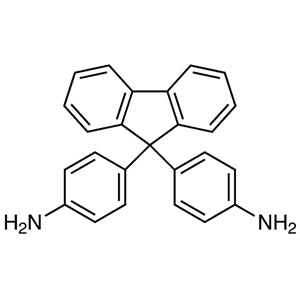
- TCI B2654 15499-84-0 9,9-Bis(4-aminophenyl)fluorene (purified by sublimation)
- Polyimide synthesis: the two aromatic amino groups react with dianhydrides, so the compound works as a diamine monomer for polyimides whose properties depend on the monomer structure.
- Polyamide preparation: reaction with diacyl chlorides lets researchers build polyamide chains whose rigid aromatic rings and quaternary carbon bridge affect chain packing and solubility.
- Thermoset and epoxy resin development: its primary amino groups can react with epoxides and isocyanates, so it suits studies of crosslinked thermoset networks and their thermal behaviour.
- Schiff base and ligand synthesis: condensation of both amino groups with aldehydes gives bis-imine Schiff bases and ligands for coordination chemistry and related research work.
- Bifunctional linker in organic synthesis: its two primary amino groups let chemists join two molecular units, which makes it a versatile non-heterocyclic building block for designing new materials.
| Brand | TCI (product code B6743) |
|---|---|
| CAS number | 2479-47-2 |
| Molecular formula | — |
| Purity | — |
| Category | Chemistry > Building Blocks > Non-Heterocyclic Building Blocks |
| Pack sizes | available pack sizes are listed on the product page |
| Physical form | see the TCI product documentation and certificate of analysis |
| Storage | follow the storage conditions on the TCI label and Safety Data Sheet |
Store this aromatic diamine in its original, tightly closed container in a cool, dry and well-ventilated place, away from light, heat, moisture and strong oxidising agents. Keep it apart from reactive substances such as acid chlorides, anhydrides and isocyanates, which react with amino groups. Handle it only in a fume hood or a well-ventilated area, and wear suitable gloves, safety glasses and a laboratory coat. Avoid breathing dust and avoid contact with skin or eyes. Always check the current Safety Data Sheet for hazard classification, first-aid measures and disposal requirements before use. Dispose of waste according to local regulations and your institution's procedures.
—
Produk Terkait
-
4,4'-(Piperazine-1,4-diyl)dianiline TCI B6647
Regular price From Rp 2.411.850,00Regular priceRp 1.702.050,00Sale price From Rp 2.411.850,00 -
5-Trifluoromethyl-1,3-phenylenediamine TCI T3239
Regular price Rp 1.326.150,00Regular priceRp 942.900,00Sale price Rp 1.326.150,00 -
Tris(3-aminopropyl)amine TCI T1540
Regular price From Rp 6.599.250,00Regular priceRp 4.614.750,00Sale price From Rp 6.599.250,00 -
2,3,5,6-Tetramethyl-1,4-phenylenediamine TCI T1457
Regular price From Rp 1.934.100,00Regular priceRp 1.368.150,00Sale price From Rp 1.934.100,00 -
2,4,6-Trimethyl-1,3-phenylenediamine TCI T1275
Regular price From Rp 3.658.200,00Regular priceRp 2.573.550,00Sale price From Rp 3.658.200,00 -
9,9-Bis(4-aminophenyl)fluorene(purifiedbysublimation) TCI B2654
Regular price Rp 2.650.200,00Regular priceRp 1.869.000,00Sale price Rp 2.650.200,00 -
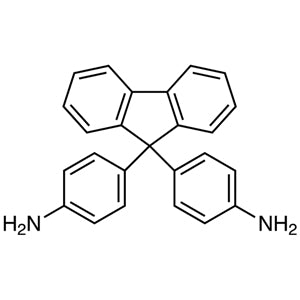
9,9-Bis(4-aminophenyl)fluorene TCI B1549
Regular price From Rp 3.365.250,00Regular priceRp 2.368.800,00Sale price From Rp 3.365.250,00 -
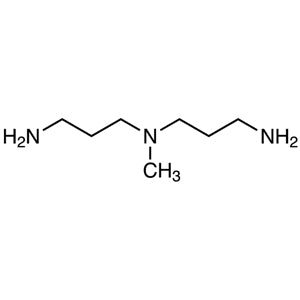
3,3'-Diamino-N-methyldipropylamine TCI B0821
Regular price From Rp 477.750,00Regular priceRp 333.900,00Sale price From Rp 477.750,00