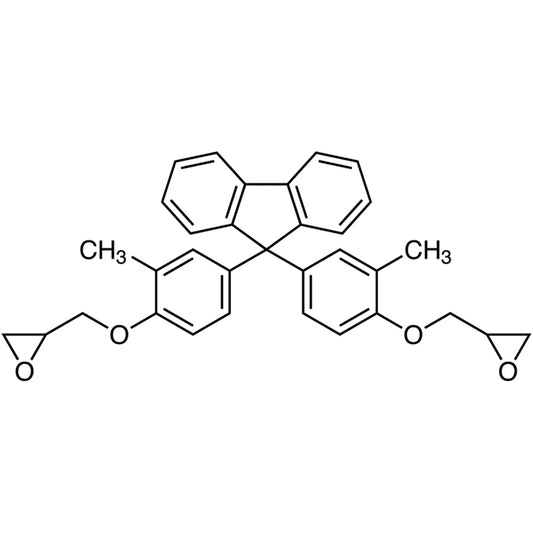
2,2-Bis(4-glycidyloxyphenyl)propane is a chemical compound widely used as a building block in the synthesis of heterocyclic compounds. It plays a crucial role in laboratory settings where the development of complex molecular structures is required. Its unique epoxide groups enable it to react with various substrates, making it a versatile reagent in organic chemistry. This compound is essential for creating polymers, resins, and other chemical substances with specific functional properties. Its ability to form stable molecular bonds contributes to its importance in chemical research and industrial applications.
The compound's high reactivity and stable molecular structure make it a preferred choice for chemical synthesis. The presence of epoxide groups allows for a wide range of chemical transformations, enhancing its utility in laboratory experiments. Its compatibility with multiple substrates and its ability to form complex molecules with specific functions further solidify its position as a key reagent. The compound's reliability and consistent performance ensure that it is a trusted material in both academic and industrial research environments.
In Indonesian laboratories, 2,2-Bis(4-glycidyloxyphenyl)propane is commonly used in organic chemistry research, the development of new materials, and the production of chemical compounds for industrial applications. Its reactivity and versatility make it a preferred choice for researchers working on polymer science, resin formulation, and advanced chemical synthesis. Its widespread use in these contexts highlights its importance in supporting scientific innovation and technological advancement.
TCI brochures (PDF)
- Epoxide Monomers 2025-09-19 · p. 2
- Monomers 2025-05-28 · p. 20
Related TCI products
- TCI B4269 47758-37-2 9,9-Bis(4-glycidyloxyphenyl)fluorene
- TCI B4666 114205-89-9 9,9-Bis(4-glycidyloxy-3-methylphenyl)fluorene
- TCI G0296 51997-51-4 4-Glycidyloxycarbazole
- TCI N0448 17557-23-2 Neopentyl Glycol Diglycidyl Ether
- TCI T4294 63666-10-4 3-(1,1,2-Trimethyl-1H-benzo[e]indol-3-ium-3-yl)propane-1-sulfonate
- TCI B2108 2930-05-4 Benzyl Glycidyl Ether
- Organic chemistry research where complex molecular structures are synthesized using epoxide-functional compounds.
- Development of new materials such as polymers and resins that require reactive functional groups for cross-linking.
- Industrial chemical synthesis processes that rely on stable and reactive building blocks for producing high-performance compounds.
- Polymer science experiments involving the creation of thermosetting resins and composite materials.
- Advanced chemical synthesis projects requiring versatile reagents capable of forming multiple molecular bonds.
| Brand | TCI |
|---|---|
| CAS number | 1675-54-3 |
| Molecular formula | — |
| Purity | — |
| Category | Chemistry > Building Blocks > Heterocyclic Building Blocks |
| Pack sizes | — |
| Physical form | — |
| Storage | Store in a cool, dry place away from moisture and direct sunlight. |
This compound should be stored in a cool, dry environment to maintain its chemical integrity and prevent degradation. It is recommended to keep it in a sealed container to avoid exposure to moisture and air, which can affect its reactivity. Proper ventilation is essential when handling the material to minimize inhalation risks. Due to its reactive nature, it should be stored away from incompatible substances such as strong acids or bases. Laboratory personnel should wear appropriate personal protective equipment, including gloves and safety goggles, when working with this compound. Regular monitoring of storage conditions ensures the material remains safe and effective for use in chemical experiments.
—
Produk Terkait
-
9,9-Bis(4-glycidyloxyphenyl)fluorene TCI B4269
Regular price From Rp 1.035.300,00Regular priceRp 723.450,00Sale price From Rp 1.035.300,00 -
9,9-Bis(4-glycidyloxy-3-methylphenyl)fluorene TCI B4666
Regular price From Rp 2.518.950,00Regular priceRp 1.760.850,00Sale price From Rp 2.518.950,00 -
4-Glycidyloxycarbazole TCI G0296
Regular price From Rp 1.696.800,00Regular priceRp 1.202.250,00Sale price From Rp 1.696.800,00 -
NeopentylGlycolDiglycidylEther TCI N0448
Regular price From Rp 955.500,00Regular priceRp 667.800,00Sale price From Rp 955.500,00 -
3-(1,1,2-Trimethyl-1H-benzo[e]indol-3-ium-3-yl)propane-1-sulfonate TCI T4294
Regular price From Rp 557.550,00Regular priceRp 405.300,00Sale price From Rp 557.550,00 -
BenzylGlycidylEther TCI B2108
Regular price From Rp 1.510.950,00Regular priceRp 1.056.300,00Sale price From Rp 1.510.950,00 -
AllylGlycidylEther TCI A0221
Regular price From Rp 477.750,00Regular priceRp 333.900,00Sale price From Rp 477.750,00 -
3-(Oxiran-2-yl)-7-oxabicyclo[410]heptane(mixtureofisomers) TCI V0195
Regular price From Rp 3.870.300,00Regular priceRp 2.705.850,00Sale price From Rp 3.870.300,00