Bis(2,4-pentanedionato)palladium(II), also known as TCI B2018, is a chemical compound widely used as a catalyst in laboratory settings, particularly in C-H activation reactions. This compound plays a crucial role in modern chemical synthesis by enabling efficient and selective reactions. Its ability to accelerate chemical processes without being consumed makes it a valuable tool for researchers. In the laboratory, it is commonly employed in the development of complex organic molecules, where precise control over reaction pathways is essential. Due to its high reactivity and stability, it is a preferred choice for various catalytic applications.
The compound's unique chemical properties, including its high reactivity and structural complexity, make it a preferred choice in catalytic processes. Its ability to interact with a wide range of substrates allows for versatile applications in chemical reactions. The stability of the compound under various reaction conditions ensures consistent performance, making it reliable for repeated use in laboratory experiments. Additionally, its specificity in catalytic activity allows for precise control over reaction outcomes, which is critical in advanced chemical research. These characteristics contribute to its widespread use in both academic and industrial chemical laboratories.
In Indonesian laboratories, Bis(2,4-pentanedionato)palladium(II) is commonly used in chemical research, especially in catalysis and organic synthesis. It is a key component in experiments that require efficient and selective chemical transformations. Many research institutions and universities in Indonesia rely on this compound for its effectiveness in promoting complex chemical reactions. Its application in C-H activation has made it an essential tool for researchers working on innovative chemical processes and drug development.
TCI brochures (PDF)
- Palladium Catalysts for Cross-Coupling Reaction 2025-05-01 · p. 1
- C-H Bond Activation Reaction 2025-06-20 · p. 4
- Transition Metal Catalysts 2026-04-10 · p. 13
- Suzuki-Miyaura Cross Coupling Reaction 2025-12-01 · p. 23
Related TCI products
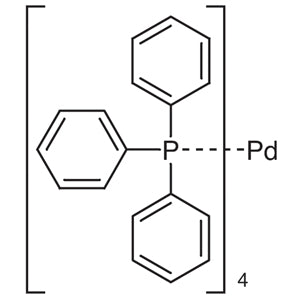
- TCI T1350 14221-01-3 Tetrakis(triphenylphosphine)palladium(0)
- TCI B3160 95408-45-0 [1,1'-Bis(di-tert-butylphosphino)ferrocene]palladium(II) Dichloride
- TCI B2064 95464-05-4 [1,1'-Bis(diphenylphosphino)ferrocene]palladium(II) Dichloride Dichloromethane Adduct
- TCI B2055 29934-17-6 Bis(tricyclohexylphosphine)palladium(II) Dichloride
- TCI B2042 14588-08-0 Bis(triphenylphosphine)palladium(II) Diacetate
- TCI B2026 40691-33-6 Bis(tri-o-tolylphosphine)palladium(II) Dichloride
- C-H Activation Reactions: This compound is ideal for C-H activation due to its ability to facilitate selective bond cleavage and formation, making it essential for synthetic organic chemistry.
- Organic Synthesis: It is widely used in the synthesis of complex organic molecules, where precise control over reaction conditions is crucial for achieving desired products.
- Catalytic Processes: Its high reactivity and stability make it a preferred catalyst in various industrial and academic chemical processes, enhancing reaction efficiency.
- Research and Development: Laboratories use this compound to explore new catalytic mechanisms and improve existing chemical processes for better yields and selectivity.
- Drug Development: Its role in promoting selective chemical transformations is vital in the development of new pharmaceutical compounds and therapeutic agents.
| Brand | TCI |
|---|---|
| CAS number | 14024-61-4 |
| Molecular formula | — |
| Purity | — |
| Category | Chemistry > Catalysis and Inorganic Chemistry > C-H Activation [Catalysis] |
| Pack sizes | Available in various quantities as per supplier specifications |
| Physical form | Solid, typically in powder or crystalline form |
| Storage | Store in a cool, dry place away from moisture and direct sunlight |
This compound should be stored in a cool, dry environment to maintain its chemical stability and reactivity. It is recommended to use airtight containers to prevent exposure to moisture and air, which can affect its performance. Proper labeling of storage containers is essential to ensure safe handling and prevent accidental use. Laboratory personnel should wear appropriate personal protective equipment, such as gloves and safety goggles, when handling this material. It should be kept away from incompatible substances to avoid any potential chemical reactions. Regular inspection of storage conditions ensures the compound remains in optimal condition for use in research applications.
—
Product Categories
- Catalysis and Inorganic ChemistryC-H Activation [Catalysis]Palladium Compounds [C-H Activation]
- Catalysis and Inorganic ChemistryTransition Elements [Catalysis and Inorganic Chemistry]Palladium [Catalysis and Inorganic Chemistry]
- Catalysis and Inorganic ChemistryCross-coupling Reaction using Transition Metal Catalysts [C-C Bond Formation]Palladium Catalysts [Cross-coupling Reaction using Transition Metal Catalysts]
- Synthetic ReagentsC-C Bond Formation [Synthetic Reagents]Cross-coupling Reaction using Transition Metal Catalysts [C-C Bond Formation]
Produk Terkait
-
Tetrakis(triphenylphosphine)palladium(0) TCI T1350
Regular price From Rp 1.458.450,00Regular priceRp 1.035.300,00Sale price From Rp 1.458.450,00 -
[1,1'-Bis(di-tert-butylphosphino)ferrocene]palladium(II)Dichloride TCI B3160
Regular price From Rp 6.811.350,00Regular priceRp 4.778.550,00Sale price From Rp 6.811.350,00 -
[1,1'-Bis(diphenylphosphino)ferrocene]palladium(II)DichlorideDichloromethaneAdduct TCI B2064
Regular price From Rp 2.121.000,00Regular priceRp 1.498.350,00Sale price From Rp 2.121.000,00 -
Bis(tricyclohexylphosphine)palladium(II)Dichloride TCI B2055
Regular price From Rp 2.199.750,00Regular priceRp 1.554.000,00Sale price From Rp 2.199.750,00 -
Bis(triphenylphosphine)palladium(II)Diacetate TCI B2042
Regular price From Rp 2.942.100,00Regular priceRp 2.072.700,00Sale price From Rp 2.942.100,00 -
Bis(tri-o-tolylphosphine)palladium(II)Dichloride TCI B2026
Regular price From Rp 2.121.000,00Regular priceRp 1.498.350,00Sale price From Rp 2.121.000,00 -
[1,2-Bis(diphenylphosphino)ethane]palladium(II)Dichloride TCI B2016
Regular price From Rp 2.121.000,00Regular priceRp 1.498.350,00Sale price From Rp 2.121.000,00 -
Bis(acetonitrile)palladium(II)Dichloride TCI B1676
Regular price Rp 2.782.500,00Regular priceRp 1.961.400,00Sale price Rp 2.782.500,00