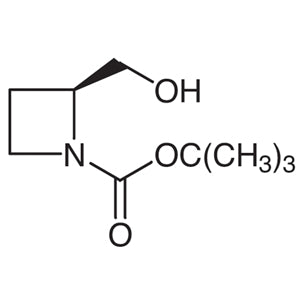
(S)-1-(tert-Butoxycarbonyl)-2-azetidinemethanol is a chiral building block widely used in asymmetric synthesis to construct complex molecular structures. This compound plays a critical role in chemical laboratories, particularly in research focused on bioactive compounds. Its unique azetidine ring structure enables specific chemical reactions, making it essential for the development of pharmaceuticals and organic chemicals. Due to its structural features, it is a key component in the synthesis of enantiomerically pure compounds, which are vital in the pharmaceutical and medical research sectors.
The compound’s tert-butoxycarbonyl group enhances its chemical stability and facilitates reaction processes, making it a preferred choice for synthetic chemists. Its asymmetric nature allows for enantioselective synthesis, a process crucial for creating drugs with high efficacy and minimal side effects. Additionally, the reactivity of the azetidine ring enables a variety of chemical transformations, such as bond formation and substitution reactions. These properties make it highly versatile and valuable in both academic and industrial research settings.
In Indonesian laboratories, this compound is commonly used in chemical research, especially in asymmetric synthesis and the development of new compounds. It is frequently employed in pharmaceutical and medical research to explore the reactivity of molecules and their applications in drug development. Many research institutions and universities in Indonesia rely on this compound to advance their understanding of molecular behavior and its implications in various scientific fields.
TCI brochures (PDF)
- Chiral Building Blocks 2025-04-14 · p. 5
Related TCI products
- TCI B2174 161511-90-6 (R)-1-(tert-Butoxycarbonyl)-2-azetidinemethanol
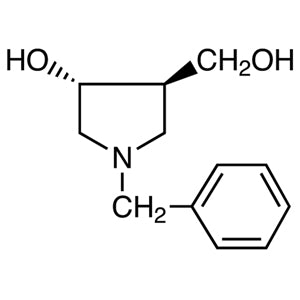
- TCI H1200 253129-03-2 (3R,4R)-1-Benzyl-4-hydroxy-3-pyrrolidinemethanol
- TCI B3992 142253-56-3 1-(tert-Butoxycarbonyl)-3-azetidinemethanol
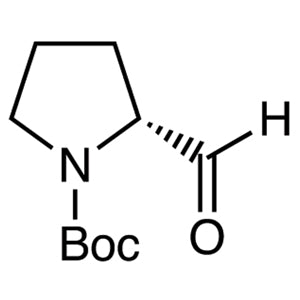
- TCI B5395 73365-02-3 N-(tert-Butoxycarbonyl)-D-prolinal
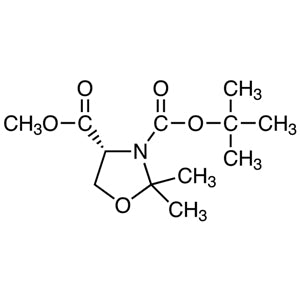
- TCI B5352 95715-86-9 (R)-(+)-3-(tert-Butoxycarbonyl)-4-methoxycarbonyl-2,2-dimethyl-1,3-oxazolidine
- TCI B4846 169447-70-5 (S)-1-(tert-Butoxycarbonyl)-2-methylpiperazine
- Asymmetric Synthesis: This compound is ideal for creating enantiomerically pure compounds, essential in pharmaceutical research for drug development.
- Organic Chemistry Research: Its reactive azetidine ring and stable tert-butoxycarbonyl group make it a valuable tool for exploring new chemical reactions and molecular structures.
- Bioactive Compound Development: The compound is used to synthesize compounds with biological activity, supporting research into potential therapeutic agents.
- Medicinal Chemistry Studies: Its structural versatility allows for the design of complex molecules with specific pharmacological properties.
- Academic Research: Widely used in Indonesian universities for teaching and research in synthetic chemistry and molecular biology.
| Brand | TCI |
|---|---|
| CAS number | 161511-85-9 |
| Molecular formula | — |
| Purity | — |
| Category | Chemistry > Asymmetric Synthesis > Chiral Building Blocks |
| Pack sizes | Available in various quantities as per supplier specifications |
| Physical form | Solid or liquid, depending on the specific product variant |
| Storage | Store in a cool, dry place away from moisture and direct sunlight |
This compound should be stored in a cool, dry environment to maintain its chemical stability. It is recommended to use airtight containers to prevent exposure to moisture and air, which could affect its reactivity. Due to its potential chemical reactivity, it should be handled in a well-ventilated laboratory setting, ideally with appropriate personal protective equipment. Avoid contact with incompatible substances to ensure safety during storage and use. Proper labeling of containers is essential for safe handling and to prevent accidental exposure. Regular inspection of storage conditions is advised to maintain optimal stability and usability of the compound.
—
Produk Terkait
-
(R)-1-(tert-Butoxycarbonyl)-2-azetidinemethanol TCI B2174
Regular price From Rp 3.524.850,00Regular priceRp 2.480.100,00Sale price From Rp 3.524.850,00 -
(3R,4R)-1-Benzyl-4-hydroxy-3-pyrrolidinemethanol TCI H1200
Regular price Rp 6.067.950,00Regular priceRp 4.258.800,00Sale price Rp 6.067.950,00 -
1-(tert-Butoxycarbonyl)-3-azetidinemethanol TCI B3992
Regular price Rp 2.279.550,00Regular priceRp 1.609.650,00Sale price Rp 2.279.550,00 -
N-(tert-Butoxycarbonyl)-D-prolinal TCI B5395
Regular price Rp 1.934.100,00Regular priceRp 1.368.150,00Sale price Rp 1.934.100,00 -
(R)-(+)-3-(tert-Butoxycarbonyl)-4-methoxycarbonyl-2,2-dimethyl-1,3-oxazolidine TCI B5352
Regular price From Rp 1.643.250,00Regular priceRp 1.164.450,00Sale price From Rp 1.643.250,00 -
(S)-1-(tert-Butoxycarbonyl)-2-methylpiperazine TCI B4846
Regular price From Rp 1.749.300,00Regular priceRp 1.239.000,00Sale price From Rp 1.749.300,00 -
Nalpha-(tert-Butoxycarbonyl)-L-tryptophanol TCI B4287
Regular price From Rp 1.008.000,00Regular priceRp 720.300,00Sale price From Rp 1.008.000,00 -
(4S,5R)-3-(tert-Butoxycarbonyl)-2,2-dimethyl-4-phenyl-1,3-oxazolidine-5-carboxylicAcid TCI B4127
Regular price Rp 2.147.250,00Regular priceRp 1.517.250,00Sale price Rp 2.147.250,00