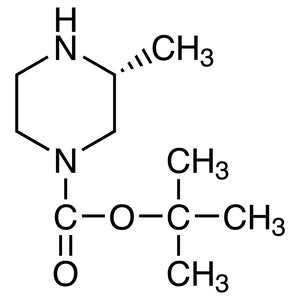
(S)-1-(tert-Butoxycarbonyl)-2-methylpiperazine is a chiral building block widely used in asymmetric synthesis to construct molecules with specific biological activities. This compound plays a critical role in organic chemistry laboratories, particularly in pharmaceutical research, where the stereochemistry of a molecule can significantly influence its pharmacological properties. As a key intermediate, it enables chemists to explore the impact of spatial configuration on molecular behavior, making it essential for the development of bioactive compounds. Its unique structure and functional groups make it a versatile tool for synthetic chemists aiming to create complex molecules with precise stereochemical control.
The compound's modified piperazine ring, attached to a tert-butoxycarbonyl (Boc) group, provides stability and reactivity, allowing for controlled chemical transformations. This structural feature enhances its utility in synthetic pathways, offering chemists greater flexibility in designing and optimizing reaction conditions. Additionally, its crystalline form and stability under specific conditions make it easy to handle and store, ensuring consistent performance in laboratory settings. These properties collectively make it a preferred choice for researchers working in asymmetric synthesis and drug development.
In Indonesian laboratories, this compound is commonly used in organic chemistry research, especially in the development of bioactive compounds. It is a key component in studies related to pharmacology and medicinal chemistry, where the ability to control stereochemistry is crucial. Many research institutions and universities in Indonesia rely on this compound to advance their understanding of asymmetric synthesis and its applications in pharmaceutical science.
TCI brochures (PDF)
- Chiral Building Blocks 2025-04-14 · p. 4
Related TCI products
- TCI M3462 163765-44-4 (R)-1-Boc-3-methylpiperazine
- TCI M2091 75336-86-6 (R)-(-)-2-Methylpiperazine
- TCI M1424 74879-18-8 (S)-(+)-2-Methylpiperazine
- TCI D6010 147081-29-6 (S)-1-Boc-3-methylpiperazine
- TCI B6400 170033-47-3 tert-Butyl (R)-2-Methylpiperazine-1-carboxylate
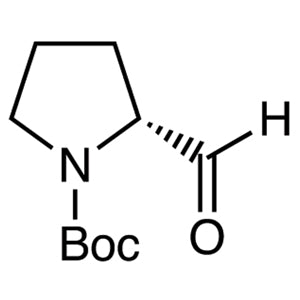
- TCI B5395 73365-02-3 N-(tert-Butoxycarbonyl)-D-prolinal
- Asymmetric synthesis is a key application where this compound is used to create chiral molecules with specific stereochemical configurations, essential for drug development and bioactive compound research.
- Pharmaceutical research benefits from this compound's ability to influence molecular behavior through stereochemistry, making it valuable for designing new therapeutic agents.
- Organic chemistry experiments often utilize this compound as a chiral building block to explore the effects of spatial configuration on molecular reactivity and stability.
- Drug development projects rely on this compound to synthesize compounds with desired biological activities, leveraging its structural versatility in synthetic pathways.
- Bioactive compound synthesis is enhanced by the compound's controlled reactivity, allowing for the creation of molecules with specific pharmacological properties.
| Brand | TCI |
|---|---|
| CAS number | 169447-70-5 |
| Molecular formula | — |
| Purity | — |
| Category | Chemistry > Asymmetric Synthesis > Chiral Building Blocks |
| Pack sizes | Available in various quantities as per standard laboratory requirements |
| Physical form | Crystalline solid |
| Storage | Store in a cool, dry place away from direct sunlight and moisture |
This compound should be stored in a cool, dry environment to maintain its stability and prevent degradation. It is recommended to keep it in a tightly sealed container to avoid exposure to moisture and air, which can affect its chemical integrity. Proper labeling of storage containers is essential for safe handling and identification. Laboratory personnel should wear appropriate personal protective equipment, such as gloves and safety goggles, when handling the compound to ensure safety. Due to its chemical nature, it should be stored away from incompatible substances to prevent any potential reactions. Regular monitoring of storage conditions ensures the compound remains suitable for use in research applications.
—
Produk Terkait
-
(R)-1-Boc-3-methylpiperazine TCI M3462
Regular price From Rp 1.246.350,00Regular priceRp 887.250,00Sale price From Rp 1.246.350,00 -
(R)-(-)-2-Methylpiperazine TCI M2091
Regular price Rp 1.192.800,00Regular priceRp 849.450,00Sale price Rp 1.192.800,00 -
(S)-(+)-2-Methylpiperazine TCI M1424
Regular price From Rp 795.900,00Regular priceRp 572.250,00Sale price From Rp 795.900,00 -
(S)-1-Boc-3-methylpiperazine TCI D6010
Regular price From Rp 1.326.150,00Regular priceRp 942.900,00Sale price From Rp 1.326.150,00 -
tert-Butyl(R)-2-Methylpiperazine-1-carboxylate TCI B6400
Regular price From Rp 1.113.000,00Regular priceRp 793.800,00Sale price From Rp 1.113.000,00 -
N-(tert-Butoxycarbonyl)-D-prolinal TCI B5395
Regular price Rp 1.934.100,00Regular priceRp 1.368.150,00Sale price Rp 1.934.100,00 -
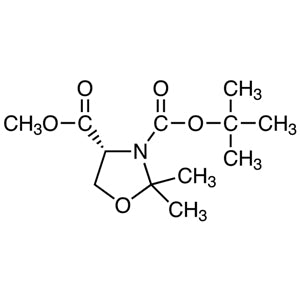
(R)-(+)-3-(tert-Butoxycarbonyl)-4-methoxycarbonyl-2,2-dimethyl-1,3-oxazolidine TCI B5352
Regular price From Rp 1.643.250,00Regular priceRp 1.164.450,00Sale price From Rp 1.643.250,00 -
Nalpha-(tert-Butoxycarbonyl)-L-tryptophanol TCI B4287
Regular price From Rp 1.008.000,00Regular priceRp 720.300,00Sale price From Rp 1.008.000,00