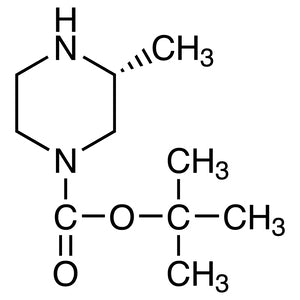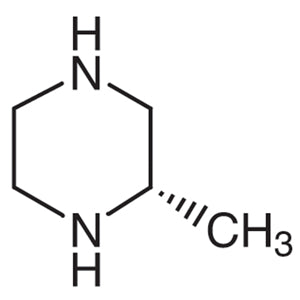
(S)-(+)-2-Methylpiperazine is a chiral building block widely used in asymmetric synthesis, playing a crucial role in the development of complex organic molecules. This compound is essential for researchers working in pharmaceutical and organic chemistry, as it enables the creation of enantiomerically pure compounds. Its application spans various areas, including drug discovery and the synthesis of bioactive molecules. Due to its stereochemical properties, it is particularly valuable in the preparation of chiral intermediates that are critical for the synthesis of pharmaceuticals. The compound's unique structure allows for selective reactions, making it a preferred choice in modern synthetic strategies.
One of the key characteristics that make (S)-(+)-2-Methylpiperazine a preferred choice is its high chiral purity, which ensures consistent results in synthetic processes. Its stability under standard laboratory conditions also contributes to its reliability in various chemical reactions. The compound is known for its solubility in common organic solvents, which facilitates its use in a wide range of synthetic protocols. Additionally, its well-defined stereochemistry allows for precise control over the stereochemical outcome of reactions, making it an indispensable tool for chemists aiming to produce enantiomerically pure compounds.
In Indonesian laboratories, (S)-(+)-2-Methylpiperazine is commonly used in academic and industrial research settings. It is particularly relevant in pharmaceutical research, where the development of new drugs requires the synthesis of chiral compounds. Its application supports both basic and applied research, contributing to advancements in organic chemistry and medicinal chemistry. As a key reagent in asymmetric synthesis, it is widely utilized in laboratories across Indonesia for its reliability and effectiveness in producing complex molecules.
TCI brochures (PDF)
- Chiral Building Blocks 2025-04-14 · p. 4
Related TCI products
- TCI B4846 169447-70-5 (S)-1-(tert-Butoxycarbonyl)-2-methylpiperazine
- TCI M3462 163765-44-4 (R)-1-Boc-3-methylpiperazine
- TCI M2091 75336-86-6 (R)-(-)-2-Methylpiperazine
- TCI D6010 147081-29-6 (S)-1-Boc-3-methylpiperazine
- TCI B6400 170033-47-3 tert-Butyl (R)-2-Methylpiperazine-1-carboxylate
- TCI A3772 4572-03-6 3-(4-Methylpiperazin-1-yl)propan-1-amine
- Asymmetric synthesis is a key application where this compound is used to produce enantiomerically pure compounds, essential for pharmaceutical research.
- Chiral intermediate preparation benefits from its stereochemical properties, allowing for the synthesis of complex molecules with high enantiomeric purity.
- Drug discovery processes rely on this compound to create chiral compounds that are critical in the development of new therapeutic agents.
- Organic chemistry research utilizes it for the synthesis of bioactive molecules, supporting studies on molecular structure and biological activity.
- Bioactive compound testing involves using this material to evaluate the biological activity of complex organic molecules in various assays.
| Brand | TCI |
|---|---|
| CAS number | 74879-18-8 |
| Molecular formula | — |
| Purity | — |
| Category | Chemistry > Asymmetric Synthesis > Chiral Building Blocks |
| Pack sizes | Available in various quantities as per supplier specifications |
| Physical form | Solid or liquid, depending on the specific product variant |
| Storage | — |
This compound should be stored in a cool, dry place away from direct sunlight and moisture. It is recommended to use airtight containers to prevent exposure to air and humidity, which may affect its stability. Proper labeling of containers is essential to ensure safe handling and prevent cross-contamination. In laboratory settings, it is important to follow standard safety protocols, including the use of personal protective equipment when handling. Due to its chemical nature, it should be stored separately from incompatible substances to avoid any potential reactions. Regular monitoring of storage conditions helps maintain the integrity and effectiveness of the compound during its use.
—
Produk Terkait
-
(S)-1-(tert-Butoxycarbonyl)-2-methylpiperazine TCI B4846
Regular price From Rp 1.696.800,00Regular price -
(R)-1-Boc-3-methylpiperazine TCI M3462
Regular price From Rp 1.193.850,00Regular price -
(R)-(-)-2-Methylpiperazine TCI M2091
Regular price Rp 1.140.300,00Regular price -
(S)-1-Boc-3-methylpiperazine TCI D6010
Regular price From Rp 1.273.650,00Regular price -
tert-Butyl(R)-2-Methylpiperazine-1-carboxylate TCI B6400
Regular price From Rp 1.060.500,00Regular price -
3-(4-Methylpiperazin-1-yl)propan-1-amine TCI A3772
Regular price From Rp 2.359.350,00Regular price -
1-Amino-4-methylpiperazine TCI A1192
Regular price From Rp 1.908.900,00Regular price -
4-Methylpiperazine-1-carbaldehyde TCI M3738
Regular price From Rp 1.644.300,00Regular price