4,5-Bis(2-cyanoethylthio)-1,3-dithiole-2-thione is a complex chemical compound used as a building block in the synthesis of heterocyclic compounds. This molecule is essential in organic chemistry laboratories for its unique structural features, which include two cyanoethylthio groups attached to a dithiole-2-thione framework. Its role is critical in the development of compounds with biological activity, such as pharmaceuticals and synthetic chemicals. Due to its complex molecular structure, it is highly valued for its reactivity and specificity in chemical reactions.
The compound’s reactivity is primarily attributed to its thiol and dithiole-2-thione groups, which are known for their ability to participate in various chemical transformations. These properties make it a preferred choice for substitution reactions, coupling reactions, and structural modifications. Its versatility in forming bonds with different functional groups allows it to be widely used in the synthesis of heterocyclic compounds with diverse functionalities. This makes it a key reagent in the field of organic chemistry.
In Indonesian laboratories, this compound is commonly used in research focused on the development of new chemical entities. Its unique structure and reactivity make it a valuable tool for chemists working on drug discovery, material science, and synthetic chemistry. The compound is particularly sought after for its ability to contribute to the creation of complex molecular architectures. Its application in both academic and industrial research settings highlights its importance in modern chemical research.
TCI brochures (PDF)
- Molecular Conductors 2025-11-13 · p. 6
- Ligands 2025-12-01 · p. 20
Related TCI products
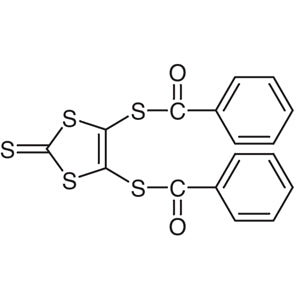
- TCI B1199 68494-08-6 4,5-Bis(benzoylthio)-1,3-dithiole-2-thione
- TCI B1778 49638-64-4 4,5-Bis(methylthio)-1,3-dithiole-2-thione
- TCI P1635 202126-48-5 5-Propyl-1,3-dithiolo[4,5-d][1,3]dithiole-2-thione
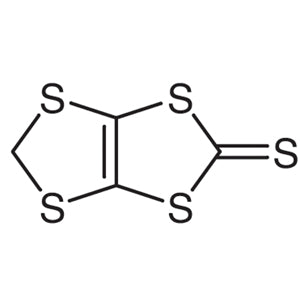
- TCI M1112 70800-59-8 4,5-Methylenedithio-1,3-dithiole-2-thione
- TCI H1163 202126-51-0 5-Hexyl-1,3-dithiolo[4,5-d][1,3]dithiole-2-thione
- TCI E0429 59089-89-3 4,5-Ethylenedithio-1,3-dithiole-2-thione
- Used in the synthesis of heterocyclic compounds due to its unique dithiole-2-thione framework and reactive thiol groups.
- Applied in pharmaceutical research for the development of bioactive molecules with therapeutic potential.
- Employed in organic chemistry experiments for structural modifications and functional group transformations.
- Utilized in material science for the creation of advanced chemical materials with specific properties.
- Integrated into drug discovery projects to explore new chemical scaffolds with potential medicinal applications.
| Brand | TCI |
|---|---|
| CAS number | 132765-35-6 |
| Molecular formula | — |
| Purity | — |
| Category | Chemistry > Building Blocks > Heterocyclic Building Blocks |
| Pack sizes | Available in various quantities as per supplier specifications |
| Physical form | Solid, typically in crystalline or powder form |
| Storage | Store in a cool, dry place away from light and moisture |
This compound should be stored in a cool, dry environment, away from direct sunlight and moisture. It is recommended to use airtight containers made of glass or high-density polyethylene to prevent contamination and degradation. Due to its reactivity, it should be handled in a well-ventilated area, preferably under a fume hood, to minimize exposure. Avoid contact with incompatible substances such as strong oxidizing agents. Always wear appropriate personal protective equipment, including gloves, goggles, and a lab coat, when handling this material. Proper storage and handling are essential to maintain its chemical integrity and ensure safe laboratory practices.
—
Product Categories
Produk Terkait
-
4,5-Bis(benzoylthio)-1,3-dithiole-2-thione TCI B1199
Regular price From Rp 2.782.500,00Regular priceRp 1.961.400,00Sale price From Rp 2.782.500,00 -
4,5-Bis(methylthio)-1,3-dithiole-2-thione TCI B1778
Regular price Rp 3.658.200,00Regular priceRp 2.573.550,00Sale price Rp 3.658.200,00 -
5-Propyl-1,3-dithiolo[4,5-d][1,3]dithiole-2-thione TCI P1635
Regular price From Rp 2.252.250,00Regular priceRp 1.590.750,00Sale price From Rp 2.252.250,00 -
4,5-Methylenedithio-1,3-dithiole-2-thione TCI M1112
Regular price Rp 6.943.650,00Regular priceRp 4.870.950,00Sale price Rp 6.943.650,00 -
5-Hexyl-1,3-dithiolo[4,5-d][1,3]dithiole-2-thione TCI H1163
Regular price Rp 8.347.500,00Regular priceRp 5.852.700,00Sale price Rp 8.347.500,00 -
4,5-Ethylenedithio-1,3-dithiole-2-thione TCI E0429
Regular price From Rp 1.988.700,00Regular priceRp 1.405.950,00Sale price From Rp 1.988.700,00 -
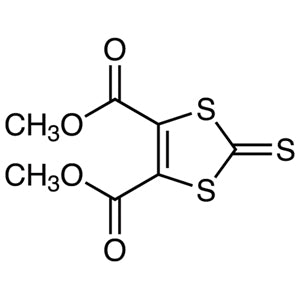
Dimethyl1,3-Dithiole-2-thione-4,5-dicarboxylate TCI D2127
Regular price From Rp 2.173.500,00Regular priceRp 1.535.100,00Sale price From Rp 2.173.500,00 -
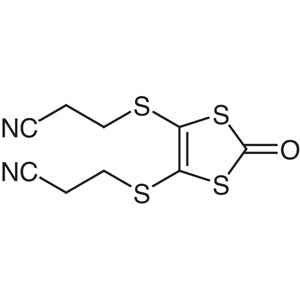
4,5-Bis(2-cyanoethylthio)-1,3-dithiol-2-one TCI B2233
Regular price Rp 7.339.500,00Regular priceRp 5.148.150,00Sale price Rp 7.339.500,00