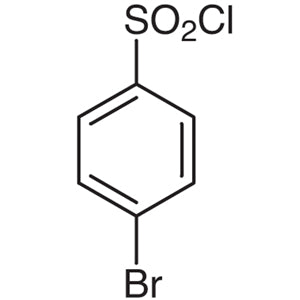
2-Bromobenzenesulfonyl Chloride (TCI B2702) is a chemical compound widely used as a building block in the synthesis of complex organic molecules. This reagent plays a crucial role in laboratory settings where organic chemists aim to create new compounds through various reaction mechanisms. Its versatility makes it an essential component in both academic and industrial research environments. The compound is particularly valuable in reactions involving substitution and electrophilic processes, enabling the formation of a wide range of functional groups and heterocyclic structures.
The compound's molecular structure is stable, yet it exhibits high reactivity, which makes it a preferred choice for chemists seeking reliable and efficient synthetic pathways. Its ability to participate in nucleophilic, substitution, and bond-forming reactions underscores its importance in organic synthesis. The chemical and physical properties of 2-Bromobenzenesulfonyl Chloride allow it to be a versatile reagent in multiple synthetic strategies. Its reactivity and stability ensure consistent results, making it a trusted material in both research and development.
In Indonesian laboratories, 2-Bromobenzenesulfonyl Chloride is commonly used in organic chemistry, pharmaceutical, and biochemical research. It supports the development of new compounds with potential applications in medicine and industry. Its availability and reliability make it a key reagent for academic and industrial researchers working on complex chemical syntheses. The compound is widely utilized in institutions and research centers across Indonesia, contributing to scientific advancements in various fields.
Related TCI products
- Organic synthesis of heterocyclic compounds due to its reactivity and ability to form functional groups.
- Pharmaceutical research for the development of new drugs and therapeutic agents through complex molecular structures.
- Biochemical studies involving the modification of organic molecules for enzyme inhibition or receptor interaction.
- Industrial chemical production where stable and reactive intermediates are required for large-scale synthesis.
- Academic research in universities and research institutes focusing on chemical innovation and molecular design.
| Brand | TCI |
|---|---|
| CAS number | 2905-25-1 |
| Molecular formula | — |
| Purity | — |
| Category | Chemistry > Building Blocks > Non-Heterocyclic Building Blocks |
| Pack sizes | — |
| Physical form | — |
| Storage | Store in a cool, dry place away from moisture and direct sunlight. |
This compound should be stored in a cool, dry environment, away from moisture and direct sunlight to maintain its stability and reactivity. It is recommended to use airtight containers made of glass or high-density polyethylene to prevent contamination and degradation. Due to its chemical nature, it should be handled with appropriate personal protective equipment, including gloves and safety goggles. Avoid exposure to heat sources and ensure proper ventilation in the laboratory. Regular monitoring of storage conditions is essential to ensure the compound remains in optimal condition for use in chemical reactions. Always follow standard laboratory safety protocols when working with reactive chemical reagents.
—
Produk Terkait
-
3-BromobenzenesulfonylChloride TCI B2389
Regular price From Rp 955.500,00Regular priceRp 667.800,00Sale price From Rp 955.500,00 -
4-BromobenzenesulfonylChloride TCI B0550
Regular price From Rp 1.856.400,00Regular priceRp 1.297.800,00Sale price From Rp 1.856.400,00 -
3-Bromobenzenesulfonamide TCI B5734
Regular price From Rp 1.458.450,00Regular priceRp 1.035.300,00Sale price From Rp 1.458.450,00 -
4-BromobenzenediazoniumTetrafluoroborate TCI B3114
Regular price Rp 2.332.050,00Regular priceRp 1.630.650,00Sale price Rp 2.332.050,00 -
1-Benzyloxy-3-bromobenzene TCI B2307
Regular price From Rp 823.200,00Regular priceRp 575.400,00Sale price From Rp 823.200,00 -
1-Benzyloxy-4-bromobenzene TCI B2127
Regular price From Rp 848.400,00Regular priceRp 593.250,00Sale price From Rp 848.400,00 -
3,6-Dibromobenzene-1,2-diamine TCI D4974
Regular price From Rp 2.094.750,00Regular priceRp 1.464.750,00Sale price From Rp 2.094.750,00 -
2,4-Dinitrobromobenzene TCI D2701
Regular price Rp 3.367.350,00Regular priceRp 2.354.100,00Sale price Rp 3.367.350,00