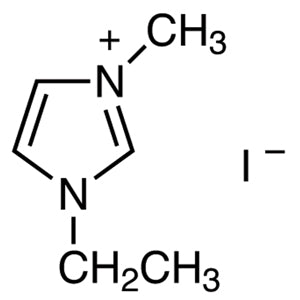
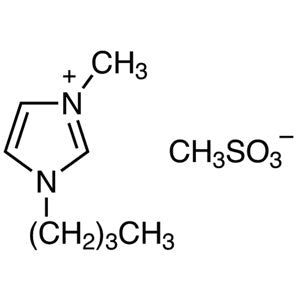
1-Butyl-3-methylimidazolium Iodide is a versatile ionic liquid widely used in modern chemical applications. As a member of the ionic liquid family, it serves as a key component in various laboratory processes, offering unique chemical and physical properties that enhance reaction efficiency and product yield. This compound is particularly valuable in synthetic chemistry due to its ability to act as both a solvent and a catalyst, making it an essential tool for researchers in both academic and industrial settings. Its non-volatile nature and high thermal stability contribute to its reliability in a wide range of experimental conditions.
The properties of 1-Butyl-3-methylimidazolium Iodide make it a preferred choice for many laboratory applications. It exhibits excellent solubility in both polar and non-polar solvents, allowing it to be used in diverse chemical reactions. Its high boiling point and low vapor pressure ensure that it remains stable during prolonged heating or under high-temperature conditions, reducing the risk of evaporation and loss. Additionally, its ionic nature provides unique reactivity, making it suitable for applications such as electrochemical studies and catalytic processes. These characteristics make it a reliable and efficient alternative to traditional organic solvents.
In Indonesian laboratories, 1-Butyl-3-methylimidazolium Iodide is commonly used in research and development activities, particularly in the fields of organic synthesis, materials science, and environmental chemistry. Its non-toxic and non-volatile nature aligns with modern laboratory safety standards, making it a preferred choice for both educational and industrial applications. Its availability through reliable suppliers like AMI Scientific ensures that researchers have access to this essential compound for their experiments and projects.
TCI brochures (PDF)
- Ionic Liquids 2026-06-08 · p. 7
Related TCI products
- TCI H1633 178631-05-5 1-Hexyl-3-methylimidazolium Iodide
- TCI E0556 35935-34-3 1-Ethyl-3-methylimidazolium Iodide
- TCI B5487 878027-73-7 1-Butyl-3-methylimidazolium Tricyanomethanide
- TCI B5447 448245-52-1 1-Butyl-3-methylimidazolium Dicyanamide
- TCI B4091 344790-87-0 1-Butyl-3-methylimidazolium Thiocyanate
- TCI B3596 820965-08-0 1-Butyl-3-methylimidazolium Tribromide
- Used in organic synthesis for its ability to dissolve a wide range of compounds and facilitate reaction pathways.
- Applied in electrochemical studies due to its stable ionic nature and high thermal resistance.
- Employed in catalytic processes as a green alternative to volatile organic solvents, reducing environmental impact.
- Utilized in materials science for the preparation of functional polymers and nanomaterials.
- Integrated into green chemistry initiatives as a non-volatile solvent that minimizes waste and evaporation losses.
| Brand | TCI |
|---|---|
| CAS number | 65039-05-6 |
| Molecular formula | — |
| Purity | — |
| Category | Chemistry > Specialty Synthesis > Ionic Liquids |
| Pack sizes | 50g, 250g, 1kg |
| Physical form | Liquid |
| Storage | Store in a cool, dry place away from direct sunlight and moisture. |
This ionic liquid should be stored in a cool, dry environment, away from direct sunlight and moisture. It is recommended to use sealed, airtight containers to prevent contamination and maintain its chemical integrity. Due to its non-volatile nature, it does not evaporate easily, but proper sealing is still essential to avoid any potential exposure. In laboratory settings, it should be handled with standard chemical safety protocols, including the use of gloves and protective eyewear. It is important to ensure that storage areas are well-ventilated and free from incompatible materials. Proper labeling and storage conditions help maintain the quality and usability of the compound over time.
—
Produk Terkait
-
1-Hexyl-3-methylimidazoliumIodide TCI H1633
Regular price From Rp 1.908.900,00Regular priceRp 1.350.300,00Sale price From Rp 1.908.900,00 -
1-Ethyl-3-methylimidazoliumIodide TCI E0556
Regular price From Rp 1.008.000,00Regular priceRp 720.300,00Sale price From Rp 1.008.000,00 -
1-Butyl-3-methylimidazoliumTricyanomethanide TCI B5487
Regular price From Rp 1.856.400,00Regular priceRp 1.313.550,00Sale price From Rp 1.856.400,00 -
1-Butyl-3-methylimidazoliumDicyanamide TCI B5447
Regular price From Rp 1.749.300,00Regular priceRp 1.239.000,00Sale price From Rp 1.749.300,00 -
1-Butyl-3-methylimidazoliumThiocyanate TCI B4091
Regular price From Rp 1.167.600,00Regular priceRp 831.600,00Sale price From Rp 1.167.600,00 -
1-Butyl-3-methylimidazoliumTribromide TCI B3596
Regular price Rp 3.922.800,00Regular priceRp 2.758.350,00Sale price Rp 3.922.800,00 -
1-Butyl-3-methylimidazoliumTrifluoro(trifluoromethyl)borate TCI B3542
Regular price Rp 3.312.750,00Regular priceRp 2.332.050,00Sale price Rp 3.312.750,00 -
1-Butyl-3-methylimidazoliumMethanesulfonate TCI B3231
Regular price From Rp 848.400,00Regular priceRp 609.000,00Sale price From Rp 848.400,00