The TCI B2719 Bromine - 1,4-Dioxane Complex is a chemical compound widely used in organic synthesis reactions. This reagent is a bromine solution dissolved in 1,4-dioxane, making it a stable and controlled source of bromine for various chemical processes. Its formulation allows for easy handling and precise dosing, which is essential in laboratory settings where accuracy and safety are paramount. This complex is particularly useful in reactions that require bromine as a reagent without the risks associated with pure bromine.
The reagent’s formulation in 1,4-dioxane enhances its stability and safety compared to pure bromine, which is highly corrosive and toxic. This makes it a preferred choice for researchers who need a reliable and manageable bromine source. The solubility of bromine in 1,4-dioxane also ensures consistent performance across different experimental conditions. Its reactivity and controlled release make it ideal for a variety of synthetic applications, from nucleophilic substitution to oxidation reactions.
In Indonesian laboratories, the TCI B2719 Bromine - 1,4-Dioxane Complex is commonly used in organic chemistry research. It is a staple in both academic and research institutions, where it supports the synthesis of aromatic and aliphatic compounds. Its stability, ease of use, and safety profile make it a go-to reagent for chemists seeking a reliable bromine source. Its versatility and controlled nature ensure that it remains a key component in many chemical experiments conducted in Indonesia.
TCI brochures (PDF)
- Halogenation Reagents 2026-04-03 · p. 6
Related TCI products
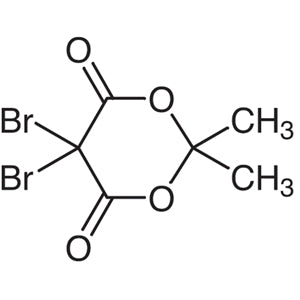
- TCI D1710 66131-14-4 5,5-Dibromomeldrum's Acid (=5,5-Dibromo-2,2-dimethyl-4,6-dioxy-1,3-dioxane)
- TCI T2468 40210-84-2 Tetrathiafulvalene - 7,7,8,8-Tetracyanoquinodimethane Complex
- TCI T1442 42152-46-5 Copper(I) Trifluoromethanesulfonate Benzene Complex
- TCI T1416 105029-70-7 Tetrabutylphosphonium Bis(1,3-dithiole-2-thione-4,5-dithiolato)nickel(III) Complex
- TCI T1282 55492-86-9 Tris(tetrathiafulvalene) Bis(tetrafluoroborate) Complex
- TCI T1272 68401-88-7 Tetrabutylammonium Bis(1,3-dithiole-2-thione-4,5-dithiolato)nickel(III) Complex
- Nucleophilic Substitution Reactions: This reagent is ideal for facilitating substitution reactions due to its controlled bromine release, ensuring predictable reaction outcomes.
- Oxidation Processes: Its bromine content supports oxidation reactions, making it a valuable tool in the synthesis of various organic compounds.
- Aromatic Compound Synthesis: The reagent is frequently used in the preparation of aromatic compounds, where controlled bromination is essential for desired product formation.
- Aliphatic Compound Preparation: It is used in the synthesis of aliphatic compounds, providing a stable and manageable bromine source for organic transformations.
- Organic Chemistry Research: Its versatility and safety make it a preferred choice for a wide range of research applications in Indonesian laboratories.
| Brand | TCI |
|---|---|
| CAS number | 15481-39-7 |
| Molecular formula | — |
| Purity | — |
| Category | Chemistry > Synthetic Reagents > C-X(Halogen) Bond Formation |
| Pack sizes | — |
| Physical form | Liquid |
| Storage | Store in a cool, dark place away from heat and direct sunlight |
The TCI B2719 Bromine - 1,4-Dioxane Complex should be stored in a cool, dark place away from heat and direct sunlight to maintain its stability. It is recommended to use appropriate containers that are resistant to chemical corrosion, such as glass or high-density polyethylene. Due to its reactivity, it should be handled with care, using proper personal protective equipment like gloves and goggles. In laboratory settings, it is important to ensure good ventilation to minimize exposure to vapors. The reagent should be kept in a secure location, away from incompatible substances to prevent any potential chemical interactions. Proper storage and handling practices are essential to ensure the safety of laboratory personnel and the integrity of the reagent.
—
Produk Terkait
-
5,5-Dibromomeldrum'sAcid(=5,5-Dibromo-2,2-dimethyl-4,6-dioxy-1,3-dioxane) TCI D1710
Regular price From Rp 3.735.900,00Regular priceRp 2.628.150,00Sale price From Rp 3.735.900,00 -
Tetrathiafulvalene-7,7,8,8-TetracyanoquinodimethaneComplex TCI T2468
Regular price Rp 8.718.150,00Regular priceRp 6.112.050,00Sale price Rp 8.718.150,00 -
Copper(I)TrifluoromethanesulfonateBenzeneComplex TCI T1442
Regular price From Rp 2.041.200,00Regular priceRp 1.426.950,00Sale price From Rp 2.041.200,00 -
TetrabutylphosphoniumBis(1,3-dithiole-2-thione-4,5-dithiolato)nickel(III)Complex TCI T1416
Regular price Rp 4.266.150,00Regular priceRp 2.998.800,00Sale price Rp 4.266.150,00 -
Tris(tetrathiafulvalene)Bis(tetrafluoroborate)Complex TCI T1282
Regular price Rp 5.009.550,00Regular priceRp 3.518.550,00Sale price Rp 5.009.550,00 -
TetrabutylammoniumBis(1,3-dithiole-2-thione-4,5-dithiolato)nickel(III)Complex TCI T1272
Regular price Rp 1.590.750,00Regular priceRp 1.127.700,00Sale price Rp 1.590.750,00 -
Borane-AmmoniaComplex TCI B5082
Regular price From Rp 4.849.950,00Regular priceRp 3.391.500,00Sale price From Rp 4.849.950,00 -
Bis(3-bromophenylboronicAcid)scyllo-InositolComplexDipotassiumPentahydrate TCI B4523
Regular price From Rp 769.650,00Regular priceRp 553.350,00Sale price From Rp 769.650,00