4,4'-Bis(2-benzoxazolyl)stilbene is a chemical compound widely used in organic reactions, particularly in the synthesis of heterocyclic compounds. This compound plays a crucial role in laboratory settings where the development of bioactive molecules is required. Its unique structural features make it a valuable reagent for researchers aiming to create new pharmaceuticals or industrial chemicals. Due to its complex molecular structure, it is often employed in advanced synthetic pathways that demand high reactivity and specificity.
The compound's reactivity and structural complexity make it a preferred choice for various synthetic processes. It is especially useful in substitution reactions and sililation reactions, where its ability to participate in multiple chemical transformations is highly advantageous. Its stability under certain conditions further enhances its usability in laboratory environments, ensuring consistent results during chemical synthesis. These properties make it a reliable material for both academic and industrial research applications.
In Indonesian laboratories, 4,4'-Bis(2-benzoxazolyl)stilbene is commonly used in pharmaceutical and organic chemistry research. Scientists rely on this compound to develop new drugs and understand complex chemical mechanisms. Its versatility in different synthetic routes makes it an essential tool for researchers working on advanced chemical projects. Its presence in Indonesian laboratories highlights its importance in the field of material science and chemical innovation.
Related TCI products
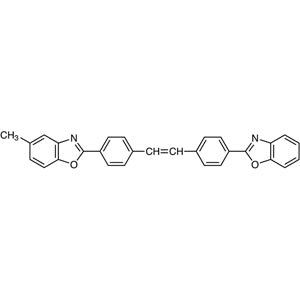
- TCI B1565 5242-49-9 4-(2-Benzoxazolyl)-4'-(5-methyl-2-benzoxazolyl)stilbene
- TCI B2728 5089-22-5 1,4-Bis(2-benzoxazolyl)naphthalene
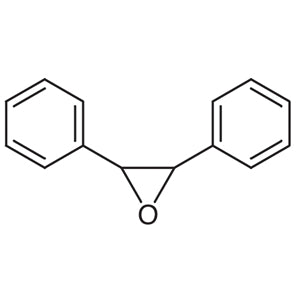
- TCI S0262 1439-07-2 trans-Stilbene Oxide
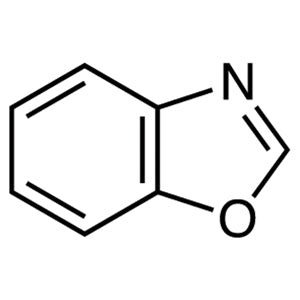
- TCI B0095 273-53-0 Benzoxazole
- TCI P2098 32959-62-9 2-(2-Pyridyl)benzoxazole
- TCI M3063 23417-29-0 6-Methyl-1,3-benzoxazole-2(3H)-thione
- Heterocyclic Compound Synthesis: This compound is ideal for creating complex ring structures, essential in pharmaceutical development.
- Pharmaceutical Research: Its reactivity supports the design of bioactive molecules, contributing to drug discovery efforts.
- Organic Chemistry Experiments: It is used in substitution and sililation reactions, offering versatility in synthetic pathways.
- Material Science Studies: Its structural properties make it useful in the development of new chemical materials.
- Bioactive Molecule Development: It aids in the synthesis of compounds with specific biological activities, supporting research in medicinal chemistry.
| Brand | TCI |
|---|---|
| CAS number | 1533-45-5 |
| Molecular formula | — |
| Purity | — |
| Category | Chemistry > Building Blocks > Heterocyclic Building Blocks |
| Pack sizes | Available in standard laboratory quantities |
| Physical form | Solid |
| Storage | Store in a cool, dry place away from light |
This compound should be stored in a cool, dry place, away from direct light to maintain its stability and reactivity. It is recommended to use airtight containers to prevent moisture absorption, which can affect its chemical integrity. Due to its reactivity, it should be handled in a well-ventilated laboratory environment to ensure safety. Proper personal protective equipment, such as gloves and safety goggles, should be worn during handling. Avoid exposure to incompatible substances to prevent unwanted chemical reactions. Regular monitoring of storage conditions helps ensure the compound remains suitable for use in laboratory applications.
—
Produk Terkait
-
4-(2-Benzoxazolyl)-4'-(5-methyl-2-benzoxazolyl)stilbene TCI B1565
Regular price Rp 1.776.600,00Regular priceRp 1.257.900,00Sale price Rp 1.776.600,00 -
1,4-Bis(2-benzoxazolyl)naphthalene TCI B2728
Regular price From Rp 1.776.600,00Regular priceRp 1.257.900,00Sale price From Rp 1.776.600,00 -
trans-StilbeneOxide TCI S0262
Regular price From Rp 1.803.900,00Regular priceRp 1.261.050,00Sale price From Rp 1.803.900,00 -
Benzoxazole TCI B0095
Regular price Rp 1.881.600,00Regular priceRp 1.331.400,00Sale price Rp 1.881.600,00 -
2-(2-Pyridyl)benzoxazole TCI P2098
Regular price Rp 1.483.650,00Regular priceRp 1.053.150,00Sale price Rp 1.483.650,00 -
6-Methyl-1,3-benzoxazole-2(3H)-thione TCI M3063
Regular price From Rp 1.908.900,00Regular priceRp 1.350.300,00Sale price From Rp 1.908.900,00 -
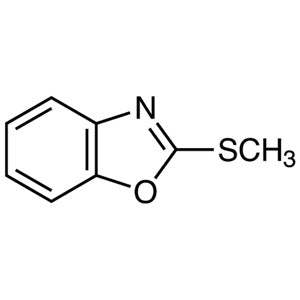
2-(Methylthio)benzoxazole TCI M2454
Regular price From Rp 1.483.650,00Regular priceRp 1.053.150,00Sale price From Rp 1.483.650,00 -
2-(2-Hydroxyphenyl)benzoxazole TCI H0291
Regular price From Rp 557.550,00Regular priceRp 405.300,00Sale price From Rp 557.550,00