N-Benzyl-p-toluenesulfonamide is a chemical compound widely used as a building block in the synthesis of complex molecules. It plays a crucial role in organic chemistry laboratories, where it serves as a versatile intermediate in various reactions. This compound is particularly valuable in substitution and nucleophilic reactions, making it an essential tool for researchers aiming to construct more complex molecular structures. Its presence in both heterocyclic and non-heterocyclic synthesis highlights its broad applicability in chemical research and development.
The compound is known for its chemical stability and reactivity, which make it a preferred choice for a wide range of chemical applications. It exhibits good solubility in organic solvents, facilitating easy dissolution and reaction processes. These properties ensure that it remains effective in diverse experimental conditions. Additionally, its non-toxic nature and ease of handling contribute to its popularity in laboratory settings, where safety and efficiency are paramount.
In Indonesian laboratories, N-Benzyl-p-toluenesulfonamide is commonly used in scientific research, especially in the fields of organic chemistry and compound synthesis. It is frequently applied in pharmaceutical, material science, and chemical industry research. Its availability and reliability make it a go-to reagent for scientists working on innovative projects and product development.
Related TCI products
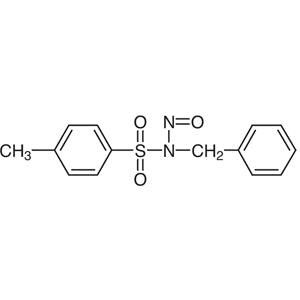
- TCI B3051 33528-13-1 N-Benzyl-N-nitroso-p-toluenesulfonamide
- TCI T1461 4104-47-6 N-Sulfinyl-p-toluenesulfonamide
- TCI B1389 2651-15-2 N-[Bis(methylthio)methylene]-p-toluenesulfonamide
- TCI B0745 1907-65-9 N-Butyl-p-toluenesulfonamide
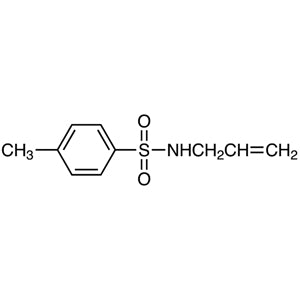
- TCI A2665 50487-71-3 N-Allyl-p-toluenesulfonamide
- TCI T0285 649-15-0 N,N-Diethyl-p-toluenesulfonamide
- Organic synthesis research utilizes N-Benzyl-p-toluenesulfonamide for constructing complex molecular frameworks due to its reactivity and structural versatility.
- Pharmaceutical development benefits from this compound as it is often used in the synthesis of drug molecules and bioactive compounds.
- Material science applications leverage its chemical properties for the creation of new polymers and functional materials.
- Chemical industry research employs it in the production of specialty chemicals and intermediates for various industrial processes.
- Academic laboratories use it as a key reagent in teaching and experimental studies to demonstrate fundamental chemical reactions and synthesis techniques.
| Brand | TCI |
|---|---|
| CAS number | 1576-37-0 |
| Molecular formula | — |
| Purity | — |
| Category | Chemistry > Building Blocks > Non-Heterocyclic Building Blocks |
| Pack sizes | Available in various quantities as per standard laboratory supply |
| Physical form | Solid |
| Storage | Store in a cool, dry place away from moisture and direct sunlight |
N-Benzyl-p-toluenesulfonamide should be stored in a cool, dry environment to maintain its chemical integrity. It is recommended to keep it in airtight containers to prevent exposure to moisture and air, which could affect its stability. The compound is generally non-toxic and safe to handle, but standard laboratory precautions should still be followed, such as wearing protective gloves and goggles. It is important to ensure that the storage area is well-ventilated to avoid any potential accumulation of volatile substances. Proper labeling of containers is essential for safe handling and easy identification in a laboratory setting.
—
Produk Terkait
-
N-Benzyl-N-nitroso-p-toluenesulfonamide TCI B3051
Regular price From Rp 3.895.500,00Regular priceRp 2.739.450,00Sale price From Rp 3.895.500,00 -
N-Sulfinyl-p-toluenesulfonamide TCI T1461
Regular price Rp 7.499.100,00Regular priceRp 5.259.450,00Sale price Rp 7.499.100,00 -
N-[Bis(methylthio)methylene]-p-toluenesulfonamide TCI B1389
Regular price Rp 2.121.000,00Regular priceRp 1.498.350,00Sale price Rp 2.121.000,00 -
N-Butyl-p-toluenesulfonamide TCI B0745
Regular price From Rp 848.400,00Regular priceRp 609.000,00Sale price From Rp 848.400,00 -
N-Allyl-p-toluenesulfonamide TCI A2665
Regular price From Rp 2.518.950,00Regular priceRp 1.776.600,00Sale price From Rp 2.518.950,00 -
N,N-Diethyl-p-toluenesulfonamide TCI T0285
Regular price Rp 2.173.500,00Regular priceRp 1.535.100,00Sale price Rp 2.173.500,00 -
p-Toluenesulfonamide TCI T0281
Regular price From Rp 530.250,00Regular priceRp 386.400,00Sale price From Rp 530.250,00 -
o-Toluenesulfonamide TCI T0280
Regular price Rp 662.550,00Regular priceRp 478.800,00Sale price Rp 662.550,00