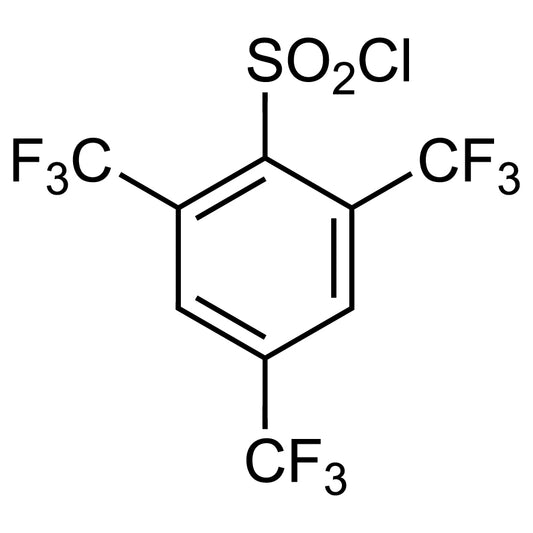
3,3’-Bis(trifluoromethyl)benzophenone is a chemical compound widely used as a building block in the synthesis of complex organic compounds. This material plays a crucial role in laboratory settings where precise molecular modifications are required. Its unique molecular structure, featuring two trifluoromethyl groups attached to a benzophenone ring, makes it a versatile reagent for various chemical transformations. It is particularly valuable in reactions involving fluorine substitution or aromatic ring modifications, offering stability and controlled reactivity.
The compound's chemical properties, including its stability and controlled reactivity, make it a preferred choice for organic chemists. The presence of fluorine in the trifluoromethyl groups imparts unique electronic characteristics, influencing its reactivity and solubility. These properties enable it to be used in a wide range of synthetic applications, from pharmaceutical development to materials science. Its ability to resist unwanted chemical reactions also ensures long-term stability during storage and use.
In Indonesian laboratories, this compound is commonly used in research and development projects focused on organic synthesis. Its reliability and performance make it a staple in academic and industrial laboratories. Researchers rely on its predictable behavior to achieve consistent results in complex chemical processes. Its role in advancing chemical innovation is well recognized in the scientific community.
TCI brochures (PDF)
- Fluorination Reagents, Fluorinated Building Blocks 2026-03-18 · p. 38
Related TCI products
- TCI T4379 728-86-9 Phenyl[4-(trifluoromethyl)phenyl]methanone
- TCI T4302 944453-80-9 2,4,6-Tris(trifluoromethyl)benzenesulfonyl Chloride
- TCI T4250 711-33-1 1-[4-(Trifluoromethyl)phenyl]propan-1-one
- TCI T4165 6185-76-8 (4-Methoxyphenyl)[4-(trifluoromethyl)phenyl]methanone
- TCI T4045 402-52-8 1-Methoxy-4-(trifluoromethyl)benzene
- TCI T3765 277756-46-4 1-(Trifluoromethyl)cyclopropane-1-carboxylic Acid
- Organic synthesis applications benefit from its controlled reactivity and stability, allowing precise molecular modifications.
- Pharmaceutical research utilizes it for fluorine substitution in drug molecule development, enhancing compound properties.
- Materials science experiments leverage its unique electronic characteristics for creating advanced functional materials.
- Analytical chemistry uses it as a reference standard for testing and calibrating instrumentation accuracy.
- Environmental studies incorporate it to study fluorinated compound behavior in chemical processes and degradation pathways.
| Brand | TCI |
|---|---|
| CAS number | 1868-00-4 |
| Molecular formula | — |
| Purity | — |
| Category | Chemistry > Building Blocks > Fluorinated Building Blocks |
| Pack sizes | Available in various quantities as per supplier specifications |
| Physical form | Solid |
| Storage | Store in a cool, dry place away from light and moisture |
This compound should be stored in a cool, dry environment, away from direct light and moisture to maintain its chemical integrity. It is recommended to use airtight containers made of materials compatible with its chemical properties, such as glass or high-density polyethylene. Proper ventilation is essential when handling the material to minimize exposure to vapors. Due to its stability, it does not require refrigeration but should be kept in a secure location to prevent accidental spills or contamination. Laboratory personnel should wear appropriate personal protective equipment, including gloves and safety goggles, when handling this compound to ensure safe working conditions.
—
Produk Terkait
-
Phenyl[4-(trifluoromethyl)phenyl]methanone TCI T4379
Regular price Rp 1.988.700,00Regular priceRp 1.405.950,00Sale price Rp 1.988.700,00 -
2,4,6-Tris(trifluoromethyl)benzenesulfonylChloride TCI T4302
Regular price From Rp 3.949.050,00Regular priceRp 2.761.500,00Sale price From Rp 3.949.050,00 -
1-[4-(Trifluoromethyl)phenyl]propan-1-one TCI T4250
Regular price Rp 2.173.500,00Regular priceRp 1.535.100,00Sale price Rp 2.173.500,00 -
(4-Methoxyphenyl)[4-(trifluoromethyl)phenyl]methanone TCI T4165
Regular price From Rp 2.227.050,00Regular priceRp 1.572.900,00Sale price From Rp 2.227.050,00 -
1-Methoxy-4-(trifluoromethyl)benzene TCI T4045
Regular price From Rp 2.016.000,00Regular priceRp 1.409.100,00Sale price From Rp 2.016.000,00 -
1-(Trifluoromethyl)cyclopropane-1-carboxylicAcid TCI T3765
Regular price From Rp 795.900,00Regular priceRp 572.250,00Sale price From Rp 795.900,00