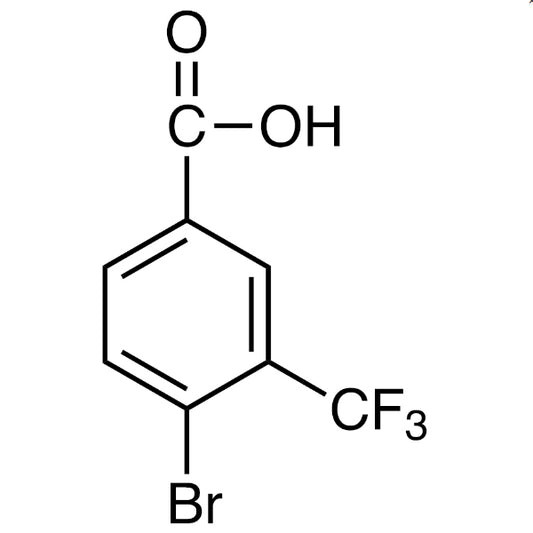
2,5-Bis(2,2,2-trifluoroethoxy)benzoic Acid is a fluorinated organic compound widely used in laboratory settings for its unique chemical properties and reactivity. This compound serves as a building block in the synthesis of complex molecules, particularly those requiring fluorine substitution. Its role is critical in organic chemistry, where it contributes to the formation of stable C-F bonds, which are essential in the development of fluorinated compounds. Due to its structural complexity and the presence of multiple fluorine atoms, it is a valuable tool for researchers aiming to manipulate molecular functionality.
The compound's fluorinated groups significantly influence its polarity and reactivity, making it a preferred choice for synthetic chemists. The trifluoroethoxy groups enhance its ability to participate in substitution or electrophilic reactions, offering greater efficiency in synthetic pathways. Its stability under various reaction conditions further supports its use in diverse chemical processes. These properties make it an essential component in the creation of fluorinated materials and pharmaceutical intermediates.
In Indonesian laboratories, this compound is commonly used in organic chemistry research, especially in pharmaceutical and material science applications. Its demand is driven by the need for stable and reactive fluorinated compounds in drug development and advanced material synthesis. Researchers and industries in Indonesia rely on this compound for its versatility and effectiveness in achieving desired chemical outcomes.
Related TCI products
- TCI T3505 160969-03-9 2-[2-(2,2,2-Trifluoroethoxy)phenoxy]ethyl Methanesulfonate
- TCI T2383 1014-81-9 3-(Trifluoromethoxy)benzoic Acid
- TCI T2382 1979-29-9 2-(Trifluoromethoxy)benzoic Acid
- TCI T1400 330-12-1 4-(Trifluoromethoxy)benzoic Acid
- TCI T1302 433-97-6 2-(Trifluoromethyl)benzoic Acid
- TCI B5334 328-89-2 2-Bromo-4-(trifluoromethyl)benzoic Acid
- Fluorinated Compound Synthesis: This compound is ideal for creating fluorinated organic molecules due to its reactive trifluoroethoxy groups, enabling efficient C-F bond formation.
- Pharmaceutical Research: It is widely used in drug development for fluorination of aromatic rings, enhancing drug efficacy and metabolic stability.
- Material Science Development: The compound supports the creation of advanced materials with unique physical and chemical properties due to its fluorinated structure.
- Organic Chemistry Education: It is a key reagent in teaching complex synthetic reactions, particularly those involving fluorine substitution.
- Industrial Chemical Production: Its stability and reactivity make it suitable for large-scale synthesis of fluorinated compounds in chemical manufacturing.
| Brand | TCI |
|---|---|
| CAS number | 35480-52-5 |
| Molecular formula | — |
| Purity | — |
| Category | Chemistry > Building Blocks > Fluorinated Building Blocks |
| Pack sizes | Available in various quantities as per supplier specifications |
| Physical form | Solid or crystalline, depending on the batch |
| Storage | Store in a cool, dry place away from moisture and direct sunlight |
This compound should be stored in a cool, dry environment to prevent degradation. It is recommended to use airtight containers to minimize exposure to moisture and air. Due to its fluorinated nature, it is important to handle it with care to avoid any potential reactivity with incompatible substances. Proper ventilation should be maintained in the laboratory when working with this material. Always wear appropriate personal protective equipment, such as gloves and safety goggles, to ensure safe handling. The compound should be kept away from heat sources and incompatible chemicals to maintain its stability and effectiveness.
—
Produk Terkait
-
2-[2-(2,2,2-Trifluoroethoxy)phenoxy]ethylMethanesulfonate TCI T3505
Regular price From Rp 689.850,00Regular priceRp 497.700,00Sale price From Rp 689.850,00 -
3-(Trifluoromethoxy)benzoicAcid TCI T2383
Regular price From Rp 689.850,00Regular priceRp 497.700,00Sale price From Rp 689.850,00 -
2-(Trifluoromethoxy)benzoicAcid TCI T2382
Regular price Rp 1.961.400,00Regular priceRp 1.387.050,00Sale price Rp 1.961.400,00 -
4-(Trifluoromethoxy)benzoicAcid TCI T1400
Regular price From Rp 742.350,00Regular priceRp 534.450,00Sale price From Rp 742.350,00 -
2-(Trifluoromethyl)benzoicAcid TCI T1302
Regular price Rp 1.856.400,00Regular priceRp 1.313.550,00Sale price Rp 1.856.400,00 -
2-Bromo-4-(trifluoromethyl)benzoicAcid TCI B5334
Regular price From Rp 1.431.150,00Regular priceRp 1.016.400,00Sale price From Rp 1.431.150,00 -
4-Bromo-2-(trifluoromethyl)benzoicAcid TCI B4843
Regular price From Rp 1.378.650,00Regular priceRp 979.650,00Sale price From Rp 1.378.650,00 -
4-Bromo-3-(trifluoromethyl)benzoicAcid TCI B4821
Regular price From Rp 557.550,00Regular priceRp 405.300,00Sale price From Rp 557.550,00