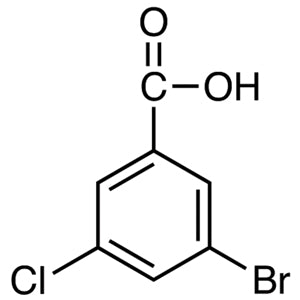
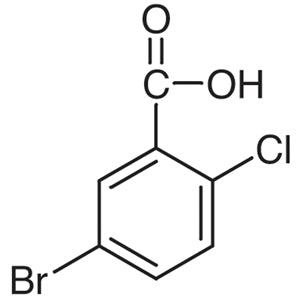
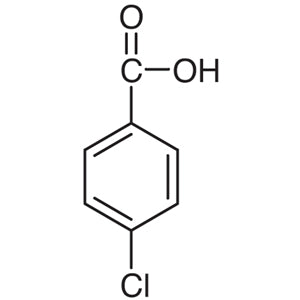
3-Bromo-4-chlorobenzoic acid is a versatile organic building block widely used in chemical synthesis within laboratory settings. This compound serves as a foundational material for the development of complex organic molecules, particularly in the field of medicinal chemistry and materials science. Its aromatic structure, combined with bromo and chloro substituents, makes it a valuable reagent for various synthetic pathways. The compound's ability to participate in electrophilic substitution reactions and its reactivity under different reaction conditions make it an essential tool for chemists working on functional group modifications and molecular assembly.
The chemical properties of 3-Bromo-4-chlorobenzoic acid, including its stability and reactivity, make it a preferred choice for researchers. The presence of halogen atoms enhances its reactivity, allowing it to be selectively modified in targeted positions. Its aromatic nature provides structural stability, while the halogen substituents introduce functional versatility. These characteristics enable the compound to be used in a wide range of synthetic applications, from pharmaceutical development to polymer synthesis. Its predictable behavior under different reaction conditions ensures reliable outcomes in laboratory experiments.
In Indonesian laboratories, 3-Bromo-4-chlorobenzoic acid is commonly used in organic chemistry research, pharmaceutical development, and material science projects. Its availability in various packaging options supports both small-scale research and larger-scale experimentation. Institutions and research centers in Indonesia rely on this compound for its consistent performance and adaptability in diverse chemical processes. Its role in advancing scientific discovery is well-recognized in the local academic and industrial chemistry communities.
Related TCI products
- Organic synthesis is a key application where this compound is used to build complex molecules through electrophilic substitution and functional group modification.
- Pharmaceutical research benefits from its reactivity, allowing for the development of new drug candidates with tailored properties.
- Material science applications leverage its aromatic structure for creating advanced polymers and functional materials.
- Analytical chemistry uses it as a standard for chromatographic and spectroscopic analysis due to its well-defined chemical properties.
- Environmental studies incorporate it in the synthesis of compounds for assessing chemical behavior in natural systems.
| Brand | TCI |
|---|---|
| CAS number | 42860-10-6 |
| Molecular formula | — |
| Purity | — |
| Category | Chemistry > Building Blocks > Non-Heterocyclic Building Blocks |
| Pack sizes | Available in various quantities to suit different experimental needs |
| Physical form | Solid, crystalline appearance |
| Storage | Store in a cool, dry place away from light and moisture |
This compound should be stored in a cool, dry environment, away from direct sunlight and moisture to maintain its chemical integrity. It is recommended to use airtight containers made of glass or high-density polyethylene to prevent contamination and degradation. Due to its halogen substituents, it may react with strong bases or reducing agents, so it should be handled with care in a well-ventilated fume hood. Proper personal protective equipment, including gloves and safety goggles, should always be worn when handling this material. Its reactivity under certain conditions necessitates cautious storage and use in controlled laboratory settings to ensure safety and effectiveness.
—
Produk Terkait
-
2-Bromo-6-chlorobenzoicAcid TCI B4820
Regular price From Rp 557.550,00Regular priceRp 405.300,00Sale price From Rp 557.550,00 -
2-Bromo-4-chlorobenzoicAcid TCI B4592
Regular price Rp 1.881.600,00Regular priceRp 1.331.400,00Sale price Rp 1.881.600,00 -
3-Bromo-5-chlorobenzoicAcid TCI B4191
Regular price From Rp 875.700,00Regular priceRp 627.900,00Sale price From Rp 875.700,00 -
4-Bromo-3-chlorobenzoicAcid TCI B3791
Regular price From Rp 1.378.650,00Regular priceRp 979.650,00Sale price From Rp 1.378.650,00 -
2-Bromo-5-chlorobenzoicAcid TCI B3112
Regular price Rp 1.458.450,00Regular priceRp 1.035.300,00Sale price Rp 1.458.450,00 -
4-Bromo-2-chlorobenzoicAcid TCI B1407
Regular price From Rp 1.749.300,00Regular priceRp 1.239.000,00Sale price From Rp 1.749.300,00 -
5-Bromo-2-chlorobenzoicAcid TCI B1344
Regular price From Rp 822.150,00Regular priceRp 590.100,00Sale price From Rp 822.150,00 -
4-ChlorobenzoicAcid TCI C0134
Regular price From Rp 557.550,00Regular priceRp 405.300,00Sale price From Rp 557.550,00