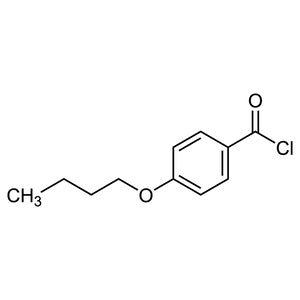
4-tert-Butoxybenzaldehyde is an organic compound widely used in chemical reactions as a building block or raw material. It plays a crucial role in the synthesis of aromatic compounds and their derivatives, contributing to the formation of complex molecules through substitution or addition reactions. In laboratory settings, this compound is essential for obtaining chemicals that require an aromatic structure combined with an aldehyde group. Its unique molecular configuration enables it to participate in various chemical processes, making it a versatile reagent for synthetic chemistry.
The compound's key characteristics include the presence of an aldehyde group on the aromatic ring and an ether functional group, which provide stability and reactivity. These features make it a preferred choice for chemists seeking a flexible and reliable building block. The aldehyde functionality allows for further functionalization, while the tert-butoxy group enhances its stability during reactions. This combination of reactivity and stability makes it ideal for a wide range of synthetic applications.
In Indonesian laboratories, 4-tert-Butoxybenzaldehyde is commonly used in organic chemistry research, pharmaceutical compound synthesis, and industrial chemical development. Its availability and reactivity make it a valuable tool for researchers working on complex molecule synthesis. It is particularly useful in studies involving Friedel-Crafts reactions, electrophilic substitution, and reduction processes. Its role in advancing chemical innovation is significant in both academic and industrial contexts.
- Organic chemistry research utilizes 4-tert-Butoxybenzaldehyde for synthesizing aromatic compounds due to its aldehyde and ether functionalities.
- Pharmaceutical compound development benefits from its reactivity, allowing for the creation of complex drug molecules through substitution reactions.
- Industrial chemical synthesis leverages its stability and versatility for producing a wide range of chemical intermediates.
- Analytical chemistry applications use it as a standard for identifying and quantifying aromatic compounds in various samples.
- Environmental studies incorporate it in the analysis of organic pollutants, particularly in the breakdown of aromatic substances in contaminated environments.
| Brand | TCI |
|---|---|
| CAS number | 57699-45-3 |
| Molecular formula | — |
| Purity | — |
| Category | Chemistry > Building Blocks > Non-Heterocyclic Building Blocks |
| Pack sizes | Available in various quantities as per standard laboratory supply |
| Physical form | Liquid |
| Storage | Store in a cool, dry place away from direct sunlight and incompatible materials |
4-tert-Butoxybenzaldehyde should be stored in a cool, dry environment, away from direct sunlight and sources of heat. It is recommended to keep it in a sealed container to prevent evaporation and contamination. The compound is best stored in a well-ventilated area to minimize exposure to air. It should be kept away from incompatible substances such as strong oxidizing agents and acids. Proper labeling of containers is essential for safe handling and to ensure that the compound is easily identifiable. Regular inspection of storage conditions is advised to maintain its integrity and ensure safety in the laboratory setting.
—
Produk Terkait
-
4-Butoxybenzaldehyde TCI B0126
Regular price Rp 3.021.900,00Regular priceRp 2.112.600,00Sale price Rp 3.021.900,00 -
4-ButoxybenzoicAcid TCI B0896
Regular price Rp 1.908.900,00Regular priceRp 1.350.300,00Sale price Rp 1.908.900,00 -
4-ButoxybenzoylChloride TCI B6724
Regular price Rp 3.365.250,00Regular priceRp 2.368.800,00Sale price Rp 3.365.250,00 -
4-ButoxybenzylAlcohol TCI B1042
Regular price From Rp 1.008.000,00Regular priceRp 720.300,00Sale price From Rp 1.008.000,00 -
tert-Butoxybenzene TCI D6334
Regular price From Rp 1.988.700,00Regular priceRp 1.390.200,00Sale price From Rp 1.988.700,00 -
1,4-Dibutoxybenzene TCI D3264
Regular price Rp 2.942.100,00Regular priceRp 2.056.950,00Sale price Rp 2.942.100,00 -
4-ButoxybenzenesulfonylChloride TCI B2587
Regular price From Rp 1.035.300,00Regular priceRp 723.450,00Sale price From Rp 1.035.300,00 -
3-Acetoxybenzaldehyde TCI A2467
Regular price Rp 4.213.650,00Regular priceRp 2.946.300,00Sale price Rp 4.213.650,00