Bis(tetrabutylammonium) Dihydrogen Bis(isothiocyanato)bis(2,2'-bipyridyl-4,4'-dicarboxylato)ruthenium(II) is a complex metal compound used in catalytic reactions and inorganic chemistry research. This compound contains a ruthenium(II) ion coordinated with isothiocyanate and 2,2'-bipyridyl-4,4'-dicarboxylato ligands, making it a valuable tool for studying reaction mechanisms and catalytic processes. Its unique structure allows it to act as a catalyst in various chemical transformations, offering versatility in both synthetic and analytical applications.
This compound is preferred due to its stability under controlled conditions and its ability to influence reaction pathways. Its complex structure provides a high degree of reactivity and selectivity, which is essential for precise chemical synthesis. Additionally, it exhibits sensitivity to environmental factors such as moisture and temperature, which requires careful handling. These properties make it a reliable choice for researchers aiming to optimize chemical processes and develop new catalytic systems.
In Indonesian laboratories, this compound is commonly used in scientific research and educational settings. It plays a key role in advancing knowledge in inorganic chemistry and catalysis. Its application in both academic and industrial research environments highlights its importance in modern chemical studies. Researchers rely on it to explore new reaction mechanisms and improve catalytic efficiency in various chemical processes.
Advantages (TCI brochure)
- Ruthenium complex with bipyridine ligand, carboxyl groups link to TiO2
TCI brochures (PDF)
- Bipyridine/Terpyridine Ligands Bearing Phosphonate Ester Moieties 2025-08-07 · p. 1
- Solar Cell Materials 2026-04-21 · p. 12
Related TCI products
- TCI B4373 502693-09-6 Bis(isothiocyanato)(2,2'-bipyridyl-4,4'-dicarboxylato)(4,4'-dinonyl-2,2'-bipyridyl)ruthenium(II)
- TCI B4372 141460-19-7 Bis(isothiocyanato)bis(2,2'-bipyridyl-4,4'-dicarboxylato)ruthenium(II)
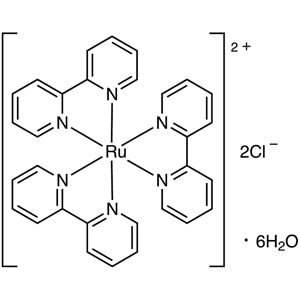
- TCI T1655 50525-27-4 Tris(2,2'-bipyridyl)ruthenium(II) Chloride Hexahydrate
- TCI T3902 304695-79-2 Dichlorotris(1,10-phenanthroline)ruthenium(II) Monohydrate
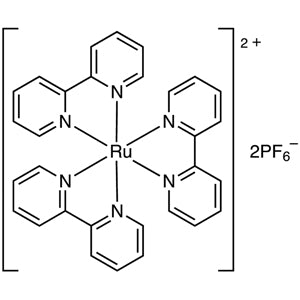
- TCI T3435 60804-74-2 Tris(2,2'-bipyridine)ruthenium(II) Bis(hexafluorophosphate)
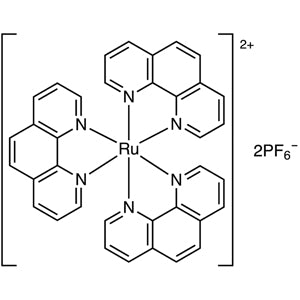
- TCI T3208 60804-75-3 Tris(1,10-phenanthroline)ruthenium(II) Bis(hexafluorophosphate)
- Catalytic Reaction Studies: This compound is ideal for investigating catalytic mechanisms due to its unique coordination structure and reactivity.
- Inorganic Chemistry Research: Its complex metal composition makes it suitable for studying coordination chemistry and transition metal behavior.
- Synthetic Organic Chemistry: It is used to modify reaction pathways and enhance the efficiency of organic synthesis processes.
- Analytical Chemistry Applications: Its distinct spectral properties aid in the identification and characterization of complex chemical compounds.
- Educational Research: It serves as a valuable teaching tool for demonstrating catalytic processes and inorganic chemistry concepts.
From the TCI brochure
- Sensitizer dye in dye-sensitized solar cells
| Brand | TCI |
|---|---|
| CAS number | 207347-46-4 |
| Molecular formula | — |
| Purity | — |
| Category | Chemistry > Catalysis and Inorganic Chemistry > Transition Elements |
| Pack sizes | Available in various quantities as per supplier specifications |
| Physical form | Solid, typically in crystalline or powder form |
| Storage | Store in a cool, dry place away from moisture and light |
This compound should be stored in a cool, dry environment to maintain its chemical stability. It is recommended to keep it in airtight containers to prevent exposure to moisture and humidity. Due to its sensitivity to environmental conditions, it should be handled with care to avoid degradation. Laboratory personnel should wear appropriate personal protective equipment when working with this material. Proper ventilation is essential to minimize inhalation risks. The compound is best stored in a secure location that is inaccessible to unauthorized individuals. Regular monitoring of storage conditions is advised to ensure long-term stability and effectiveness.
—
Product Categories
Produk Terkait
-
Bis(isothiocyanato)(2,2'-bipyridyl-4,4'-dicarboxylato)(4,4'-dinonyl-2,2'-bipyridyl)ruthenium(II) TCI B4373
Regular price Rp 3.524.850,00Regular priceRp 2.480.100,00Sale price Rp 3.524.850,00 -
Bis(isothiocyanato)bis(2,2'-bipyridyl-4,4'-dicarboxylato)ruthenium(II) TCI B4372
Regular price Rp 3.949.050,00Regular priceRp 2.777.250,00Sale price Rp 3.949.050,00 -
Tris(2,2'-bipyridyl)ruthenium(II)ChlorideHexahydrate TCI T1655
Regular price From Rp 2.835.000,00Regular priceRp 1.998.150,00Sale price From Rp 2.835.000,00 -
Dichlorotris(1,10-phenanthroline)ruthenium(II)Monohydrate TCI T3902
Regular price Rp 5.246.850,00Regular priceRp 3.684.450,00Sale price Rp 5.246.850,00 -
Tris(2,2'-bipyridine)ruthenium(II)Bis(hexafluorophosphate) TCI T3435
Regular price Rp 4.133.850,00Regular priceRp 2.906.400,00Sale price Rp 4.133.850,00 -
Tris(1,10-phenanthroline)ruthenium(II)Bis(hexafluorophosphate) TCI T3208
Regular price From Rp 1.881.600,00Regular priceRp 1.331.400,00Sale price From Rp 1.881.600,00 -
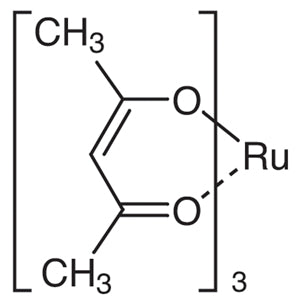
Tris(2,4-pentanedionato)ruthenium(III) TCI T2183
Regular price From Rp 2.411.850,00Regular priceRp 1.702.050,00Sale price From Rp 2.411.850,00 -
[(R)-2,2'-Bis(diphenylphosphino)-1,1'-binaphthyl]ruthenium(II)Dichloride TCI B3067
Regular price Rp 5.485.200,00Regular priceRp 3.851.400,00Sale price Rp 5.485.200,00