2-Bromo-5-phenylthiophene is an organic compound widely used in scientific material research, particularly in the development of organic semiconductors. This compound plays a crucial role in the synthesis of complex molecules with applications in display technologies, sensors, and optoelectronic devices. As a member of the thiophene family, it provides a stable base structure that can be chemically modified to yield materials with diverse electronic properties. Its versatility makes it an essential component in the toolkit of material scientists working on advanced functional materials.
The compound is valued for its chemical stability, solubility in organic solvents, and ability to participate in substitution and covalent reactions. These properties allow researchers to tailor its structure for specific applications, enhancing its utility in material development. Its reactivity also supports the creation of new materials with unique electronic behaviors, making it a preferred choice for those seeking to innovate in the field of organic electronics. The compound’s reliability and adaptability ensure consistent results in laboratory settings.
In Indonesian laboratories, 2-Bromo-5-phenylthiophene is commonly used in material science research, particularly in the study of organic semiconductors and optoelectronic devices. Local researchers frequently employ this compound for synthesis experiments and material characterization, leveraging its properties to advance their work in emerging technologies. Its presence in Indonesian research facilities highlights its importance in the development of next-generation electronic materials.
TCI brochures (PDF)
- Thiophenes 2026-06-29 · p. 6
- Building Blocks for Organic Semiconductor 2026-03-24 · p. 25
Related TCI products
- TCI B5491 118621-30-0 2-(4-Bromophenyl)-5-phenylthiophene
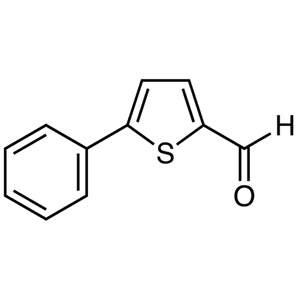
- TCI P2501 19163-21-4 5-Phenylthiophene-2-carboxaldehyde
- TCI I0998 13781-37-8 2-Iodo-5-phenylthiophene
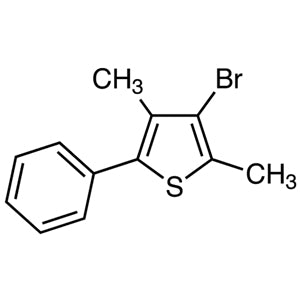
- TCI B2677 362513-28-8 3-Bromo-2,4-dimethyl-5-phenylthiophene
- TCI B5475 925899-21-4 2-Bromo-5-(2-ethylhexyl)thiophene
- TCI B5458 704890-84-6 2-[(5'-Bromo-[2,2'-bithiophen]-5-yl)methylene]malononitrile
- Organic Semiconductor Development: This compound is ideal for creating organic semiconductors due to its stable structure and ability to be chemically modified for desired electronic properties.
- Optoelectronic Device Fabrication: Its reactivity and solubility make it suitable for synthesizing materials used in optoelectronic devices such as sensors and display technologies.
- Material Synthesis Research: It is frequently used in the synthesis of complex organic molecules, supporting a wide range of material science applications.
- Sensor Material Innovation: The compound’s chemical versatility allows for the development of new sensor materials with enhanced sensitivity and performance.
- Electronic Device Characterization: It is used in experiments that require precise material characterization for the development of advanced electronic components.
| Brand | TCI |
|---|---|
| CAS number | 29488-24-2 |
| Molecular formula | — |
| Purity | — |
| Category | Materials Science > Material Building Blocks > Small Molecule Semiconductor Building Blocks |
| Pack sizes | Available in various quantities as per standard laboratory supply |
| Physical form | Solid, typically in crystalline or powder form |
| Storage | Store in a cool, dry place away from light and moisture |
This compound should be stored in a cool, dry environment, away from direct light and moisture to maintain its chemical stability. It is recommended to use airtight containers made of glass or high-density polyethylene to prevent contamination and degradation. Due to its reactivity, it should be handled in a well-ventilated area, with appropriate personal protective equipment such as gloves and safety goggles. Avoid exposure to incompatible substances, and ensure proper disposal following standard chemical waste protocols. Regular inspection of storage conditions is advised to ensure the material remains in optimal condition for laboratory use.
—
Produk Terkait
-
2-(4-Bromophenyl)-5-phenylthiophene TCI B5491
Regular price From Rp 928.200,00Regular priceRp 664.650,00Sale price From Rp 928.200,00 -
5-Phenylthiophene-2-carboxaldehyde TCI P2501
Regular price Rp 2.889.600,00Regular priceRp 2.035.950,00Sale price Rp 2.889.600,00 -
2-Iodo-5-phenylthiophene TCI I0998
Regular price Rp 3.498.600,00Regular priceRp 2.462.250,00Sale price Rp 3.498.600,00 -
3-Bromo-2,4-dimethyl-5-phenylthiophene TCI B2677
Regular price From Rp 3.870.300,00Regular priceRp 2.721.600,00Sale price From Rp 3.870.300,00 -
2-Bromo-5-(2-ethylhexyl)thiophene TCI B5475
Regular price From Rp 3.180.450,00Regular priceRp 2.239.650,00Sale price From Rp 3.180.450,00 -
2-[(5'-Bromo-[2,2'-bithiophen]-5-yl)methylene]malononitrile TCI B5458
Regular price From Rp 1.351.350,00Regular priceRp 960.750,00Sale price From Rp 1.351.350,00 -
5'-Bromo-[2,2'-bithiophene]-5-carbonitrile TCI B5457
Regular price From Rp 2.013.900,00Regular priceRp 1.423.800,00Sale price From Rp 2.013.900,00 -
3-(5-Bromo-2-thienyl)-2,5-bis(2-ethylhexyl)-6-(2-thienyl)pyrrolo[3,4-c]pyrrole-1,4-dione TCI B5456
Regular price Rp 7.075.950,00Regular priceRp 4.963.350,00Sale price Rp 7.075.950,00