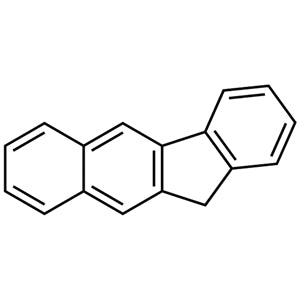
1,2-Benzofluorene is a chemical compound widely used in organic reactions to construct complex molecular structures. It serves as a building block in the synthesis of heterocyclic compounds and longer carbon-chain molecules. This compound is particularly valuable in laboratory settings where precise chemical reactions are required to produce specialized materials. Its aromatic structure provides stability, making it a reliable component in various synthetic processes. Due to its predictable behavior, it is often selected for applications that demand controlled chemical environments.
The chemical properties of 1,2-Benzofluorene contribute to its popularity in laboratory work. It exhibits a high degree of chemical stability, resisting unwanted reactions under normal conditions. This stability ensures consistent results in synthetic processes, reducing the risk of side reactions. Additionally, its relatively high melting and boiling points facilitate efficient purification and separation techniques. These characteristics make it a preferred choice for researchers seeking reliable and reproducible outcomes in their experiments.
In Indonesian laboratories, 1,2-Benzofluorene is commonly used by researchers and scientists for the development of new compounds. Its relevance spans across pharmaceutical, material science, and organic chemistry fields. It plays a crucial role in academic and industrial research, supporting both educational and applied scientific endeavors. Its use is particularly prominent in research institutions and universities focused on chemical innovation and discovery.
TCI brochures (PDF)
- Polycyclic Aromatics with sp3-Carbon Methylene Bridges 2025-08-05 · p. 1
- Fluorenes and Fluorenones 2026-04-15 · p. 2
- Building Blocks for Organic Semiconductor 2026-03-24 · p. 13
- Organic synthesis applications benefit from 1,2-Benzofluorene's stable aromatic structure, allowing for controlled chemical reactions in complex molecule construction.
- Pharmaceutical research utilizes this compound as a building block for the synthesis of heterocyclic compounds, essential in drug development processes.
- Material science applications leverage its chemical stability for the creation of advanced polymers and functional materials with specific properties.
- Educational institutions incorporate it into curriculum-based experiments to teach students about aromatic compounds and synthetic methodologies.
- Industrial research laboratories use it for the development of new chemical products, supporting innovation in chemical manufacturing processes.
| Brand | TCI |
|---|---|
| CAS number | 238-84-6 |
| Molecular formula | — |
| Purity | — |
| Category | Chemistry > Building Blocks > Non-Heterocyclic Building Blocks |
| Pack sizes | Available in various quantities as per supplier specifications |
| Physical form | Solid |
| Storage | Store in a cool, dry place away from direct sunlight and incompatible materials |
1,2-Benzofluorene should be stored in a cool, dry environment to maintain its chemical stability. It is recommended to keep it in a sealed container to prevent exposure to moisture and air. Suitable storage containers include glass or high-density polyethylene (HDPE) vessels, which provide resistance to chemical interactions. Avoid storing near flammable materials or strong oxidizing agents to ensure safety. In laboratory settings, it is important to handle the compound with appropriate personal protective equipment, such as gloves and safety goggles. Proper ventilation should be maintained when working with this compound to minimize inhalation risks. Regular monitoring of storage conditions ensures the compound remains in optimal condition for use in research and development activities.
—
Produk Terkait
-
2,3-Benzofluorene TCI B0059
Regular price From Rp 477.750,00Regular priceRp 333.900,00Sale price From Rp 477.750,00 -
Fluorene TCI F0017
Regular price From Rp 530.250,00Regular priceRp 370.650,00Sale price From Rp 530.250,00 -
7,7-Dimethyl-7H-benzo[c]fluorene TCI D5125
Regular price From Rp 2.174.550,00Regular priceRp 1.520.400,00Sale price From Rp 2.174.550,00 -
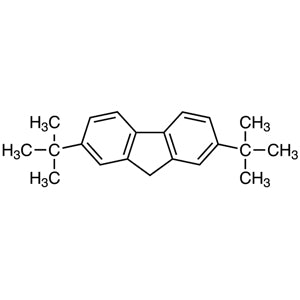
2,7-Di-tert-butylfluorene TCI D4084
Regular price From Rp 1.246.350,00Regular priceRp 871.500,00Sale price From Rp 1.246.350,00 -
2-Acetyl-7-bromofluorene TCI A3061
Regular price Rp 3.180.450,00Regular priceRp 2.239.650,00Sale price Rp 3.180.450,00 -
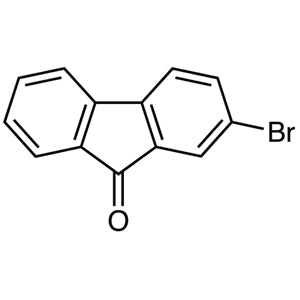
2-Bromo-9-fluorenone TCI B3109
Regular price From Rp 1.405.950,00Regular priceRp 998.550,00Sale price From Rp 1.405.950,00 -
9,9'-Bifluorenylidene TCI B1318
Regular price Rp 6.943.650,00Regular priceRp 4.855.200,00Sale price Rp 6.943.650,00 -
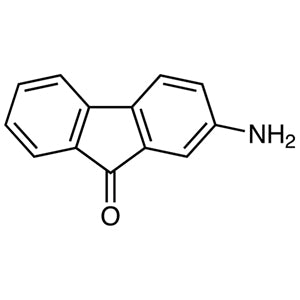
2-Amino-9-fluorenone TCI A1040
Regular price From Rp 1.643.250,00Regular priceRp 1.164.450,00Sale price From Rp 1.643.250,00