2-Bromo-4-hexylthiophene is a chemical compound widely used as a building block in the synthesis of heterocyclic compounds. Its unique molecular structure, featuring a thiophene ring substituted with bromo and hexyl groups, makes it a valuable reagent in organic chemistry. In laboratory settings, this compound plays a crucial role in the development of new materials and pharmaceuticals by enabling the creation of complex molecular architectures. Its strategic position in synthetic pathways allows chemists to design and produce compounds with specific functional properties.
The compound's high reactivity, particularly at the bromo position, makes it an ideal candidate for substitution reactions and other synthetic transformations. This reactivity, combined with its stability as a substituent group, enhances its utility in a variety of chemical processes. The presence of the hexyl chain adds versatility, allowing for further modifications and functional group introductions. These characteristics make 2-Bromo-4-hexylthiophene a preferred choice for researchers aiming to explore new synthetic routes and develop compounds with tailored properties.
In Indonesian laboratories, 2-Bromo-4-hexylthiophene is commonly used by chemists and scientists in the fields of pharmacology and materials science. Its availability in the local market supports experimental work that requires specialized reagents. Researchers rely on this compound to conduct experiments that lead to the discovery of new compounds with potential applications in medicine and advanced materials. Its role in synthetic chemistry is essential for innovation in both academic and industrial research settings.
TCI brochures (PDF)
- Thiophenes 2026-06-29 · p. 2
- Building Blocks for Organic Semiconductor 2026-03-24 · p. 25
Related TCI products
- Synthesis of Heterocyclic Compounds: This compound is ideal for creating complex ring structures due to its thiophene core and reactive bromo group.
- Pharmaceutical Research: Its structural features make it suitable for developing bioactive molecules with potential therapeutic applications.
- Organic Chemistry Experiments: The compound's reactivity supports a wide range of synthetic reactions, making it a versatile tool in laboratory settings.
- Material Science Development: The hexyl substitution enables the creation of functional materials with unique properties for industrial applications.
- Custom Compound Synthesis: Researchers use it as a starting material to design and produce specialized compounds for various scientific and commercial purposes.
| Brand | TCI |
|---|---|
| CAS number | 210705-84-3 |
| Molecular formula | — |
| Purity | — |
| Category | Chemistry > Building Blocks > Heterocyclic Building Blocks |
| Pack sizes | As per supplier specifications |
| Physical form | Solid (as per standard product description) |
| Storage | Store in a cool, dry place away from light and moisture |
This compound should be stored in a cool, dry environment, away from direct light and moisture to maintain its stability and reactivity. It is recommended to use airtight containers made of materials that are chemically inert to prevent degradation. In a laboratory setting, proper ventilation should be ensured when handling the compound to minimize exposure. Personal protective equipment, such as gloves and safety goggles, should be worn at all times. The compound should be kept in a secure location to prevent accidental spills or contamination. Regular inspection of storage conditions is advised to ensure the compound remains in optimal condition for use in experiments.
—
Produk Terkait
-
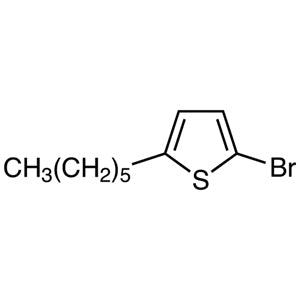
2-Bromo-5-hexylthiophene TCI B3812
Regular price Rp 4.081.350,00Regular priceRp 2.869.650,00Sale price Rp 4.081.350,00 -
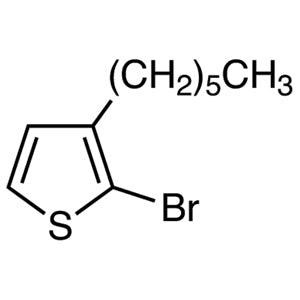
2-Bromo-3-hexylthiophene TCI B3507
Regular price From Rp 2.757.300,00Regular priceRp 1.943.550,00Sale price From Rp 2.757.300,00 -
2-Bromo-5-(2-ethylhexyl)thiophene TCI B5475
Regular price From Rp 3.180.450,00Regular priceRp 2.239.650,00Sale price From Rp 3.180.450,00 -
2-Bromo-5-dodecylthiophene TCI B5407
Regular price From Rp 2.889.600,00Regular priceRp 2.035.950,00Sale price From Rp 2.889.600,00 -
4-Bromo-2-thiophenemethanol TCI B5060
Regular price Rp 769.650,00Regular priceRp 553.350,00Sale price Rp 769.650,00 -
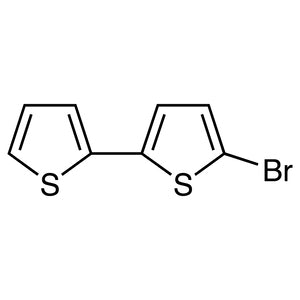
5-Bromo-2,2'-bithiophene TCI B4789
Regular price Rp 5.592.300,00Regular priceRp 3.925.950,00Sale price Rp 5.592.300,00 -
2-Bromo-3-n-octylthiophene TCI B3733
Regular price Rp 2.571.450,00Regular priceRp 1.813.350,00Sale price Rp 2.571.450,00 -
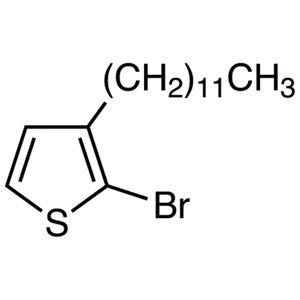
2-Bromo-3-dodecylthiophene TCI B3691
Regular price From Rp 1.272.600,00Regular priceRp 905.100,00Sale price From Rp 1.272.600,00