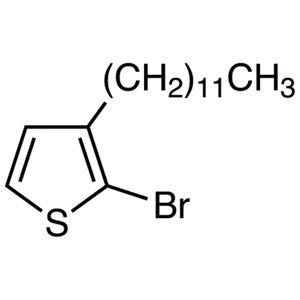
2-Bromo-3-n-octylthiophene is a chemical compound widely used as a building block in the synthesis of complex heterocyclic compounds. This compound features a thiophene ring substituted with bromo and n-octyl groups, making it a versatile reagent in organic chemistry. In laboratory settings, it serves as a key intermediate for constructing more intricate molecular structures, particularly in the development of pharmaceuticals and organic materials. Its role is essential in the design of compounds with specific functional properties, enabling researchers to tailor molecular architectures for targeted applications.
The compound is valued for its chemical reactivity and stability under controlled conditions. The bromo group contributes to its reactivity, making it suitable for substitution and electrophilic reactions, while the n-octyl group enhances solubility in organic solvents. These properties make it a preferred choice for synthetic chemists aiming to modify molecular structures efficiently. Its stability in certain conditions ensures that it remains a reliable reagent for various chemical transformations.
In Indonesian laboratories, 2-Bromo-3-n-octylthiophene is extensively used in organic chemistry research, particularly in pharmacology and materials science. Local researchers frequently employ this compound in the synthesis of bioactive molecules and functional materials. Its availability and chemical properties make it an essential tool for advancing scientific studies in these fields.
TCI brochures (PDF)
- Thiophenes 2026-06-29 · p. 2
- Building Blocks for Organic Semiconductor 2026-03-24 · p. 25
Related TCI products
- Organic Synthesis: This compound is ideal for constructing complex heterocyclic structures, commonly used in the development of pharmaceutical compounds due to its reactivity and solubility.
- Material Science Research: It is utilized in the synthesis of organic materials, where its functional groups contribute to the desired properties of the final product.
- Pharmacological Studies: Researchers use it to design and synthesize bioactive molecules, leveraging its structural versatility for drug development.
- Chemical Modification Reactions: Its bromo and n-octyl groups make it suitable for substitution reactions, enabling the creation of diverse molecular frameworks.
- Structural Elucidation Studies: It serves as a key intermediate in the synthesis of compounds with specific stereochemistry and functional groups.
| Brand | TCI |
|---|---|
| CAS number | 145543-83-5 |
| Molecular formula | — |
| Purity | — |
| Category | Chemistry > Building Blocks > Heterocyclic Building Blocks |
| Pack sizes | Available in various quantities as per standard laboratory supply |
| Physical form | Solid or liquid, depending on the specific product variant |
| Storage | Store in a cool, dry place away from light and incompatible substances |
This compound should be stored in a cool, dry environment, away from direct sunlight and sources of heat. It is recommended to use airtight containers to prevent exposure to moisture and air, which may affect its stability. Due to its reactivity, it should be handled in a well-ventilated area, preferably under a fume hood, to minimize inhalation risks. Avoid contact with incompatible materials such as strong oxidizers or acids. Always wear appropriate personal protective equipment, including gloves, goggles, and a lab coat, when handling this compound to ensure safety in the laboratory setting.
—
Produk Terkait
-
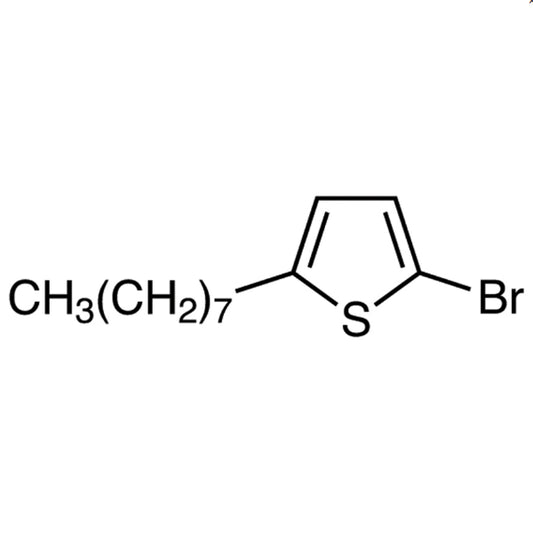
2-Bromo-5-n-octylthiophene TCI B3738
Regular price From Rp 6.386.100,00Regular priceRp 4.481.400,00Sale price From Rp 6.386.100,00 -
2-Bromo-5-(2-ethylhexyl)thiophene TCI B5475
Regular price From Rp 3.180.450,00Regular priceRp 2.239.650,00Sale price From Rp 3.180.450,00 -
2-Bromo-5-dodecylthiophene TCI B5407
Regular price From Rp 2.889.600,00Regular priceRp 2.035.950,00Sale price From Rp 2.889.600,00 -
4-Bromo-2-thiophenemethanol TCI B5060
Regular price Rp 769.650,00Regular priceRp 553.350,00Sale price Rp 769.650,00 -
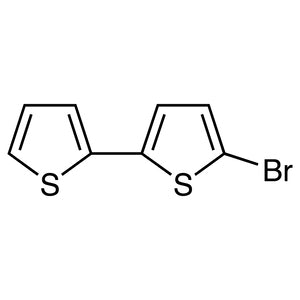
5-Bromo-2,2'-bithiophene TCI B4789
Regular price Rp 5.592.300,00Regular priceRp 3.925.950,00Sale price Rp 5.592.300,00 -
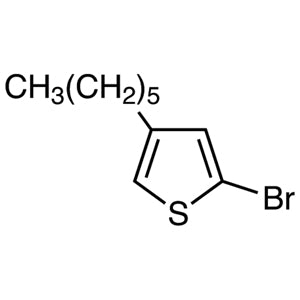
2-Bromo-4-hexylthiophene TCI B3985
Regular price Rp 4.293.450,00Regular priceRp 3.017.700,00Sale price Rp 4.293.450,00 -
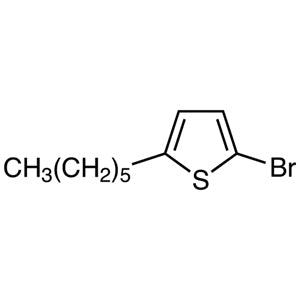
2-Bromo-5-hexylthiophene TCI B3812
Regular price Rp 4.081.350,00Regular priceRp 2.869.650,00Sale price Rp 4.081.350,00 -
2-Bromo-3-dodecylthiophene TCI B3691
Regular price From Rp 1.272.600,00Regular priceRp 905.100,00Sale price From Rp 1.272.600,00