(4-tert-Butyl-2-(2-pyridyl)oxazoline) is a chiral compound widely used in asymmetric synthesis as a catalyst and reagent. It plays a crucial role in laboratories where precise control over stereochemistry is required. This compound is particularly valuable in organic chemistry research, where the ability to selectively produce specific stereoisomers is essential. Its application spans various synthetic processes, making it an indispensable tool for chemists working on complex molecular transformations.
The compound’s chiral nature and molecular structure make it a preferred choice for achieving high enantioselectivity in chemical reactions. It exhibits excellent stability under controlled laboratory conditions and demonstrates strong binding affinity with substrates, enhancing reaction efficiency. These properties allow it to be used in a wide range of synthetic pathways, contributing to the development of new pharmaceuticals and fine chemicals. Its effectiveness in promoting stereoselective reactions has made it a standard in modern synthetic chemistry.
In Indonesian laboratories, this compound is commonly used in organic chemistry research, especially in asymmetric synthesis and catalytic processes. It is a key component in studies aimed at producing chiral compounds with specific stereochemical configurations. Its reliability and performance make it a favored reagent in both academic and industrial research settings within the country.
TCI brochures (PDF)
- Chiral Ligands 2024-12-13 · p. 3
- Asymmetric Synthesis 2026-03-18 · p. 5
- Ligands 2025-12-01 · p. 4
Related TCI products
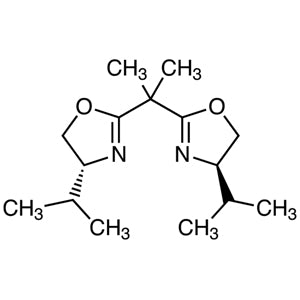
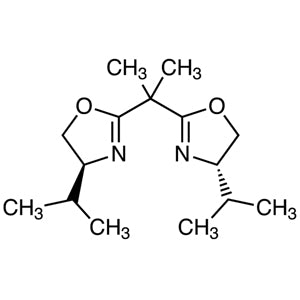
- TCI I1089 150529-94-5 (R,R)-2,2'-Isopropylidenebis(4-isopropyl-2-oxazoline)
- TCI I1051 131833-92-6 (S,S)-2,2'-Isopropylidenebis(4-isopropyl-2-oxazoline)
- TCI I0795 131833-97-1 (R,R)-(+)-2,2'-Isopropylidenebis(4-tert-butyl-2-oxazoline)
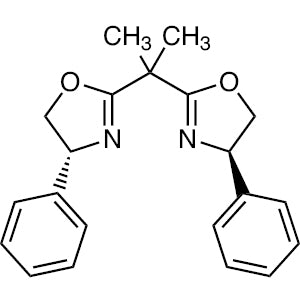
- TCI I0582 131457-46-0 (S,S)-2,2'-Isopropylidenebis(4-phenyl-2-oxazoline)
- TCI I0567 131833-93-7 (S,S)-(-)-2,2'-Isopropylidenebis(4-tert-butyl-2-oxazoline)
- TCI D2823 150529-93-4 (R,R)-2,2'-Isopropylidenebis(4-phenyl-2-oxazoline)
- Asymmetric synthesis: This compound is ideal for asymmetric synthesis due to its chiral nature, enabling the selective production of specific stereoisomers with high enantioselectivity.
- Chiral catalysis: It serves as an efficient chiral catalyst in reactions requiring precise stereochemical control, enhancing reaction efficiency and yield.
- Organic chemistry research: Widely used in organic chemistry research for developing new compounds with specific stereochemical properties.
- Pharmaceutical development: Its ability to control stereochemistry makes it valuable in the synthesis of pharmaceutical compounds with desired biological activity.
- Ligand-based reactions: It functions as a chiral ligand, facilitating complex reaction mechanisms that require precise molecular interactions.
| Brand | TCI |
|---|---|
| CAS number | 117408-98-7 |
| Molecular formula | — |
| Purity | — |
| Category | Chemistry > Asymmetric Synthesis > Chiral Catalysts, Chiral Ligands, Chiral Reagents |
| Pack sizes | Available in various pack sizes as per supplier specifications |
| Physical form | Solid (as per typical chemical form) |
| Storage | Store in a cool, dry place away from moisture and light |
This compound should be stored in a cool, dry environment, away from moisture and direct light to maintain its chemical stability. It is recommended to use airtight containers to prevent exposure to air and humidity. Proper labeling of storage containers is essential for safe handling and identification. Due to its chiral nature, it is important to maintain the integrity of the compound during handling to ensure consistent performance in reactions. Laboratory personnel should wear appropriate personal protective equipment, such as gloves and safety goggles, when working with this material. Regular monitoring of storage conditions is advised to ensure optimal preservation of the compound’s properties.
—
Product Categories
Produk Terkait
-
(R,R)-2,2'-Isopropylidenebis(4-isopropyl-2-oxazoline) TCI I1089
Regular price From Rp 1.908.900,00Regular priceRp 1.350.300,00Sale price From Rp 1.908.900,00 -
(S,S)-2,2'-Isopropylidenebis(4-isopropyl-2-oxazoline) TCI I1051
Regular price From Rp 2.384.550,00Regular priceRp 1.683.150,00Sale price From Rp 2.384.550,00 -
(R,R)-(+)-2,2'-Isopropylidenebis(4-tert-butyl-2-oxazoline) TCI I0795
Regular price Rp 4.716.600,00Regular priceRp 3.313.800,00Sale price Rp 4.716.600,00 -
(S,S)-2,2'-Isopropylidenebis(4-phenyl-2-oxazoline) TCI I0582
Regular price From Rp 2.121.000,00Regular priceRp 1.498.350,00Sale price From Rp 2.121.000,00 -
(S,S)-(-)-2,2'-Isopropylidenebis(4-tert-butyl-2-oxazoline) TCI I0567
Regular price From Rp 2.677.500,00Regular priceRp 1.887.900,00Sale price From Rp 2.677.500,00 -
(R,R)-2,2'-Isopropylidenebis(4-phenyl-2-oxazoline) TCI D2823
Regular price From Rp 2.147.250,00Regular priceRp 1.517.250,00Sale price From Rp 2.147.250,00 -
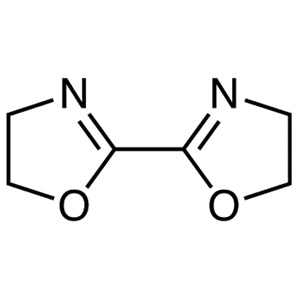
2,2'-Bis(2-oxazoline) TCI B1226
Regular price From Rp 2.835.000,00Regular priceRp 1.998.150,00Sale price From Rp 2.835.000,00 -
2,2'-Bis[(4S)-4-benzyl-2-oxazoline] TCI B6639
Regular price From Rp 2.121.000,00Regular priceRp 1.498.350,00Sale price From Rp 2.121.000,00