6-Bromo-3,4-dihydronaphthalen-2(1H)-one is a chemical compound widely used in organic reactions for the synthesis of complex molecules. As a building block in chemical laboratories, it serves as a versatile intermediate in various synthetic pathways. This compound is commonly found in chemical research settings as a foundational material for creating more intricate structures. Its aromatic nature, combined with the presence of a bromo substituent, makes it a valuable reagent in both academic and industrial research environments.
The compound's stability and reactivity make it a preferred choice for chemists. The bromo group at a specific position imparts significant reactivity, allowing it to participate in nucleophilic, electrophilic, and substitution reactions. This reactivity enables its use in a wide range of synthetic transformations, including substitution and cyclization reactions. Its controlled chemical properties ensure predictable outcomes in laboratory experiments, making it a reliable component in organic synthesis.
In Indonesian laboratories, 6-Bromo-3,4-dihydronaphthalen-2(1H)-one is frequently utilized in both pure and applied chemical research. It is commonly employed in the development of new compounds, particularly in pharmaceutical and material science applications. Its availability and consistent quality make it a go-to material for researchers aiming to advance their work in synthetic chemistry.
Related TCI products
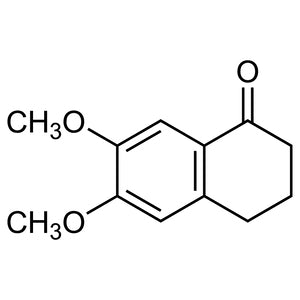
- TCI D6363 13575-75-2 6,7-Dimethoxy-3,4-dihydronaphthalen-1(2H)-one
- TCI T4149 53440-12-3 1,2,3,4-Tetrahydronaphthalene-2-carboxylic Acid
- TCI T2903 1914-65-4 1,2,3,4-Tetrahydronaphthalene-1-carboxylic Acid
- TCI T2672 4242-18-6 5,6,7,8-Tetrahydronaphthalene-1-carboxylic Acid
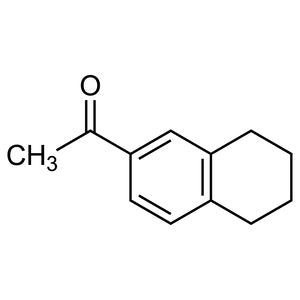
- TCI A3692 774-55-0 1-(5,6,7,8-Tetrahydronaphthalen-2-yl)ethan-1-one
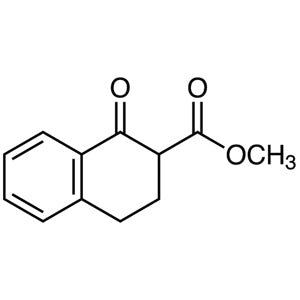
- TCI M3160 7442-52-6 Methyl 1-Oxo-1,2,3,4-tetrahydronaphthalene-2-carboxylate
- Organic synthesis applications benefit from this compound's reactivity and structural versatility, making it ideal for creating complex molecular frameworks.
- Pharmaceutical research often utilizes this compound as a starting material for the development of new drug candidates due to its chemical flexibility.
- Material science studies leverage its aromatic structure and reactivity to design novel materials with specific functional properties.
- Academic research in chemical education uses it as a teaching tool to demonstrate fundamental reaction mechanisms and synthetic strategies.
- Industrial chemical processes incorporate it as a key intermediate in the production of specialized chemicals and compounds.
| Brand | TCI |
|---|---|
| CAS number | 4133-35-1 |
| Molecular formula | — |
| Purity | — |
| Category | Chemistry > Building Blocks > Non-Heterocyclic Building Blocks |
| Pack sizes | Available in standard laboratory quantities |
| Physical form | Solid (exact form may vary based on supplier) |
| Storage | Store in a cool, dry place away from light and moisture |
This compound should be stored in a cool, dry environment, away from direct light and moisture. It is recommended to use airtight containers to prevent exposure to air and humidity. Due to its reactivity, it should be handled with care, using appropriate personal protective equipment such as gloves and safety goggles. Storage conditions should maintain a stable temperature to preserve its chemical integrity. In laboratory settings, it should be kept in a designated chemical storage area to ensure safety and compliance with standard operating procedures. Always follow established safety protocols when handling and storing reactive chemical compounds.
—
Produk Terkait
-
6,7-Dimethoxy-3,4-dihydronaphthalen-1(2H)-one TCI D6363
Regular price Rp 2.411.850,00Regular priceRp 1.702.050,00Sale price Rp 2.411.850,00 -
1,2,3,4-Tetrahydronaphthalene-2-carboxylicAcid TCI T4149
Regular price From Rp 2.411.850,00Regular priceRp 1.702.050,00Sale price From Rp 2.411.850,00 -
1,2,3,4-Tetrahydronaphthalene-1-carboxylicAcid TCI T2903
Regular price From Rp 1.618.050,00Regular priceRp 1.146.600,00Sale price From Rp 1.618.050,00 -
5,6,7,8-Tetrahydronaphthalene-1-carboxylicAcid TCI T2672
Regular price From Rp 3.551.100,00Regular priceRp 2.499.000,00Sale price From Rp 3.551.100,00 -
1-(5,6,7,8-Tetrahydronaphthalen-2-yl)ethan-1-one TCI A3692
Regular price Rp 2.359.350,00Regular priceRp 1.649.550,00Sale price Rp 2.359.350,00 -
Methyl1-Oxo-1,2,3,4-tetrahydronaphthalene-2-carboxylate TCI M3160
Regular price Rp 3.949.050,00Regular priceRp 2.777.250,00Sale price Rp 3.949.050,00 -
3,4-Dihydronaphthalen-1(2H)-oneOxime TCI D6120
Regular price From Rp 1.510.950,00Regular priceRp 1.072.050,00Sale price From Rp 1.510.950,00 -
1,4-Epoxy-1,4-dihydronaphthalene TCI E0567
Regular price From Rp 1.538.250,00Regular priceRp 1.075.200,00Sale price From Rp 1.538.250,00