2,1,3-Benzoselenadiazole is an organic compound widely used in semiconductor and materials research within laboratory settings. As a key building block in material science, it plays a crucial role in the development of advanced electronic components and functional materials. Its unique chemical structure enables it to be a versatile tool for creating complex compounds and exploring new material properties. This compound is particularly valuable for researchers aiming to innovate in the field of electronic materials and nanotechnology.
The compound is known for its chemical stability and controlled reactivity, making it a preferred choice for precise synthesis processes. Its heterocyclic structure allows for specific chemical reactions, such as substitution and bond formation, which are essential in the creation of new materials with tailored electronic properties. These characteristics ensure that it remains a reliable and consistent material for use in laboratory experiments. Additionally, its resistance to common laboratory conditions simplifies storage and handling, making it a practical option for both academic and industrial research.
In Indonesian laboratories, 2,1,3-Benzoselenadiazole is commonly used in materials science and semiconductor-related research. It is a key component in the development of new electronic materials and functional components. Researchers in Indonesia rely on this compound for its reliability and performance in complex chemical processes, contributing to advancements in material science and electronic technology.
TCI brochures (PDF)
- Building Blocks for Organic Semiconductor 2026-03-24 · p. 24
Related TCI products
- TCI D3944 63224-42-0 4,7-Dibromo-2,1,3-benzoselenadiazole
- TCI B5474 1335150-10-1 2-[(7-Bromo-2,1,3-benzothiadiazol-4-yl)methylene]malononitrile
- TCI B5473 1331742-86-9 7-Bromo-2,1,3-benzothiadiazole-4-carbonitrile
- TCI B5470 1467776-41-5 5,10-Bis(4,4,5,5-tetramethyl-1,3,2-dioxaborolan-2-yl)naphtho[1,2-c:5,6-c']bis([1,2,5]thiadiazole)
- TCI B4473 273-09-6 2,1,3-Benzoxadiazole
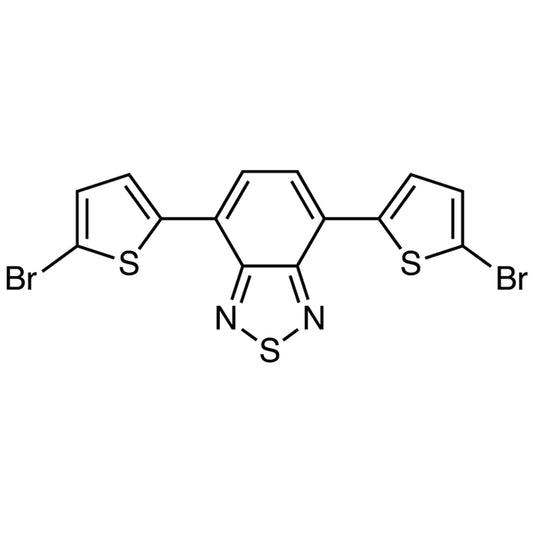
- TCI B3886 288071-87-4 4,7-Bis(5-bromo-2-thienyl)-2,1,3-benzothiadiazole
- Semiconductor material synthesis due to its ability to form stable electronic structures and participate in complex chemical reactions.
- Functional material development because of its heterocyclic structure that allows for tailored electronic properties.
- Organic electronics research as it supports the creation of advanced electronic components with unique conductive properties.
- Nanostructured material fabrication due to its reactivity and compatibility with various synthetic methods.
- Advanced chemical synthesis applications where controlled reactivity and stability are essential for producing high-quality compounds.
| Brand | TCI |
|---|---|
| CAS number | 273-15-4 |
| Molecular formula | — |
| Purity | — |
| Category | Materials Science > Material Building Blocks > Small Molecule Semiconductor Building Blocks |
| Pack sizes | Available in various quantities as per standard laboratory supply |
| Physical form | Solid |
| Storage | Store in a cool, dry place away from direct sunlight and moisture |
This compound should be stored in a cool, dry environment to maintain its chemical stability. It is recommended to use airtight containers to prevent exposure to moisture and air, which could affect its reactivity. As a solid, it is best kept in a sealed container to avoid contamination. Laboratory personnel should handle it with care, using appropriate personal protective equipment when necessary. Due to its controlled reactivity, it is important to follow standard safety protocols to ensure safe handling and use in research settings. Proper storage conditions will help preserve its properties and ensure consistent performance in experimental applications.
—
Produk Terkait
-
4,7-Dibromo-2,1,3-benzoselenadiazole TCI D3944
Regular price Rp 6.253.800,00Regular priceRp 4.389.000,00Sale price Rp 6.253.800,00 -
2-[(7-Bromo-2,1,3-benzothiadiazol-4-yl)methylene]malononitrile TCI B5474
Regular price Rp 2.942.100,00Regular priceRp 2.072.700,00Sale price Rp 2.942.100,00 -
7-Bromo-2,1,3-benzothiadiazole-4-carbonitrile TCI B5473
Regular price Rp 3.260.250,00Regular priceRp 2.295.300,00Sale price Rp 3.260.250,00 -
5,10-Bis(4,4,5,5-tetramethyl-1,3,2-dioxaborolan-2-yl)naphtho[1,2-c:5,6-c']bis([1,2,5]thiadiazole) TCI B5470
Regular price Rp 7.737.450,00Regular priceRp 5.426.400,00Sale price Rp 7.737.450,00 -
2,1,3-Benzoxadiazole TCI B4473
Regular price From Rp 980.700,00Regular priceRp 701.400,00Sale price From Rp 980.700,00 -
4,7-Bis(5-bromo-2-thienyl)-2,1,3-benzothiadiazole TCI B3886
Regular price From Rp 1.749.300,00Regular priceRp 1.239.000,00Sale price From Rp 1.749.300,00 -
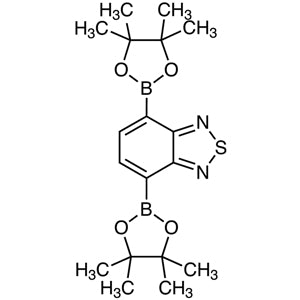
4,7-Bis(4,4,5,5-tetramethyl-1,3,2-dioxaborolan-2-yl)-2,1,3-benzothiadiazole TCI B3573
Regular price From Rp 5.855.850,00Regular priceRp 4.110.750,00Sale price From Rp 5.855.850,00 -
2,1,3-Benzothiadiazole TCI B0921
Regular price From Rp 1.192.800,00Regular priceRp 849.450,00Sale price From Rp 1.192.800,00