3,5-Bis(trifluoromethyl)pyrazole is a chemical compound widely used as a building block in the synthesis of complex molecules. It plays a crucial role in organic chemistry laboratories, where it serves as a versatile intermediate for creating compounds with tailored properties. This compound is particularly valuable for its fluorinated structure, which allows for precise modification of the final product’s chemical and physical characteristics. Its presence in the laboratory enables researchers to explore new synthetic pathways and develop compounds with unique functionalities.
The compound's unique properties stem from the presence of trifluoromethyl groups at the 3 and 5 positions of the pyrazole ring. These groups significantly influence the electronic and reactive behavior of the molecule, making it a preferred choice for synthesizing compounds with specific reactivity, stability, or electrophilic properties. The fluorinated nature of the molecule also enhances its chemical stability, which is essential for maintaining the integrity of the synthesized compounds during various stages of experimentation.
In Indonesian laboratories, 3,5-Bis(trifluoromethyl)pyrazole is commonly used in research related to organic chemistry and pharmaceutical development. Its role is vital in the creation of novel compounds with potential applications in drug discovery, material science, and other advanced chemical fields. Researchers rely on this compound to push the boundaries of chemical innovation and develop new materials with enhanced properties.
TCI brochures (PDF)
- Fluorination Reagents, Fluorinated Building Blocks 2026-03-18 · p. 48
Related TCI products
- TCI T3076 52222-73-8 4-(Trifluoromethyl)pyrazole
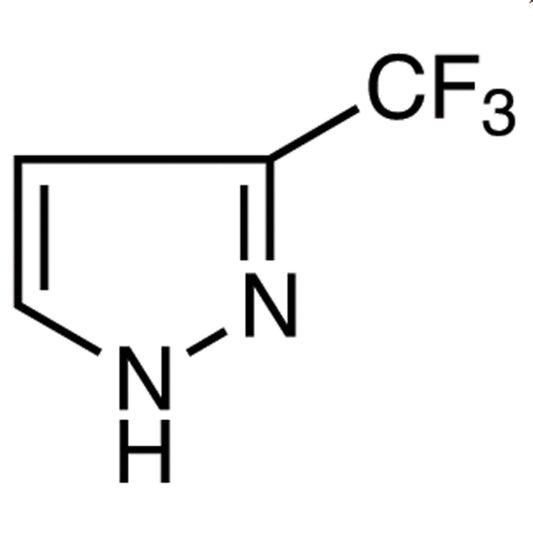
- TCI T2765 20154-03-4 3-(Trifluoromethyl)pyrazole
- TCI B4770 60061-68-9 4-Bromo-3-methyl-5-(trifluoromethyl)pyrazole
- TCI A3230 120068-79-3 5-Amino-1-[2,6-dichloro-4-(trifluoromethyl)phenyl]-1H-pyrazole-3-carbonitrile
- TCI P1756 4027-54-7 5-Phenyl-3-(trifluoromethyl)-1H-pyrazole
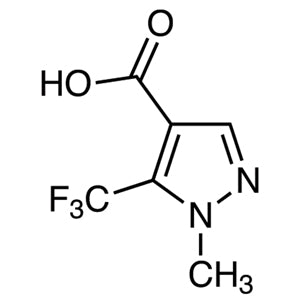
- TCI M2753 119083-00-0 1-Methyl-5-(trifluoromethyl)pyrazole-4-carboxylic Acid
- Organic synthesis applications benefit from this compound's fluorinated structure, enabling the design of molecules with tailored reactivity and stability.
- Pharmaceutical research utilizes its unique electronic properties to develop compounds with enhanced bioavailability and therapeutic potential.
- Material science experiments leverage its chemical stability to create advanced polymers and functional materials with specific properties.
- Analytical chemistry studies use it as a reference standard for evaluating the performance of various analytical techniques.
- Environmental research incorporates it in the development of compounds for pollution control and remediation technologies.
| Brand | TCI |
|---|---|
| CAS number | 14704-41-7 |
| Molecular formula | — |
| Purity | — |
| Category | Chemistry > Building Blocks > Fluorinated Building Blocks |
| Pack sizes | Available in standard laboratory quantities |
| Physical form | Solid |
| Storage | Store in a cool, dry place away from light and moisture |
This compound should be stored in a cool, dry place away from direct light and moisture to maintain its chemical integrity. It is recommended to use airtight containers made of materials compatible with fluorinated compounds, such as glass or high-density polyethylene. Due to its fluorinated nature, it is important to handle the compound with appropriate personal protective equipment, including gloves and safety goggles, to prevent skin contact and inhalation. In laboratory settings, it should be kept in a well-ventilated area to minimize exposure. Regular monitoring of storage conditions ensures the compound remains stable and suitable for use in research applications.
—
Produk Terkait
-
4-(Trifluoromethyl)pyrazole TCI T3076
Regular price From Rp 2.013.900,00Regular priceRp 1.423.800,00Sale price From Rp 2.013.900,00 -
3-(Trifluoromethyl)pyrazole TCI T2765
Regular price From Rp 955.500,00Regular priceRp 683.550,00Sale price From Rp 955.500,00 -
4-Bromo-3-methyl-5-(trifluoromethyl)pyrazole TCI B4770
Regular price Rp 1.510.950,00Regular priceRp 1.072.050,00Sale price Rp 1.510.950,00 -
5-Amino-1-[2,6-dichloro-4-(trifluoromethyl)phenyl]-1H-pyrazole-3-carbonitrile TCI A3230
Regular price From Rp 848.400,00Regular priceRp 609.000,00Sale price From Rp 848.400,00 -
5-Phenyl-3-(trifluoromethyl)-1H-pyrazole TCI P1756
Regular price From Rp 1.033.200,00Regular priceRp 738.150,00Sale price From Rp 1.033.200,00 -
1-Methyl-5-(trifluoromethyl)pyrazole-4-carboxylicAcid TCI M2753
Regular price From Rp 1.510.950,00Regular priceRp 1.072.050,00Sale price From Rp 1.510.950,00 -
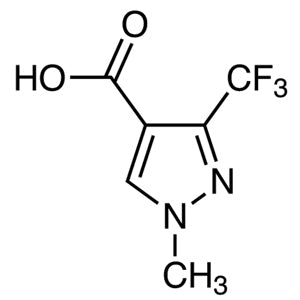
1-Methyl-3-(trifluoromethyl)pyrazole-4-carboxylicAcid TCI M2628
Regular price Rp 1.272.600,00Regular priceRp 905.100,00Sale price Rp 1.272.600,00 -
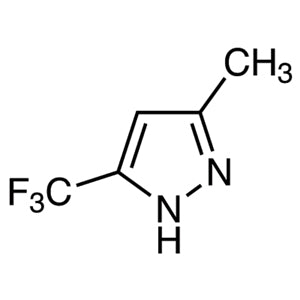
3-Methyl-5-(trifluoromethyl)pyrazole TCI M2032
Regular price From Rp 689.850,00Regular priceRp 497.700,00Sale price From Rp 689.850,00