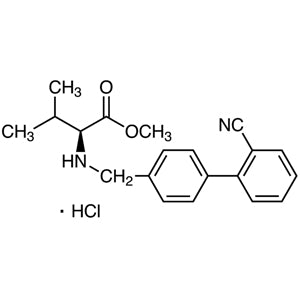
4-Butyl-4'-cyanobiphenyl is a chemical compound widely used in materials science, particularly in the development of liquid crystal (LC) materials. This compound plays a crucial role in laboratories where researchers are working on advanced display technologies and electronic materials. Its unique molecular structure, consisting of two benzene rings connected by a nitrogen and carbon linkage, along with butyl and cyanide groups at each end, makes it highly functional for specific molecular alignment applications.
The compound is favored for its distinct physical and chemical properties. It exhibits a clear phase transition temperature, which is essential for its use in liquid crystal applications. Additionally, it has good solubility in organic solvents, facilitating ease of synthesis and manipulation in laboratory settings. Its chemical stability and non-toxic nature further enhance its appeal for use in research environments where safety and consistency are paramount.
In Indonesian laboratories, 4-Butyl-4'-cyanobiphenyl is commonly used in the development of advanced materials for display technologies such as LCD and OLED screens. Its ability to form stable crystalline structures and its compatibility with various synthesis methods make it a preferred choice for researchers working on electronic materials and optoelectronic applications.
TCI brochures (PDF)
- Liquid Crystal Materials 2026-04-01 · p. 4
Related TCI products
- TCI B1806 114772-54-2 4'-Bromomethyl-2-cyanobiphenyl
- TCI A2986 89823-23-4 4-[(6-Acryloyloxy)hexyloxy]-4'-cyanobiphenyl
- TCI A1249 4854-84-6 4-Amino-4'-cyanobiphenyl
- TCI C2475 482577-59-3 N-(2'-Cyanobiphenyl-4-ylmethyl)-L-valine Methyl Ester Hydrochloride
- TCI C1299 2920-38-9 4-Cyanobiphenyl
- TCI A0554 1562-94-3 4,4'-Azoxydianisole
- Liquid Crystal Display (LCD) Development: This compound is ideal for creating liquid crystal materials used in LCDs due to its molecular alignment properties and phase transition characteristics.
- Organic Light-Emitting Diode (OLED) Research: Its optical and electronic properties make it suitable for OLED applications, supporting the development of next-generation display technologies.
- Electronic Material Synthesis: The compound is frequently used in the synthesis of electronic materials due to its solubility and stability in organic solvents.
- Material Characterization Studies: Its well-defined phase behavior makes it valuable for studying the physical properties of liquid crystals under various conditions.
- Industrial Material Testing: It is used in testing the performance of liquid crystal materials in different environmental and operational conditions.
| Brand | TCI |
|---|---|
| CAS number | 52709-83-8 |
| Molecular formula | — |
| Purity | — |
| Category | Materials Science > Electronic Materials > Liquid Crystal (LC) Materials |
| Pack sizes | Available in various quantities as per supplier specifications |
| Physical form | Solid |
| Storage | Store in a cool, dry place away from light and heat |
This compound should be stored in a cool, dry environment, away from direct sunlight and sources of heat. It is recommended to use airtight containers made of glass or high-density polyethylene to prevent contamination and maintain its chemical integrity. Due to its stability, it does not require refrigeration, but it should be kept in a secure location to avoid exposure to moisture or incompatible substances. In laboratory settings, it is important to handle the compound with appropriate personal protective equipment, such as gloves and safety goggles, to ensure safe handling and minimize any potential risks.
—
Produk Terkait
-
4'-Bromomethyl-2-cyanobiphenyl TCI B1806
Regular price From Rp 1.246.350,00Regular priceRp 887.250,00Sale price From Rp 1.246.350,00 -
4-[(6-Acryloyloxy)hexyloxy]-4'-cyanobiphenyl TCI A2986
Regular price From Rp 3.658.200,00Regular priceRp 2.573.550,00Sale price From Rp 3.658.200,00 -
4-Amino-4'-cyanobiphenyl TCI A1249
Regular price From Rp 2.650.200,00Regular priceRp 1.869.000,00Sale price From Rp 2.650.200,00 -
N-(2'-Cyanobiphenyl-4-ylmethyl)-L-valineMethylEsterHydrochloride TCI C2475
Regular price From Rp 1.801.800,00Regular priceRp 1.275.750,00Sale price From Rp 1.801.800,00 -
4-Cyanobiphenyl TCI C1299
Regular price From Rp 1.431.150,00Regular priceRp 1.016.400,00Sale price From Rp 1.431.150,00 -
4,4'-Azoxydianisole TCI A0554
Regular price From Rp 1.458.450,00Regular priceRp 1.019.550,00Sale price From Rp 1.458.450,00 -
3,4,5-Trifluorophenyltrans,trans-4'-Propylbicyclohexyl-4-carboxylate TCI T3756
Regular price From Rp 1.483.650,00Regular priceRp 1.053.150,00Sale price From Rp 1.483.650,00 -
1-Butoxy-2,3-difluoro-4-(trans-4-propylcyclohexyl)benzene TCI B5364
Regular price From Rp 1.696.800,00Regular priceRp 1.186.500,00Sale price From Rp 1.696.800,00