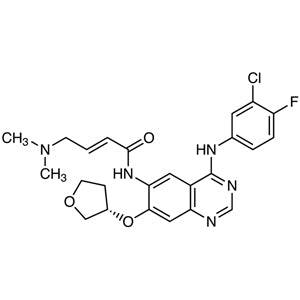
TCI B4945 183322-45-4 PD 153035 Hydrochloride is a chemical compound widely used in scientific experiments, particularly in biochemistry and biotechnology. It functions as an enzyme substrate or inhibitor, playing a crucial role in chemical reactions within laboratory settings. This compound is essential for studying enzyme mechanisms and their impact on biochemical processes. Its versatility makes it a valuable tool for researchers aiming to manipulate or analyze enzymatic activity with precision.
The compound is favored for its high purity and stability under specific conditions, ensuring reliable results in experimental procedures. Its chemical properties allow for predictable and measurable reactions, which are vital for accurate scientific analysis. Additionally, its good solubility in organic solvents simplifies processing and application across various experimental setups. These characteristics make it a preferred choice for laboratories requiring consistency and accuracy in their research.
In Indonesian laboratories, TCI B4945 is extensively used in biochemical, pharmacological, and biotechnological research. It supports studies on enzyme function, reaction kinetics, and drug development. Its reliability and performance make it a key component in experiments that demand precision and reproducibility. This compound is essential for advancing scientific understanding in diverse research fields.
TCI brochures (PDF)
- Receptor Tyrosine Kinase (RTK) Inhibitors 2026-04-06 · p. 1
- Reagents for Biological Research 2025-03-11 · p. 40
- Biochemical Research: This compound is ideal for studying enzyme mechanisms and reaction kinetics due to its role as a substrate or inhibitor.
- Enzyme Activity Testing: It enables precise measurement of enzyme activity and inhibition, supporting biochemical analysis.
- Drug Development Studies: It is used to evaluate enzyme interactions and potential drug targets in pharmacological research.
- Biotechnological Applications: Its stability and solubility make it suitable for enzyme-based processes in biotechnology.
- Analytical Chemistry: It provides reliable results in experiments requiring controlled chemical reactions and accurate measurements.
| Brand | TCI |
|---|---|
| CAS number | 183322-45-4 |
| Molecular formula | — |
| Purity | — |
| Category | Life Science > Biochemicals and Reagents > Enzymes, Enzyme Inhibitors, Enzyme Substrates |
| Pack sizes | — |
| Physical form | — |
| Storage | Store in a cool, dry place away from light |
This compound should be stored in a cool, dry place away from direct light to maintain its stability and purity. It is recommended to use airtight containers to prevent moisture absorption and contamination. When handling, ensure proper laboratory safety practices are followed, including the use of personal protective equipment. Avoid exposure to high temperatures or humid environments to preserve its chemical integrity. Regular inspection of storage conditions is advised to ensure optimal performance in experimental applications. Proper storage ensures consistent results and prolongs the compound's usability in research settings.
—
Product Categories
- Biochemicals and ReagentsEnzymes, Enzyme Inhibitors, Enzyme SubstratesEnzyme Inhibitors [Biochemicals and Reagents]
- Cell BiologyCancer ResearchAntitumor Agents for Research
- Cell BiologyCancer ResearchTumor Growth Regulation [Cancer Research]
- Cell BiologyCell Signaling and NeuroscienceKinase/Phosphatase Biology
Produk Terkait
-
TyrphostinA23 TCI T3503
Regular price Rp 12.109.650,00Regular priceRp 8.484.000,00Sale price Rp 12.109.650,00 -
TyrphostinAG490 TCI T2962
Regular price Rp 1.431.150,00Regular priceRp 1.016.400,00Sale price Rp 1.431.150,00 -
TyrphostinAG1478 TCI T2944
Regular price Rp 6.704.250,00Regular priceRp 4.704.000,00Sale price Rp 6.704.250,00 -
Butein TCI B3803
Regular price From Rp 3.100.650,00Regular priceRp 2.184.000,00Sale price From Rp 3.100.650,00 -
Afatinib TCI A2870
Regular price From Rp 2.757.300,00Regular priceRp 1.943.550,00Sale price From Rp 2.757.300,00 -
PD158780 TCI P2567
Regular price From Rp 3.578.400,00Regular priceRp 2.517.900,00Sale price From Rp 3.578.400,00 -
Pelitinib TCI P2529
Regular price From Rp 3.498.600,00Regular priceRp 2.462.250,00Sale price From Rp 3.498.600,00 -
Mubritinib TCI M3058
Regular price From Rp 5.565.000,00Regular priceRp 3.907.050,00Sale price From Rp 5.565.000,00