


TCI B5085, with the CAS number 196599-80-1, is a chemical compound known as 1,2-Bis(4-methoxyphenyl)-2-oxoethyl Cyclohexylcarbamate. This material is widely used in scientific research, particularly in the fields of materials science and macromolecular chemistry. It serves as a key reagent in polymerization reactions, where it facilitates the bonding of complex organic molecules. Its role in the laboratory is critical for the synthesis of polymers with specific functional properties. Due to its chemical structure, it is a valuable tool for researchers aiming to develop new materials with tailored characteristics.
The compound's molecular structure includes methoxy groups and a carbamate group, which contribute to its reactivity and stability. These functional groups enable controlled chemical reactions, making it a preferred choice for applications requiring precision. The presence of these groups also allows for molecular modification and cross-linking, enhancing its versatility in various experimental setups. The compound’s ability to maintain stability under specific conditions further supports its use in complex chemical processes.
In Indonesian laboratories, this compound is commonly used in polymer and material research. Its specific chemical properties make it suitable for high-precision chemical reactions, supporting advancements in scientific and technological fields. The availability of this compound locally ensures that researchers have access to essential materials for their experiments. Its role in the development of new materials and chemical processes underscores its importance in the scientific community.
TCI brochures (PDF)
- Photobase Generator(PBG)for Anionic UV Light Curing 2024-07-22 · p. 1
- Polymerization Initiators 2025-09-17 · p. 6
- Biomaterials Research Reagents 2025-02-19 · p. 27
Related TCI products
- TCI N1052 119137-03-0 2-Nitrobenzyl Cyclohexylcarbamate
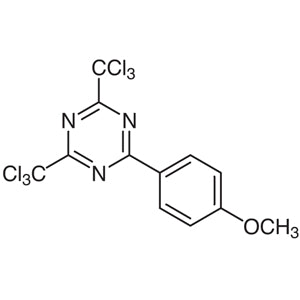
- TCI M1245 3584-23-4 2-(4-Methoxyphenyl)-4,6-bis(trichloromethyl)-1,3,5-triazine
- TCI A0104 121-71-1 3'-Hydroxyacetophenone
- TCI A0502 84-65-1 Anthraquinone
- TCI A0508 153277-35-1 Sodium Anthraquinone-2-sulfonate Monohydrate
- TCI A0061 98-86-2 Acetophenone
- Polymer synthesis and modification where controlled cross-linking and functional group incorporation are required.
- Research in macromolecular chemistry focusing on the development of new polymer structures and properties.
- Organic chemistry experiments involving the formation of complex molecular architectures through controlled reactions.
- Material science studies aimed at creating polymers with enhanced mechanical and chemical stability.
- Advanced chemical synthesis projects requiring reagents with specific functional groups for targeted molecular interactions.
| Brand | TCI |
|---|---|
| CAS number | 196599-80-1 |
| Molecular formula | — |
| Purity | — |
| Category | Materials Science > Polymer/Macromolecule Reagents > Polymerization Reagents |
| Pack sizes | — |
| Physical form | — |
| Storage | Store in a cool, dry place away from direct sunlight and incompatible materials. |
This compound should be stored in a cool, dry environment, away from direct sunlight and sources of heat. It is recommended to keep it in a tightly sealed container to prevent moisture absorption and contamination. Due to its chemical nature, it should be handled with appropriate personal protective equipment, including gloves and safety goggles. Avoid exposure to incompatible substances such as strong acids or bases. Ensure proper ventilation in the laboratory to minimize inhalation risks. Regularly inspect storage conditions to maintain the integrity and safety of the material.
—
Product Categories
Produk Terkait
-
2-NitrobenzylCyclohexylcarbamate TCI N1052
Regular price Rp 6.916.350,00Regular priceRp 4.852.050,00Sale price Rp 6.916.350,00 -
2-(4-Methoxyphenyl)-4,6-bis(trichloromethyl)-1,3,5-triazine TCI M1245
Regular price From Rp 1.590.750,00Regular priceRp 1.127.700,00Sale price From Rp 1.590.750,00 -
3'-Hydroxyacetophenone TCI A0104
Regular price From Rp 1.113.000,00Regular priceRp 793.800,00Sale price From Rp 1.113.000,00 -
Anthraquinone TCI A0502
Regular price From Rp 477.750,00Regular priceRp 333.900,00Sale price From Rp 477.750,00 -
SodiumAnthraquinone-2-sulfonateMonohydrate TCI A0508
Regular price From Rp 822.150,00Regular priceRp 590.100,00Sale price From Rp 822.150,00 -
Acetophenone TCI A0061
Regular price From Rp 769.650,00Regular priceRp 537.600,00Sale price From Rp 769.650,00 -
TriphenylsulfoniumBis(trifluoromethanesulfonyl)imide TCI T4393
Regular price From Rp 1.298.850,00Regular priceRp 924.000,00Sale price From Rp 1.298.850,00 -
(9-Oxo-9H-thioxanthen-2-yl)[4-[(9-oxo-9H-thioxanthen-2-yl)thio]phenyl](phenyl)sulfoniumTetrakis(perfluorophenyl)borate TCI T4223
Regular price From Rp 1.643.250,00Regular priceRp 1.164.450,00Sale price From Rp 1.643.250,00




![TCI T4223 1195763-48-4 (9-Oxo-9H-thioxanthen-2-yl)[4-[(9-oxo-9H-thioxanthen-2-yl)thio]phenyl](phenyl)sulfonium Tetrakis(perfluorophenyl)borate](http://amiscientific.com/cdn/shop/files/TCI2510T4223_cf7e9d09-4622-438c-8f99-db5b99de2771.jpg?v=1792664587&width=533)
![1195763-48-4 (9-Oxo-9H-thioxanthen-2-yl)[4-[(9-oxo-9H-thioxanthen-2-yl)thio]phenyl](phenyl)sulfonium Tetrakis(perfluorophenyl)borate - AMI Scientific](http://amiscientific.com/cdn/shop/files/TCI2510T4223.jpg?v=1767144890&width=533)