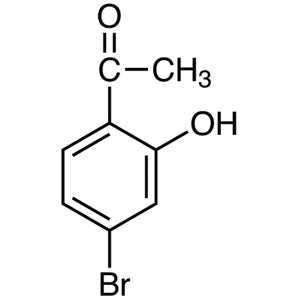
2-Bromo-2'-fluoroacetophenone is an organic compound widely used as a foundational building block in the synthesis of complex molecules. Its aromatic structure, combined with bromo and fluoro substituents, provides unique reactivity and versatility in chemical reactions. This compound plays a crucial role in laboratory settings, particularly in organic chemistry research, where it serves as a key intermediate for the development of pharmaceuticals, industrial chemicals, and specialty compounds. Its ability to participate in various reaction mechanisms makes it an essential tool for chemists working on complex molecular architectures.
The compound's chemical properties, including its reactivity in nucleophilic, substitution, and electrophilic reactions, make it a preferred choice for synthetic chemists. The combination of bromo and fluoro groups enhances its reactivity and functional group compatibility, enabling a wide range of chemical transformations. Its solubility in organic solvents such as ethyl acetate and chloroform further simplifies its handling and purification in laboratory processes. These characteristics ensure its effectiveness in both academic and industrial research environments.
In Indonesian laboratories, 2-Bromo-2'-fluoroacetophenone is extensively used in organic chemistry research, especially in the development of pharmaceutical compounds and industrial materials. Its availability and chemical versatility make it a valuable resource for researchers aiming to synthesize complex molecules with specific functional groups. Its application is particularly prominent in drug discovery and chemical synthesis projects conducted in academic and research institutions across Indonesia.
Related TCI products
- TCI B5237 198477-89-3 5'-Bromo-2'-fluoroacetophenone
- TCI B5236 625446-22-2 4'-Bromo-2'-fluoroacetophenone
- TCI B2382 403-29-2 2-Bromo-4'-fluoroacetophenone
- TCI B2014 1007-15-4 3'-Bromo-4'-fluoroacetophenone
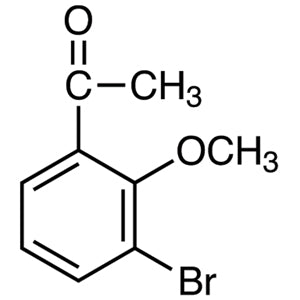
- TCI B5498 267651-23-0 3'-Bromo-2'-methoxyacetophenone
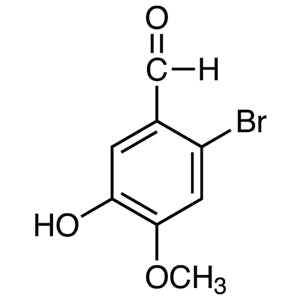
- TCI B4681 2973-59-3 2-Bromo-5-hydroxy-4-methoxybenzaldehyde
- Organic synthesis is a primary application where this compound serves as a versatile building block for creating complex molecular structures.
- Pharmaceutical research benefits from its reactivity and functional group compatibility, aiding in the development of new drug candidates.
- Industrial chemical production utilizes its unique properties for the synthesis of specialty chemicals and intermediates.
- Analytical chemistry applications leverage its solubility and reactivity for the preparation of standard solutions and reaction intermediates.
- Research and development in chemical engineering rely on its stability and reactivity for the exploration of new synthetic pathways.
| Brand | TCI |
|---|---|
| CAS number | 655-15-2 |
| Molecular formula | — |
| Purity | — |
| Category | Chemistry > Building Blocks > Non-Heterocyclic Building Blocks |
| Pack sizes | — |
| Physical form | — |
| Storage | Store in a cool, dry place away from light and incompatible materials |
This compound should be stored in a cool, dry environment, away from direct light and sources of heat. It is recommended to use airtight containers made of materials that are chemically inert, such as glass or high-density polyethylene, to prevent contamination and degradation. Due to its reactivity, it should be handled with care, using appropriate personal protective equipment like gloves and safety goggles. It is important to ensure proper ventilation in the workspace to avoid inhalation of vapors. Avoid contact with incompatible substances such as strong bases or reducing agents. Always follow standard laboratory safety protocols when working with reactive organic compounds to ensure a safe and controlled environment.
—
Product Categories
Produk Terkait
-
5'-Bromo-2'-fluoroacetophenone TCI B5237
Regular price From Rp 1.033.200,00Regular priceRp 738.150,00Sale price From Rp 1.033.200,00 -
4'-Bromo-2'-fluoroacetophenone TCI B5236
Regular price From Rp 1.192.800,00Regular priceRp 849.450,00Sale price From Rp 1.192.800,00 -
2-Bromo-4'-fluoroacetophenone TCI B2382
Regular price From Rp 1.378.650,00Regular priceRp 963.900,00Sale price From Rp 1.378.650,00 -
3'-Bromo-4'-fluoroacetophenone TCI B2014
Regular price Rp 1.723.050,00Regular priceRp 1.220.100,00Sale price Rp 1.723.050,00 -
3'-Bromo-2'-methoxyacetophenone TCI B5498
Regular price From Rp 1.140.300,00Regular priceRp 812.700,00Sale price From Rp 1.140.300,00 -
2-Bromo-5-hydroxy-4-methoxybenzaldehyde TCI B4681
Regular price Rp 4.293.450,00Regular priceRp 3.001.950,00Sale price Rp 4.293.450,00 -
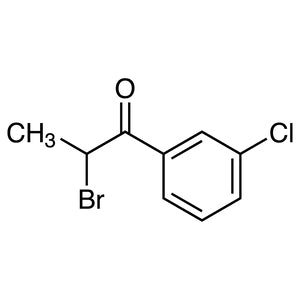
2-Bromo-1-(3-chlorophenyl)propan-1-one TCI B2932
Regular price From Rp 1.934.100,00Regular priceRp 1.368.150,00Sale price From Rp 1.934.100,00 -
4'-Bromo-2'-hydroxyacetophenone TCI B5382
Regular price From Rp 875.700,00Regular priceRp 627.900,00Sale price From Rp 875.700,00