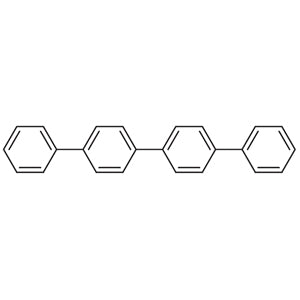
4,4'''-Bis(2-butyloctyloxy)-p-quaterphenyl is an organic compound widely used in optical and photonic material research within laboratory settings. This compound plays a key role in the development of advanced optical devices and display technologies due to its unique light interaction properties. Its complex molecular structure enables it to absorb and emit light in specific spectral ranges, making it a valuable component in the study of light-sensitive materials. Researchers rely on this compound to explore new applications in fields such as optoelectronics and photonics, where precise control over light behavior is essential.
The compound’s ability to act as a pigment or active material in optical systems is a key factor in its preference among scientists. Its chemical stability and resistance to various environmental conditions ensure consistent performance over time, which is critical for long-term research projects. Additionally, its optical properties allow for tailored applications in devices that require specific light absorption or emission characteristics. These features make it a reliable choice for laboratories aiming to innovate in optical material science.
In Indonesian laboratories, this compound is commonly used in material science and information technology research. It supports studies on light-sensitive materials, particularly in the development of LED and laser technologies. Its stability and optical versatility make it a go-to material for researchers working on advanced optical systems and display technologies. Its role in these contexts highlights its importance in both academic and industrial research settings.
- Optical material development for LED and laser technologies due to its light absorption and emission properties.
- Research on light-sensitive materials for use in photonic devices and display technologies.
- Study of functional dyes in the field of optical engineering and material science.
- Development of advanced optical coatings and pigments for industrial applications.
- Investigation of molecular interactions in photonic and optoelectronic systems for scientific innovation.
| Brand | TCI |
|---|---|
| CAS number | 18434-08-7 |
| Molecular formula | — |
| Purity | — |
| Category | Materials Science > Photonic Materials and Optical Materials > Functional Dyes (Other) |
| Pack sizes | Available in various quantities as per supplier specifications |
| Physical form | Solid (as per standard product description) |
| Storage | Store in a cool, dry place away from direct light |
This compound should be stored in a cool, dry environment, away from direct sunlight and sources of heat. It is recommended to use airtight containers to prevent moisture absorption and contamination. Due to its chemical stability, it does not require refrigeration but should be kept in a secure location to avoid exposure to incompatible substances. In laboratory settings, proper personal protective equipment should be worn when handling the material to ensure safety. Regular inspection of storage conditions is advised to maintain the integrity of the compound over time.
—
Product Categories
Produk Terkait
-
N,N,N',N'-Tetraphenyl[1,1':4',1'':4'',1'''-quaterphenyl]-4,4'''-diamine TCI T3657
Regular price From Rp 1.908.900,00Regular priceRp 1.350.300,00Sale price From Rp 1.908.900,00 -
p-Quaterphenyl TCI Q0001
Regular price From Rp 769.650,00Regular priceRp 537.600,00Sale price From Rp 769.650,00