p-Quaterphenyl is an organic compound with a complex molecular structure characterized by four phenyl rings connected symmetrically in the para positions. This compound plays a crucial role in laboratory settings as a building block for constructing more complex molecular structures. Its use spans across various chemical experiments, particularly in the synthesis of advanced compounds and in the study of organic materials. Due to its stability and controlled reactivity, it is a key component in many synthetic processes.
The chemical properties of p-Quaterphenyl make it a preferred choice for laboratory applications. It exhibits relatively stable chemical behavior, with a high melting point and the ability to participate in substitution and condensation reactions. These characteristics ensure its reliability in demanding experimental conditions. Its clear and well-defined structure also facilitates easy identification and processing during experiments.
In Indonesian laboratories, p-Quaterphenyl is widely used in chemical research, including the development of organic materials, the synthesis of complex compounds, and the investigation of optical and electronic properties. Its versatility and reliability make it an essential material for both academic and industrial research activities.
TCI brochures (PDF)
- Nanocarbon Materials 2026-09-30 · p. 9
Related TCI products
- TCI T3657 145898-89-1 N,N,N',N'-Tetraphenyl[1,1':4',1'':4'',1'''-quaterphenyl]-4,4'''-diamine
- TCI B5320 18434-08-7 4,4'''-Bis(2-butyloctyloxy)-p-quaterphenyl
- TCI A0495 120-12-7 Anthracene
- TCI A0005 208-96-8 Acenaphthylene
- TCI T3267 217-59-4 Triphenylene (purified by sublimation)
- TCI T3263 92-94-4 p-Terphenyl (purified by sublimation)
- Organic material development: p-Quaterphenyl is used to create new organic materials with specific optical and electronic properties due to its stable structure and predictable chemical behavior.
- Complex compound synthesis: Its role as a building block allows chemists to construct more intricate molecular structures, making it ideal for synthetic chemistry applications.
- Optical property studies: The compound's well-defined structure enables researchers to investigate its optical characteristics, which are essential in advanced material research.
- Electronic material research: Its chemical stability and reactivity make it suitable for studies involving electronic properties of organic compounds.
- Structural analysis experiments: The clear molecular structure of p-Quaterphenyl facilitates accurate identification and processing in analytical laboratory procedures.
| Brand | TCI |
|---|---|
| CAS number | 135-70-6 |
| Molecular formula | — |
| Purity | — |
| Category | Chemistry > Building Blocks > Non-Heterocyclic Building Blocks |
| Pack sizes | Available in various quantities as per standard laboratory supply |
| Physical form | Solid |
| Storage | Store in a cool, dry place away from light and moisture |
p-Quaterphenyl should be stored in a cool, dry environment, away from direct light and moisture to maintain its chemical stability. It is recommended to use airtight containers to prevent contamination and degradation. Due to its solid form, it should be kept in a secure location to avoid accidental spills or exposure. Laboratory personnel should handle the compound with care, using appropriate personal protective equipment when necessary. Proper labeling of storage containers is essential to ensure safe handling and prevent misuse. Regular inspection of storage conditions is advised to maintain the integrity of the material throughout its shelf life.
—
Produk Terkait
-
N,N,N',N'-Tetraphenyl[1,1':4',1'':4'',1'''-quaterphenyl]-4,4'''-diamine TCI T3657
Regular price From Rp 1.908.900,00Regular priceRp 1.350.300,00Sale price From Rp 1.908.900,00 -
4,4'''-Bis(2-butyloctyloxy)-p-quaterphenyl TCI B5320
Regular price From Rp 1.405.950,00Regular priceRp 982.800,00Sale price From Rp 1.405.950,00 -
Anthracene TCI A0495
Regular price From Rp 584.850,00Regular priceRp 408.450,00Sale price From Rp 584.850,00 -
Acenaphthylene TCI A0005
Regular price From Rp 769.650,00Regular priceRp 537.600,00Sale price From Rp 769.650,00 -
Triphenylene(purifiedbysublimation) TCI T3267
Regular price From Rp 3.367.350,00Regular priceRp 2.354.100,00Sale price From Rp 3.367.350,00 -
p-Terphenyl(purifiedbysublimation) TCI T3263
Regular price From Rp 1.510.950,00Regular priceRp 1.056.300,00Sale price From Rp 1.510.950,00 -
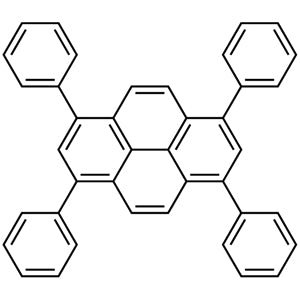
1,3,6,8-Tetraphenylpyrene TCI T3042
Regular price From Rp 2.837.100,00Regular priceRp 1.983.450,00Sale price From Rp 2.837.100,00 -
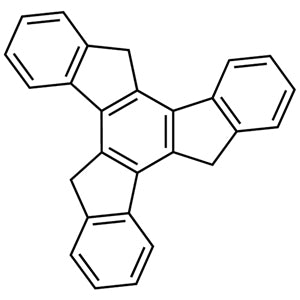
Truxene TCI T2752
Regular price From Rp 1.246.350,00Regular priceRp 871.500,00Sale price From Rp 1.246.350,00