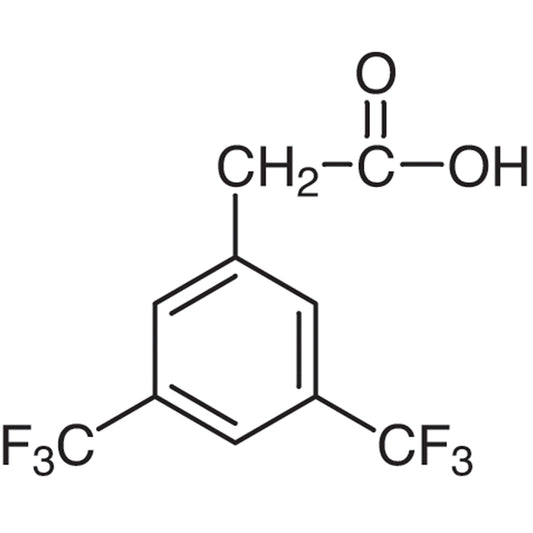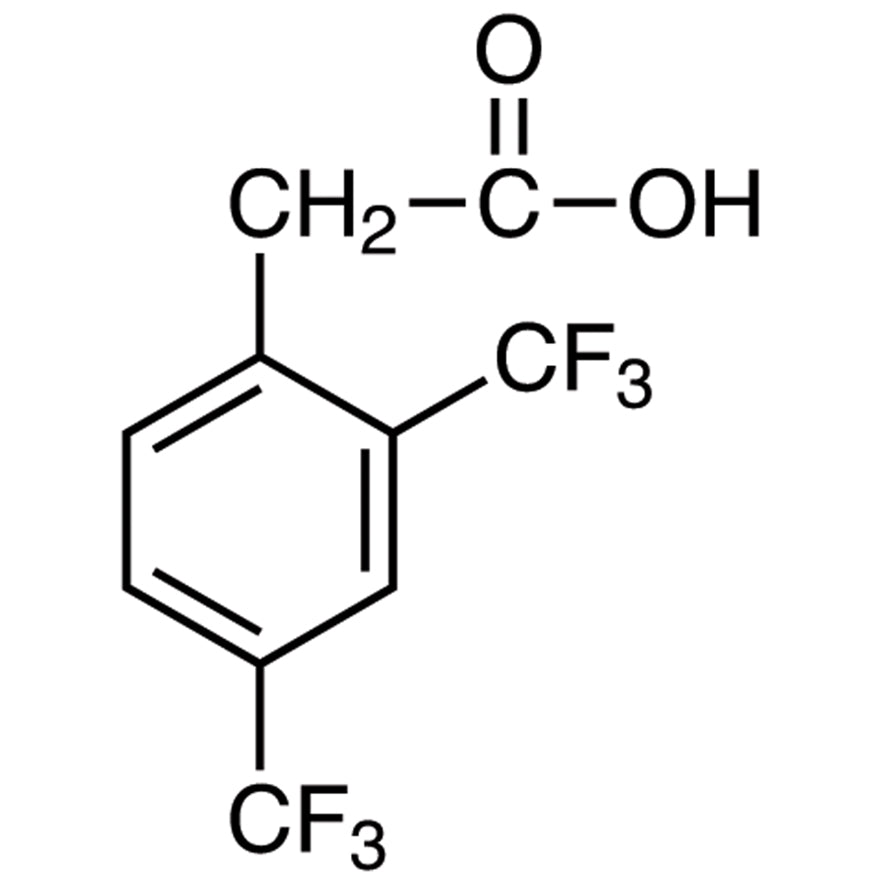
2,4-Bis(trifluoromethyl)phenylacetic Acid is a chemical compound widely used as a building block in the synthesis of complex organic molecules. This compound plays a crucial role in laboratory settings, particularly in organic chemistry and pharmaceutical research, where it serves as a versatile intermediate for creating compounds with specific functional groups. Its unique molecular structure, rich in fluorine atoms, makes it an essential component for designing molecules with tailored biological and physical properties. Due to its reactivity and the presence of trifluoromethyl groups, it is highly sought after in chemical reactions that require precise molecular modifications.
The compound's high polarity and reactivity are key factors that make it a preferred choice for researchers. The presence of trifluoromethyl groups significantly influences its chemical behavior, enabling it to participate in a variety of synthetic pathways. These properties are particularly valuable in the development of new drugs and materials, where precise control over molecular structure is essential. Its stability under certain conditions also contributes to its reliability in laboratory applications, ensuring consistent results during synthesis processes.
In Indonesian laboratories, this compound is commonly used in organic chemistry, pharmacology, and material science research. As the demand for advanced chemical synthesis grows, the importance of such building blocks increases. It is a key ingredient in the development of new compounds with applications in medicine and industry, making it an indispensable tool for researchers working on innovative projects.
Related TCI products
- TCI T1783 32857-62-8 4-(Trifluoromethyl)phenylacetic Acid
- TCI T1662 351-35-9 3-(Trifluoromethyl)phenylacetic Acid
- TCI T1661 3038-48-0 2-(Trifluoromethyl)phenylacetic Acid
- TCI B1976 85068-33-3 3,5-Bis(trifluoromethyl)phenylacetic Acid
- TCI T3664 4315-07-5 4-(Trifluoromethoxy)phenylacetic Acid
- TCI T2406 203302-97-0 3-(Trifluoromethoxy)phenylacetic Acid
- Organic synthesis applications benefit from the compound's reactivity and fluorinated structure, enabling the creation of complex molecules with desired properties.
- Pharmaceutical research utilizes this compound to develop new drug candidates with enhanced bioavailability and therapeutic effects.
- Material science applications leverage its unique chemical properties for the design of advanced polymers and functional materials.
- Analytical chemistry uses it as a standard for calibrating instruments and validating chemical processes in research settings.
- Environmental studies incorporate it to investigate the behavior of fluorinated compounds in various chemical systems and reaction mechanisms.
| Brand | TCI |
|---|---|
| CAS number | 177952-39-5 |
| Molecular formula | — |
| Purity | — |
| Category | Chemistry > Building Blocks > Fluorinated Building Blocks |
| Pack sizes | Available in standard laboratory quantities |
| Physical form | Solid |
| Storage | Store in a cool, dry place away from light and moisture |
This compound should be stored in a cool, dry environment, away from direct sunlight and sources of moisture. It is recommended to use airtight containers made of glass or high-density polyethylene to prevent contamination and maintain stability. Due to its reactivity, it should be handled with appropriate personal protective equipment, including gloves and safety goggles. Laboratory personnel should ensure proper ventilation when working with this compound to minimize exposure. It is important to store it separately from incompatible materials to avoid any potential chemical interactions. Regular monitoring of storage conditions is advised to maintain the integrity of the compound throughout its shelf life.
—
Produk Terkait
-
4-(Trifluoromethyl)phenylaceticAcid TCI T1783
Regular price From Rp 557.550,00Regular priceRp 405.300,00Sale price From Rp 557.550,00 -
3-(Trifluoromethyl)phenylaceticAcid TCI T1662
Regular price From Rp 1.140.300,00Regular priceRp 812.700,00Sale price From Rp 1.140.300,00 -
2-(Trifluoromethyl)phenylaceticAcid TCI T1661
Regular price From Rp 637.350,00Regular priceRp 460.950,00Sale price From Rp 637.350,00 -
3,5-Bis(trifluoromethyl)phenylaceticAcid TCI B1976
Regular price From Rp 505.050,00Regular priceRp 368.550,00Sale price From Rp 505.050,00 -
4-(Trifluoromethoxy)phenylaceticAcid TCI T3664
Regular price Rp 1.776.600,00Regular priceRp 1.257.900,00Sale price Rp 1.776.600,00 -
3-(Trifluoromethoxy)phenylaceticAcid TCI T2406
Regular price Rp 4.028.850,00Regular priceRp 2.832.900,00Sale price Rp 4.028.850,00 -
(S)-(-)-alpha-Methoxy-alpha-(trifluoromethyl)phenylaceticAcid[OpticalResolving] TCI M0832
Regular price From Rp 5.087.250,00Regular priceRp 3.573.150,00Sale price From Rp 5.087.250,00 -
(R)-(+)-alpha-Methoxy-alpha-(trifluoromethyl)phenylaceticAcid[OpticalResolving] TCI M0831
Regular price From Rp 4.902.450,00Regular priceRp 3.444.000,00Sale price From Rp 4.902.450,00