

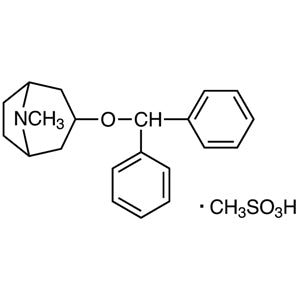
Benztropine Mesylate is a chemical compound widely used in pharmacological and biochemical research. It serves as a key reagent in experimental studies focused on anticholinergic effects and their impact on the central nervous system. This compound is essential for researchers aiming to understand the mechanisms of neurological disorders and the efficacy of neuropharmacological treatments. Its role in laboratory settings is critical for advancing knowledge in drug development and therapeutic applications.
The compound is known for its chemical stability and good solubility in organic solvents, making it highly suitable for a variety of chemical reactions. These properties ensure consistent performance in experimental protocols, contributing to reliable and reproducible results. Additionally, its thermal stability allows for ease of storage and use under varying laboratory conditions, enhancing its versatility in research applications.
In Indonesian laboratories, Benztropine Mesylate is extensively used in pharmacological research across educational institutions and research organizations. It is a preferred choice for studying the mechanisms of antiparkinson drugs and their effects on neural systems. Researchers rely on its quality and reliability to conduct accurate and meaningful experiments in the field of neuropharmacology.
- Parkinson’s Disease Research – This compound is used to study the effects of antiparkinson drugs on neural pathways and motor function.
- Anticholinergic Effect Testing – It helps in evaluating the impact of anticholinergic agents on the central nervous system and peripheral tissues.
- Neuropharmacological Studies – It is essential for investigating the pharmacodynamics and pharmacokinetics of neuroactive compounds.
- Drug Development Protocols – Its use supports the screening and evaluation of potential therapeutic agents for neurological disorders.
- Clinical Trial Simulations – It aids in creating controlled environments to assess drug interactions and therapeutic outcomes in preclinical settings.
| Brand | TCI |
|---|---|
| CAS number | 132-17-2 |
| Molecular formula | — |
| Purity | — |
| Category | Life Science > Biochemicals and Reagents > Pharmaceutical Research Reagents |
| Pack sizes | Available in various quantities as per standard reagent packaging |
| Physical form | Solid powder |
| Storage | Store in a cool, dry place away from direct sunlight |
Benztropine Mesylate should be stored in a cool, dry environment to maintain its chemical stability and prevent degradation. It is recommended to keep the compound in airtight containers to avoid moisture exposure, which could affect its solubility and potency. Laboratory personnel should handle the material with care, using appropriate personal protective equipment such as gloves and safety goggles. The compound is non-hazardous under normal conditions but should be handled in a well-ventilated area to minimize inhalation risks. Proper labeling and storage practices ensure the safety of both the material and the laboratory environment.
—